


More news on this day
A Piedmont Airlines operated American Eagle service from Charlotte to Roanoke on August 10 diverted to Lynchburg Regional Airport, prompting an unscheduled stop that temporarily disrupted evening travel across western Virginia.
Get the latest news straight to your inbox!
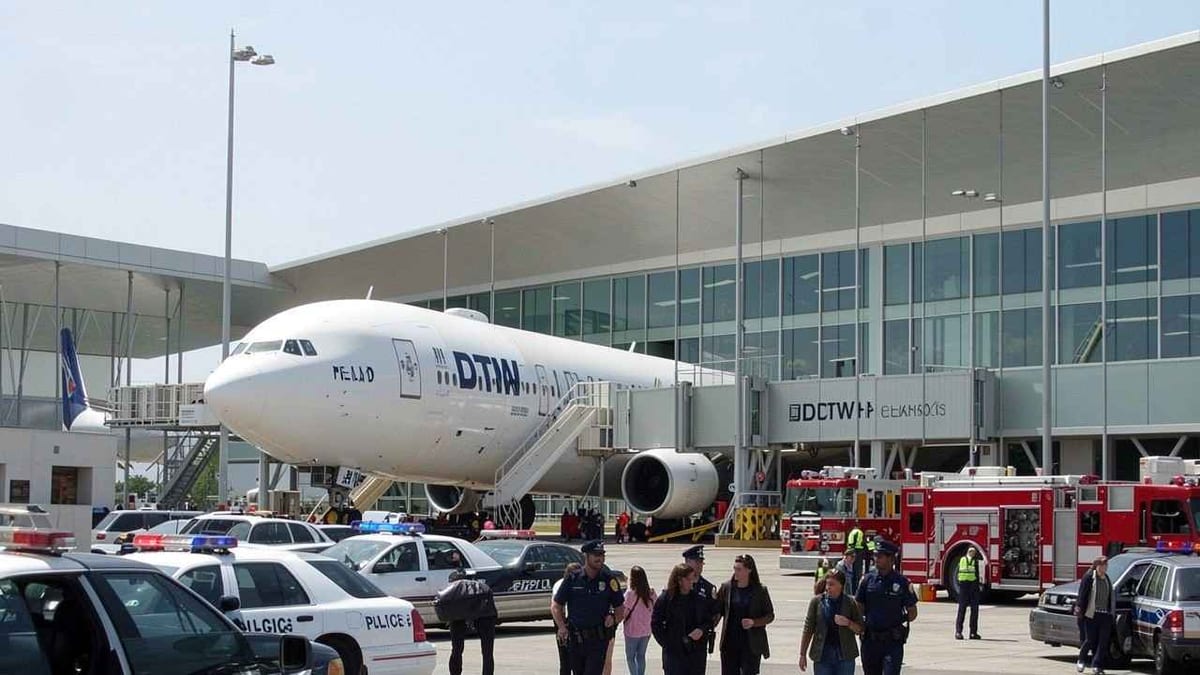
Regional Hop Diverts En Route Across Virginia
The American Eagle flight, operating under the designation PDT6067 and flown by Piedmont Airlines with an Embraer ERJ-145 regional jet, was scheduled to travel from Charlotte Douglas International Airport in North Carolina to Roanoke–Blacksburg Regional Airport in Virginia. The route is part of American Airlines’ wider regional network that links smaller Appalachian cities to the carrier’s Charlotte hub.
Publicly accessible flight-tracking information indicates that the aircraft departed Charlotte as planned but did not continue to Roanoke as filed. Instead, the jet altered course northeast and landed at Lynchburg Regional Airport, a smaller commercial facility located between the two cities that also receives American Eagle services to and from Charlotte.
The diversion occurred on the evening of August 10, with the flight already in the air when the route change was made. The unscheduled stop placed the 50-seat ERJ-145 at an airport that regularly handles similar regional traffic, with infrastructure suited to American Eagle’s Piedmont-operated services.
Initial indications from aviation data and local reporting suggest that the event was managed as a short-notice operational change rather than a prolonged disruption, with the aircraft safely on the ground in Lynchburg and passengers subsequently re-accommodated.
Lynchburg’s Role in the American Eagle Network
Lynchburg Regional Airport serves as one of several smaller commercial gateways in central and western Virginia, positioned roughly midway between Roanoke and Charlottesville. According to publicly available airport and county documents, the facility handles a modest schedule of daily departures and arrivals, dominated by American Eagle flights operating to Charlotte under capacity purchase agreements.
The airport features a primary runway long enough to support regional jets such as the Embraer ERJ-145, along with a shorter secondary runway used primarily by general aviation. This configuration allows the field to accommodate Piedmont’s regional jet operations and makes it a viable alternative for flights bound to or from Roanoke, particularly when conditions or operational considerations favor a diversion.
In recent years, Lynchburg has functioned as an important connector for local residents to the broader American Airlines network via Charlotte. Diversions like the one involving PDT6067 highlight how closely linked regional airports are, with flights sometimes rerouted among them to manage weather, airspace constraints, or airline scheduling needs.
Public documents describing the airport’s commercial service profile note that multiple daily round trips to Charlotte give travelers connectivity across the United States and beyond, relying heavily on American Eagle operators such as Piedmont Airlines.
Piedmont Airlines and the ERJ-145 Fleet
Piedmont Airlines operates as a wholly owned regional subsidiary within the American Airlines Group, flying under the American Eagle brand. The carrier, which traces its roots back to Henson Airlines, runs hundreds of daily departures on behalf of American, linking smaller communities with larger hubs primarily in the eastern United States.
While historically associated with turboprop aircraft, Piedmont’s modern operation includes Embraer ERJ-145 regional jets, a 50-seat narrow-body type commonly used for short routes such as Charlotte to Roanoke. The ERJ-145 is widely deployed across American Eagle’s network and is designed to access airports with relatively short runways and limited terminal infrastructure, which are typical of secondary and tertiary markets.
Industry data on regional aviation show that these aircraft regularly handle sectors under 500 miles, providing frequency and connectivity that would be difficult to sustain with larger mainline jets. Their performance characteristics make them suitable for diversion scenarios to nearby airports like Lynchburg, where runway length and handling facilities align with operational requirements.
Events such as the PDT6067 diversion are not uncommon in regional aviation, where smaller airfields and short sectors allow dispatchers and crews to quickly adjust routes in response to changing conditions while keeping flights within range of maintenance and support facilities.
Passenger Impact and Operational Context
For travelers on board, the diversion meant an unexpected arrival in Lynchburg rather than Roanoke, adding time and logistical complexity to trips that are often planned around tight regional connections. Depending on the length of the delay and the aircraft’s subsequent disposition, passengers may have been offered ground transportation or rebooking via later American Eagle services in the region.
Publicly accessible aviation data and general airline policy information indicate that regional diversions of this kind can be triggered by a range of factors, including weather along the approach path, runway or lighting issues, air traffic flow restrictions, or aircraft performance considerations. In many cases, the specific cause does not immediately appear in public records, but the operational pattern typically centers on safety and infrastructure availability.
Industry analyses of the US regional airline sector emphasize that such diversions, while disruptive to individual travel plans, are a routine part of managing a complex network. Smaller communities often rely on a limited number of daily flights, so a single rerouted or canceled leg can have a disproportionate impact on same-day connections.
For airports like Roanoke and Lynchburg, events involving short-notice diversions also highlight the importance of coordination among regional carriers, airport operations, and ground handling providers, ensuring that passengers can continue their journeys with as little additional disruption as possible.
Spotlight on Western Virginia’s Air Connectivity
The incident involving PDT6067 also underscores the broader role of regional aviation in western Virginia. Roanoke–Blacksburg Regional Airport and Lynchburg Regional Airport together offer a relatively small number of daily commercial flights, yet they function as critical lifelines for business travelers, students, and residents connecting to national and international destinations via hubs like Charlotte.
Available planning documents from local governments and airport authorities show ongoing efforts to maintain and, where possible, expand service options for these communities. With limited competition from other carriers at both airports, American Eagle’s Piedmont and partner operators remain central to air access for the region.
On routes such as Charlotte to Roanoke, short sector lengths and constrained schedules mean that disruptions are felt quickly by travelers. A diversion to Lynchburg on a single evening flight can ripple into missed connections, schedule changes, and overnight stays, particularly for those relying on a same-day return.
The August 10 diversion of the Piedmont-operated ERJ-145 therefore fits into a wider narrative of how regional carriers balance operational flexibility with the need for reliable connectivity in smaller markets, where each flight carries outsized importance for the communities it serves.