


More news on this day
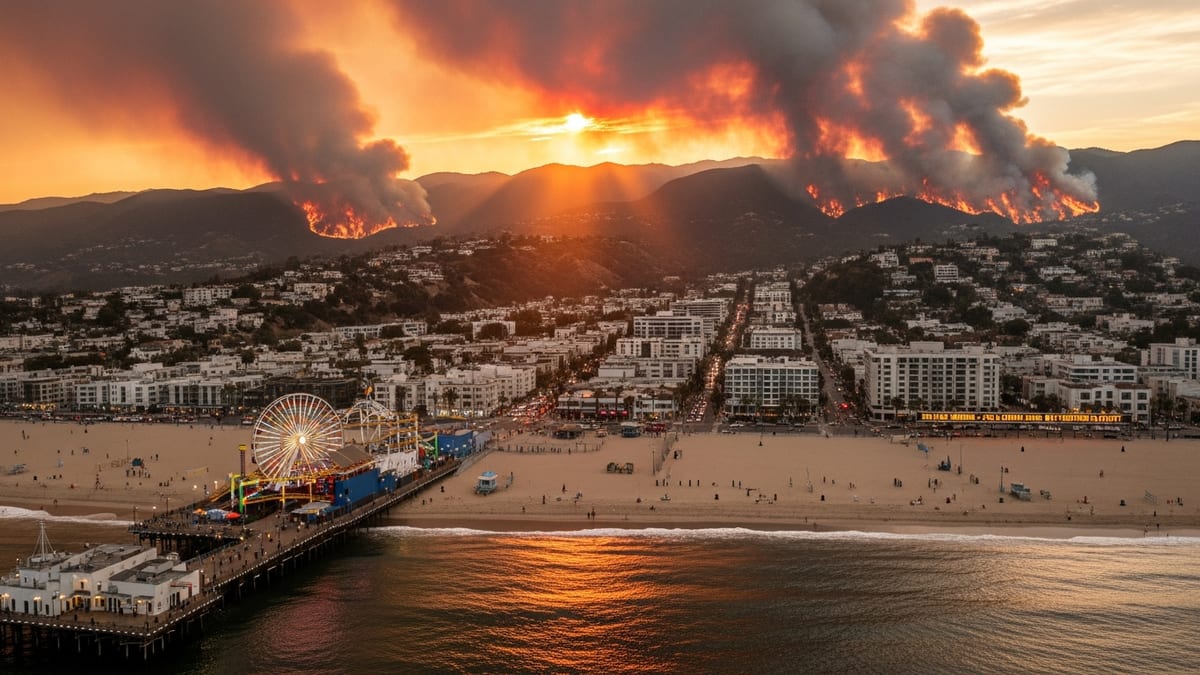
A surging wildfire season across California and the wider American West is turning peak summer into a test of resilience for tourism, as evacuations, road closures and smoke-filled skies disrupt travel plans and push destinations to balance safety, livelihoods and long-term climate realities.
Get the latest news straight to your inbox!
Evacuations, Road Closures And A Shifting Summer Map
Publicly available wildfire tracking from federal and state agencies shows dozens of large incidents burning across the western United States in mid-August, with California again among the hardest hit. Large fires in both northern and southern parts of the state have triggered evacuation orders for communities near forested foothills and canyons, while key highways and scenic byways have been closed for fire operations and falling-debris risks.
Travel advisories indicate that fire activity is reshaping the usual peak-season map. Sections of mountain corridors and coastal routes have seen intermittent closures as crews move in and out, and some rural communities are limiting access to nonresidents. For visitors, that has meant abrupt detours, longer journey times and in some cases abandoned itineraries when accommodation or campgrounds fall within active fire or evacuation zones.
Experts tracking fire seasons note that the current pattern fits a broader trend of hotter, drier summers that leave California’s vegetation primed to burn. When lightning or human activity sparks new ignitions, steep terrain and shifting winds can quickly push flames toward populated areas, forcing authorities to prioritize life safety over open access, regardless of tourism calendars.
Smoke has become an equally disruptive force. Satellite analyses from federal weather agencies over recent weeks show plumes from California, Oregon and other western fires drifting hundreds of miles, at times blanketing urban basins and major interstate corridors in haze that reduces visibility and sends air quality indices into unhealthy ranges.
Tourism Hubs From Coast To Mountains Under Pressure
The impact on tourism is uneven but increasingly visible. In California, wine country valleys, Sierra Nevada gateway towns and coastal communities that market cool summer escapes have all reported cancellations and shortened stays as travelers react to images of orange skies or follow real-time smoke and fire maps before hitting the road.
Similar patterns are emerging elsewhere in the West. Oregon travel advisories updated in late July warn that multiple large wildfires could affect popular recreation regions, including central high-desert destinations and forested lake areas, with closures on key highways and scenic routes. Advisers there are encouraging visitors already in affected regions to focus on indoor activities while monitoring official updates on fire behavior and access.
Public information from the National Interagency Fire Center indicates that, nationwide, thousands of personnel are assigned to dozens of large incidents, with the Northwest currently recording some of the most intense activity. In practice, that has meant limited capacity to keep all roads, campgrounds and backcountry trails open, especially in remote landscapes where aviation resources and ground crews are concentrated on structure protection and containment lines.
In national park gateway communities from California to Montana, travelers have taken to public forums to describe hazy vistas, persistent smoke and the difficult decision to cancel long-planned trips. These personal accounts mirror broader data on reduced visibility and degraded air quality that can undermine the signature experiences these destinations promote, from starry-night skies to clear mountain panoramas.
Economic Stakes For Local Businesses And Workers
The economic stakes are particularly acute in communities that rely heavily on seasonal visitors. Analyses prepared for California’s Legislature in recent years have highlighted that large wildfire seasons can generate statewide economic losses in the tens of billions of dollars, once damage to property, health costs and lost business activity are tallied. For small hotels, restaurants, guiding outfits and tour operators, a few weeks of closures or heavy smoke during the short summer peak can determine whether a year finishes in profit or loss.
This year’s fire conditions are reviving those concerns. Short-notice evacuations require visitors to leave with little warning, often without refunds for the first night’s stay or pre-booked activities. Even in places that remain open, the perception of risk or the reality of poor air quality is depressing walk-in traffic and last-minute bookings, as travelers pivot to inland cities, coastal regions less affected by smoke on a given day, or destinations in other states altogether.
At the same time, some local economies are seeing a temporary boost from the logistics of wildfire response. Hotels and short-term rentals have filled with firefighting personnel, utility crews and insurance assessors, providing a cushion for accommodation providers but doing little for businesses that cater primarily to leisure spending, such as outfitters and attractions. Residents in some communities have also voiced concern that the influx of response workers strains housing availability for evacuees and low-income locals.
Tourism boards across the region are walking a fine line between promoting visitation where it remains safe and accessible and acknowledging the realities of a volatile fire environment. Many are directing travelers to centralized alert pages, urging flexible plans, and emphasizing trip insurance and refundable bookings as ways to share the financial risk of disruption.
California’s Response Mirrors A Broader Western Adaptation
California’s current posture illustrates how deeply wildfire is now embedded in regional planning. State budget documents and oversight reports show steadily rising allocations for wildfire response, forest management and community resilience over the past decade, a trajectory shaped by successive record-breaking seasons. Emergency frameworks refined during catastrophic fires in 2017, 2018, 2020 and subsequent years are now being applied more routinely as new incidents emerge.
Similar patterns can be seen in neighboring states. Forecasts and outlooks from federal drought and fire agencies for 2026 flagged elevated fire risk across large parts of the West, particularly in areas where below-normal precipitation and early snowmelt have extended the dry season. In Washington and Oregon, early-year assessments pointed to above-normal potential for significant wildfires, a projection that has been borne out in the scale of acreage burned this summer.
From a tourism perspective, this convergence has practical consequences. Western states are increasingly coordinating messaging about smoke, road conditions and park access, recognizing that many travelers plan multi-state road trips rather than single-destination vacations. Regional cooperation is also growing around evacuation planning and visitor management, as research on past fires underscores the importance of clear, consistent communication to reduce confusion when roads close or conditions deteriorate quickly.
Publicly available climate studies are reinforcing the sense that these are not isolated bad years but part of a structural shift. Analyses of smoke exposure trends across the western United States have linked the sharp rise in hazardous air days to human-driven climate change, suggesting that communities which depend on clear summer skies for their appeal will need to plan for more frequent disruptions in the decades ahead.
Tourism At A Crossroads: Rethinking Seasons, Safety And Marketing
The unfolding 2026 fire season is sharpening a question that has been building for years: how to sustain tourism in landscapes that are increasingly shaped by fire. For California and other western destinations, this is not simply a matter of short-term crisis management but of rethinking how, when and where they invite visitors.
Some operators are already experimenting with shifting their primary marketing windows away from the core of fire season, emphasizing shoulder months in spring and late autumn when conditions can be cooler and less volatile. Others are investing in infrastructure that can allow for safe indoor experiences even when outdoor air quality deteriorates, such as upgraded filtration systems, covered walkways and flexible programming that can move events under shelter at short notice.
Destination managers are also reconsidering the stories they tell about their regions. Rather than presenting fire solely as a distant threat, some are foregrounding resilience and adaptation, highlighting forest restoration efforts, community preparedness initiatives and opportunities for visitors to support local recovery. This approach reflects a recognition that, for many travelers, transparency about risk and readiness may be more reassuring than silence followed by sudden closures.
For now, the immediate priority in California and across the fire-affected West remains protecting lives and property as the season enters what is historically its most intense stretch. But the decisions being made about closures, communication and long-term investment suggest that tourism in the region is standing at a crossroads, with this year’s inferno serving as both a warning and a catalyst for change.