


More news on this day
Boeing and Archer Aviation have unveiled a sweeping technology and equity deal centered on autonomous flight systems, a move that links one of the world’s largest aerospace groups with a fast-rising electric air taxi developer and signals a new phase in the race to commercialize self-flying aircraft.
Get the latest news straight to your inbox!
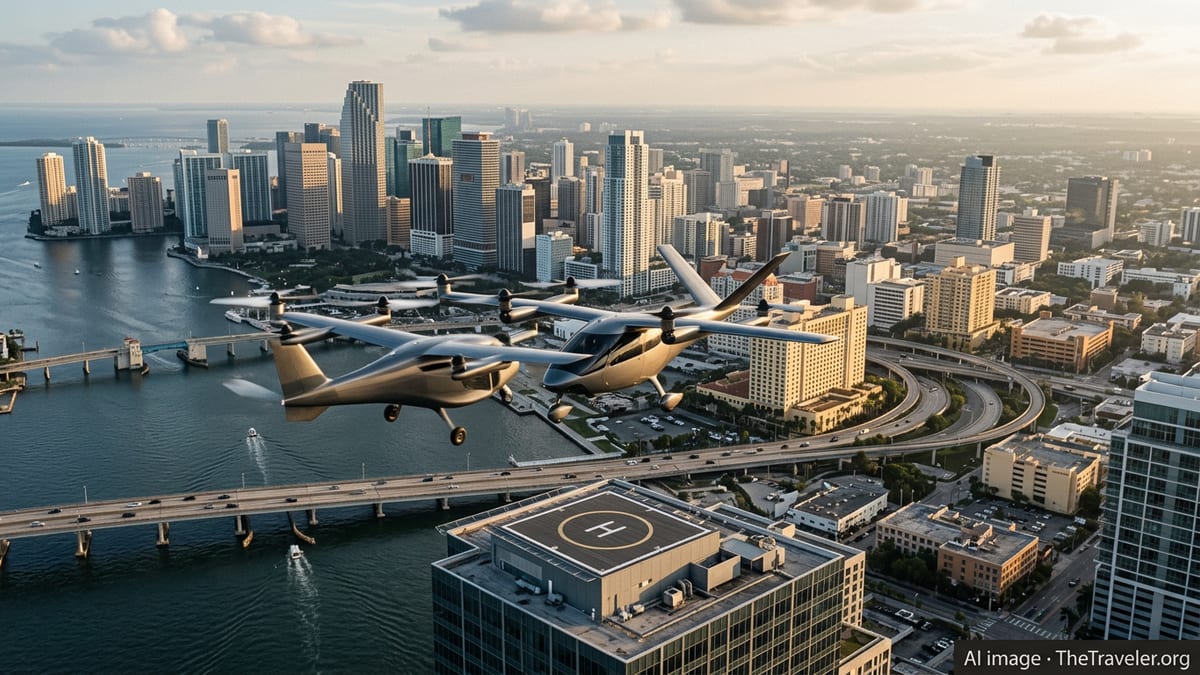
A Strategic Bet On Autonomy And Advanced Air Mobility
According to publicly available corporate filings and investor materials, the agreement provides for Boeing to take an equity stake in Archer in connection with a broader transaction involving several Boeing subsidiaries, including autonomous flight specialist Wisk Aero. In return, Archer gains access to technology, talent and intellectual property that are intended to accelerate development of future autonomous variants of its Midnight electric vertical takeoff and landing, or eVTOL, aircraft.
The arrangement builds on an earlier legal settlement between Archer, Boeing and Wisk that resolved a high-profile intellectual property dispute and created a framework for collaboration on autonomy. Those documents describe an autonomous flight technology collaboration that positions Boeing as both a partner and a customer for systems that could one day enable pilot-optional operations in urban corridors and on selected commercial and defense platforms.
Industry analysts note that the agreement comes as global regulators and manufacturers work to define how advanced air mobility will safely integrate into crowded airspace. For Archer, coupling its eVTOL development program with an established aerospace prime brings additional credibility with civil aviation authorities and potential airline customers. For Boeing, the deal offers a pathway to leverage decades of research into automated flight controls, unmanned rotorcraft and urban air mobility within a new generation of lighter, quieter aircraft.
Market commentary following the announcement indicates that investors view the tie-up as a signal that autonomy will be central to the long-term economics of air taxi networks, where pilot costs and training pipelines are seen as major constraints. The partnership structure, with both capital and technology-sharing components, suggests that each side expects a multi-decade evolution from today’s piloted prototypes toward increasingly automated fleets.
What The Deal Means For Air Taxis And Urban Mobility
Archer’s Midnight aircraft is being developed initially for piloted operations, with short-range urban and regional missions designed around trips of roughly 20 to 50 miles linking airports, business districts and emerging vertiport networks. The Boeing collaboration is focused on technology for later versions that could ultimately remove or significantly reduce onboard pilot workload, expanding capacity and lowering operating costs for urban air mobility routes.
Public statements and technical briefings on advanced air mobility highlight a staged journey from today’s highly supervised automation toward higher levels of self-flying capability. In the near term, autonomy is expected to appear as advanced pilot-assistance features, such as automated takeoff and landing, collision avoidance and route management in dense airspace. Over time, these functions could evolve into full gate-to-gate automation, overseen from ground-based control centers rather than a cockpit crew.
For cities, the prospect of autonomous eVTOL operations raises questions that extend beyond aircraft design. Urban planners and regulators are considering how vertiports, air corridors and noise footprints will be managed when fleets of electric aircraft move over neighborhoods at low altitude. The deal between Boeing and Archer underscores that large aerospace firms expect these questions to be answered and are positioning themselves early in anticipation of high-volume operations later in the decade.
Travel industry observers point out that, if autonomy can be proven safe and reliable, it could dramatically change the economics of airport access and short-haul regional travel. Autonomous eVTOL shuttles operating at high frequency could reduce congestion on highways, compress door-to-door journey times and create new premium and mass-market products for airlines, hotel groups and tourism operators clustered around major hubs.
Defense, Dual-Use Platforms And Global Competition
The new collaboration also has implications beyond civilian air taxi services. Recent announcements from Archer and defense technology firms describe jointly developed autonomous vertical-lift platforms aimed at both commercial and military roles, suggesting that the same core flight control and autonomy stack could underpin cargo drones, surveillance systems and uncrewed “loyal wingman” concepts alongside urban passenger aircraft.
Boeing brings extensive experience with autonomous and optionally piloted rotorcraft to the table, including past demonstrator programs that used advanced sensors and algorithms to allow helicopters to navigate and land with minimal human input. Integrating that heritage with Archer’s newer eVTOL architectures could yield platforms suited to missions ranging from logistics resupply to border monitoring and disaster response.
Analysts following the sector observe that advanced air mobility has become a field of strategic competition among major aerospace groups, defense contractors and technology companies. By deepening ties with Archer, Boeing positions itself as a central player in an ecosystem that spans civil air taxis, dual-use drones and future transport concepts, countering moves by rivals that are backing their own eVTOL and autonomy ventures.
For Archer, closer alignment with a global defense and commercial aerospace leader may ease pathways into government and military procurement programs that are increasingly open to electric and hybrid-electric vertical lift solutions. That, in turn, can provide valuable flight hours, data and funding streams that support the maturation of autonomous systems that will later appear in passenger applications.
Regulatory Pathways And Safety Challenges Ahead
Despite the optimism surrounding the deal, the road to fully autonomous passenger flights remains long and complex. Regulatory authorities in the United States and abroad are still refining certification frameworks for piloted eVTOL aircraft, let alone self-flying versions. Technical papers and policy discussions on urban air mobility emphasize that communication, navigation, surveillance and air traffic management systems will need significant upgrades to support dense, automated operations at low altitude.
Archer and Boeing will need to demonstrate that their autonomous systems can meet or exceed existing safety standards for commercial aviation, including performance in degraded conditions, cybersecurity resilience and robust human oversight. That will likely involve extensive simulation, ground testing and phased flight trials that introduce autonomy in narrow use cases before expanding to more complex environments and higher passenger loads.
Public acceptance is another critical factor. Surveys conducted in markets targeted for early air taxi deployment indicate that travelers are cautiously interested in electric air taxis but express concern about pilotless or highly automated aircraft. The presence of a well-known aerospace brand such as Boeing in the technology stack may help reassure some travelers and regulators, but advocates acknowledge that a long track record of safe operation will be needed before fully autonomous passenger services become routine.
In the meantime, industry observers expect the Boeing–Archer partnership to concentrate on near-term milestones such as certifying piloted eVTOL operations, building out vertiport infrastructure with airport and fixed-base operator partners, and integrating advanced automation features that can later form the backbone of fully autonomous flight. Progress on those fronts will shape how quickly the promise of on-demand, pilot-optional air mobility moves from demonstration projects into the travel mainstream.
Implications For Travelers And The Wider Aviation Market
For travelers, the most visible effects of the Boeing and Archer deal are likely to emerge first in airport access, where early eVTOL routes are being planned between major hubs and city centers. As aircraft mature and regulatory approvals advance, these services could transition from piloted shuttles marketed as a premium convenience into more widely accessible options, potentially integrated with airline booking platforms and loyalty programs.
Tourism and hospitality sectors are watching closely, particularly in regions that have already signaled support for advanced air mobility through investment incentives and streamlined certification pathways. Destination cities aiming to reduce congestion and emissions see electric and, eventually, autonomous eVTOL services as a potential differentiator for high-value visitors and business travelers.
More broadly, the Boeing–Archer collaboration adds momentum to a shift in aviation where software, autonomy and electric propulsion play a central role in competitiveness. Airlines, airports and travel operators may increasingly factor access to advanced air mobility networks into their long-term planning, from terminal design to intermodal connections.
While fully autonomous air taxis carrying tourists over city skylines remain several years away, the new agreement signals that major industry players are treating that vision as a concrete objective rather than a distant concept. For the travel sector, the outcome of this partnership will help determine whether the next era of flight is defined as much by algorithms and electric motors as by jet engines and traditional cockpit crews.