


More news on this day
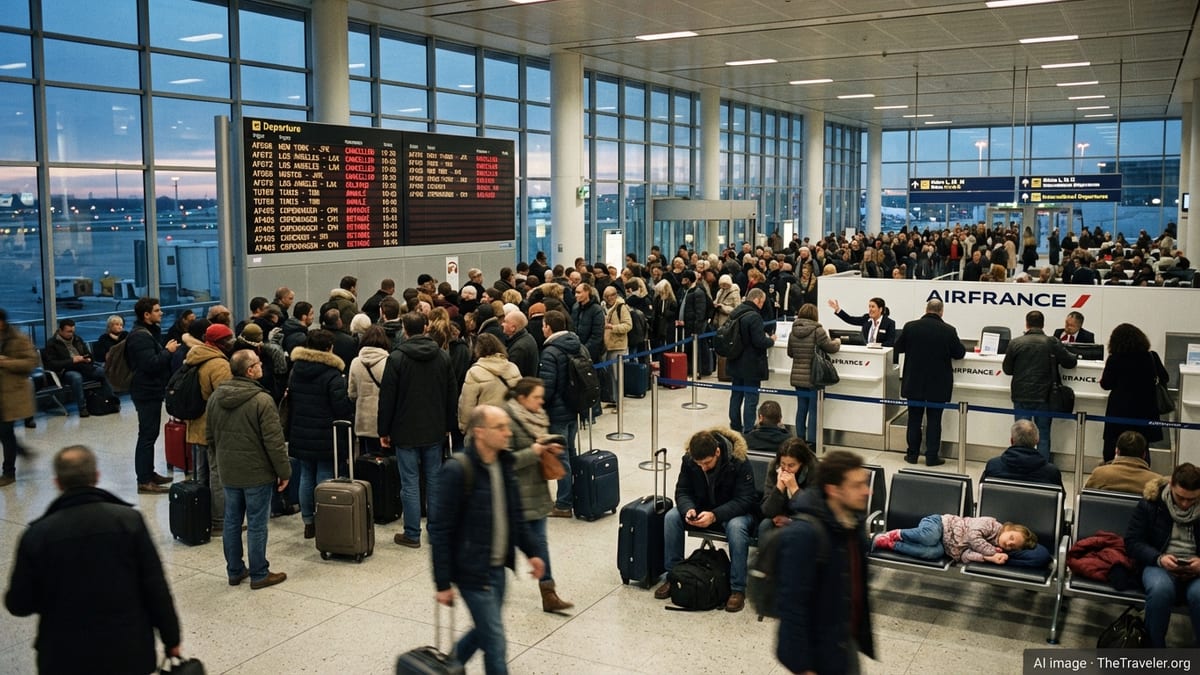
Escalating cost-of-living protests across France are beginning to affect major tourist hubs, with museum closures, temporary curfews and fresh U.S. security alerts prompting American travelers to reconsider or rework upcoming trips.
Get the latest news straight to your inbox!
Heightened Alerts But France Remains Level 2 for U.S. Travelers
Publicly available information from the U.S. government shows that France remains under a Level 2 advisory as of October 21, 2026, meaning Americans are urged to exercise increased caution rather than avoid travel outright. The advisory cites the ongoing risk of terrorism and the growing number of demonstrations, some of which have recently turned violent in urban centers.
A separate security alert issued by the U.S. Embassy in Paris in early October warned that protests were occurring across the country and could draw large crowds, after French officials reported more than 250,000 demonstrators nationwide on one weekday alone. The alert advised U.S. citizens to avoid demonstration areas, monitor local media and be prepared for sudden transport delays or detours.
Recent commentary from U.S. officials and media has focused on the potential impact of unrest on high-profile events that attract American visitors, including professional football games and major concerts in Paris. However, publicly available travel guidance continues to emphasize vigilance rather than cancellation, noting that most visits by U.S. citizens to France proceed without serious incident.
Security experts quoted in recent coverage note that France has a long, cyclical history of protest movements linked to social and economic grievances. Observers say the current wave is notable for the scale of participation and its timing during a key travel period, but not unprecedented in a country where marches and strikes are a regular feature of public life.
Closures at Louvre, Museums and Central Metro Stations
The most visible impact for tourists has been in Paris, where nationwide protest calls for Saturday, October 24 led the Louvre, the Musée d’Orsay and several other major museums to announce full-day closures. Reports indicate that protesters blocked access to the Louvre earlier in the week, while nearby metro stations along the Seine and around the Champs Élysées were temporarily shut at police request.
Travel industry outlets tracking the situation say that on the most intense protest days this month, up to a dozen metro lines have seen partial closures, with trains running through central stations without stopping. Key hubs such as Charles de Gaulle–Étoile, Bastille, République and Nation have been affected at various times, especially when march routes pass nearby.
In addition, Paris tourism officials have confirmed a nightly curfew in two central zones until at least October 26, with movement restricted between 11 p.m. and 6 a.m. in areas that saw earlier clashes. Several metro stations serving these neighborhoods are scheduled to close their entrances from 10 p.m. on selected dates, including stops close to the Eiffel Tower, Trocadéro and major riverfront attractions.
Outside the capital, media reports describe targeted disruptions in cities such as Lyon, Marseille and Toulouse, where marches have periodically blocked tramlines or key arterial roads. In Lyon, a fire at the city’s tourist office during an earlier protest weekend underscored the potential for localized damage near visitor areas, even while most attractions remained open.
Tourist Hubs Largely Open but Disruptions Hit Transit
Despite eye-catching footage circulating on social media, French tourism boards and city promotion offices continue to stress that the overwhelming majority of attractions are operating. Paris tourism authorities report that “major tourist sites remain open” and cultural programming is largely intact, though individual venues may close temporarily or adjust opening hours at short notice.
Recent travel advisories from independent European trip-planning services describe October 17 to November 5 as a period that calls for extra planning rather than cancellations. These briefings note that most museums, monuments and theme parks across France, including Disneyland Paris, are open as usual, but recommend building flexibility into itineraries and avoiding same-day long-distance train connections when major marches are announced.
Local transport operators have been issuing day-of updates on metro and tram closures, often confirming station shutdowns only a few hours before march start times. In practice, that has meant that travelers can usually move around Paris by rerouting via open stations or using buses and regional rail services, but journeys between central neighborhoods and the airports can take longer than normal.
For American visitors attending headline events such as top-tier soccer matches or the current series of American football games at Stade de France, recent rolling updates from fan communities and travel forums suggest that most fixtures have gone ahead as scheduled. Attendees have reported heavier security checks and occasional changes to recommended routes, but no large-scale cancellations directly tied to the protests.
What U.S. Travelers Are Being Urged To Do
The strengthened U.S. advisory for France urges visitors to maintain a high level of situational awareness, particularly in areas that frequently host demonstrations such as central Paris squares, major boulevards and key government districts. Travelers are encouraged to check the embassy’s security alerts page before heading out each day and to factor in additional transit time to and from train stations and airports.
Travel guidance compiled from consular notices and European transport agencies suggests several practical steps: avoid joining crowds to take photographs, move away from any sudden gathering or heavy police presence, and seek an alternative route if sirens or loudspeakers indicate a shift in protest locations. Tourists are advised to identify several routes between their accommodation and key transport hubs in case their usual metro station or bus stop is closed.
Independent travel advisories focused on the French protests recommend scheduling visits to high-profile landmarks for mornings on planned march days, when streets are typically quieter and closures less extensive. They also suggest reserving restaurant or show bookings away from known gathering points such as Place de la République, Place de la Bastille and the area around the National Assembly when large demonstrations are expected.
Publicly available risk assessments from corporate travel-security providers note that the current unrest is focused on domestic political and economic issues rather than tourists. Even so, they highlight a small but real risk of being caught up in clashes on the margins of marches or encountering opportunistic petty crime in crowded conditions, reinforcing calls for caution without discouraging travel altogether.
Planning Strategies for Upcoming Fall and Holiday Trips
For Americans with imminent departures, travel specialists interviewed across recent coverage are broadly advising against canceling trips solely because of the demonstrations, provided travelers are comfortable with a more fluid on-the-ground experience. Instead, they advocate close monitoring of developments during the 48 hours before arrival and throughout stays, with particular attention to local news and transit apps.
Practical recommendations circulating among experienced visitors include booking accommodations slightly away from traditional protest axes but still within walking distance of central sights, and favoring flexible tickets for intercity trains so that departure times can be shifted if marches coincide with travel days. Travelers are also urged to register their trip with the U.S. government’s online enrollment program so they can receive security updates by email.
Looking toward the late fall and early winter holiday period, analysts tracking France’s travel industry say that while booking inquiries have softened slightly in the days following the most intense images of unrest, there has not yet been a dramatic wave of cancellations. Group tour operators cited in trade publications report an uptick in questions from American clients about safety, but only limited changes to itineraries.
For now, public information from both French and U.S. sources indicates that France remains open to tourism, with protests introducing a layer of complexity rather than a full-scale halt. Americans planning to visit in the coming weeks are being urged to stay informed, allow extra time for movements around major cities and be prepared to tweak daily plans as demonstrations continue to unfold.