


More news on this day
Americans planning trips to parts of the Middle East are facing renewed pressure to rethink travel after reports indicated a ballistic missile attack attempt targeting Riyadh, a flashpoint that has reinforced U.S. guidance urging extra caution across the region’s major aviation and tourism corridors.
Get the latest news straight to your inbox!
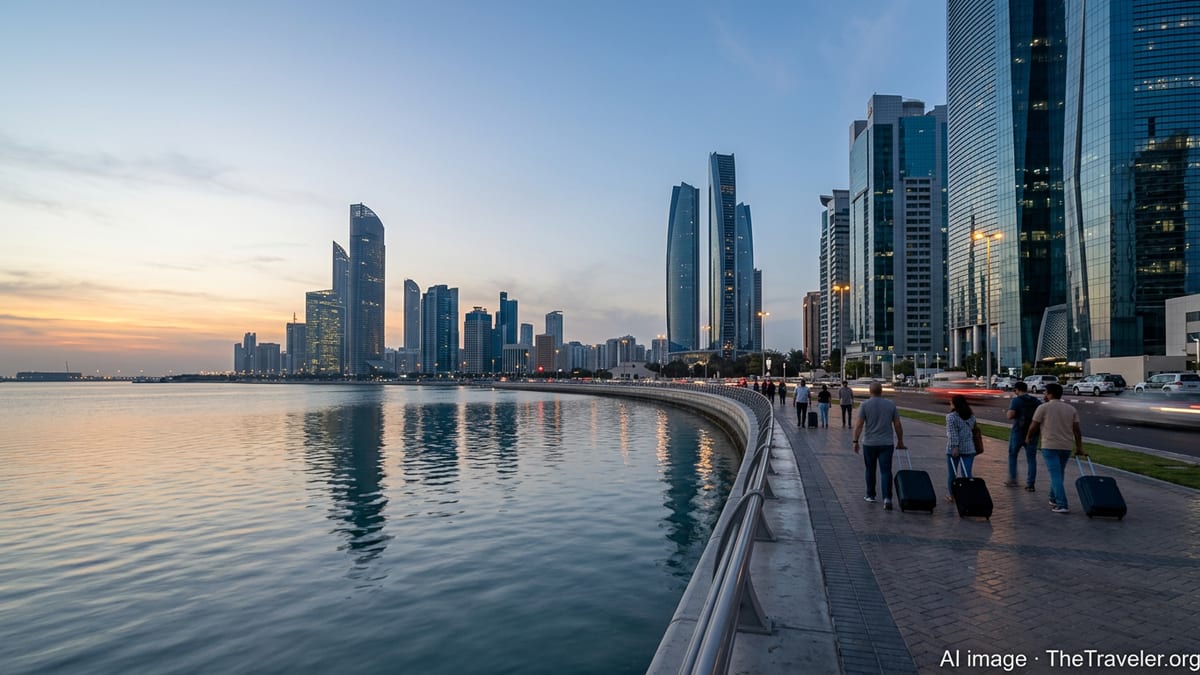
Missile incident revives focus on traveler risk in a region of iconic sites
Published coverage over the weekend described Saudi air defenses intercepting a ballistic missile launched toward Riyadh, an episode tied to the resurfacing of Houthi strikes during a broader period of regional tension. The incident drew attention not only because the target was the Saudi capital, but also because it underscores how quickly security conditions can shift around urban centers that serve as gateways to historic and cultural attractions.
Riyadh is not typically framed as a heritage tourism capital in the same way as Petra or Jerusalem’s Old City, but it is a major hub for international connections, business travel, and onward transit to archaeological sites and new tourism zones. When air-defense activity flares near a capital, the ripple effects for travelers can include sudden route changes, heightened screening, and short-notice adjustments to flight schedules.
Separately, the broader historic landscape of the region remains part of the story. UNESCO has repeatedly highlighted risks to cultural heritage in conflict zones nearby, including the Old City of Sana’a in Yemen, illustrating how instability can threaten both travelers and irreplaceable sites, even when tourists are not present on the ground.
U.S. travel advisories: Saudi Arabia remains Level 3 as threat warnings expand
The U.S. State Department’s current Travel Advisory for Saudi Arabia is Level 3, meaning Americans are advised to reconsider travel. The advisory cites risks that include terrorism and the potential for Iranian drone and missile targeting of American interests, alongside other concerns such as armed conflict and legal restrictions that can affect travelers.
The Saudi Arabia advisory dated September 15, 2026, includes a specific “Do Not Travel” note for areas near the Yemen border due to the threat of terrorism. For many travelers, that geography matters: it can shape overland itineraries, domestic flight planning, and the feasibility of side trips that might otherwise seem routine on a map.
Beyond individual country advisories, the State Department also maintains broader global-event guidance. A “Worldwide Caution” notice updated July 22, 2026, advises Americans outside the Middle East to reconsider travel to and through the region and highlights the need to monitor airport and airline operations because disruptions can occur with little warning.
Neighboring hubs also flagged: Oman and the UAE listed as Level 3
For travelers using Gulf hubs as connecting points, U.S. guidance is not limited to Saudi Arabia. Oman’s Travel Advisory was updated to Level 3 on August 30, 2026, citing armed conflict and terrorism risks, including an ongoing threat of drone and missile attacks from Iran following hostilities that began on February 28, 2026.
The United Arab Emirates also sits at Level 3 in a Travel Advisory dated August 29, 2026. The advisory notes terrorism and armed conflict concerns and references the same period of elevated regional tension, including disruptions to commercial flights. For travelers, this matters because the UAE, especially Dubai and Abu Dhabi, is among the most common transit routes between the United States, Europe, Asia, and Africa.
These advisories do not mean every trip will be disrupted. They do, however, indicate that U.S. government travel guidance views the risk environment as elevated across multiple neighboring destinations, making it harder for travelers to “route around” uncertainty simply by choosing a nearby airport.
What changes for travelers: flights, routing, and operational surprises
Even when airports remain open and flights continue, shifting security conditions can change the travel experience in tangible ways. Published coverage has linked the current warning environment to a pattern of periodic disruptions to commercial flights, including the possibility of last-minute re-routing around airspace risk areas, longer flight times, and schedule volatility.
The State Department’s UAE advisory explicitly points travelers to aviation-related notices, referencing FAA advisories such as Notices to Air Missions (NOTAMs) or Special Federal Aviation Regulations (SFARs). Those instruments can influence how airlines plan routes and how quickly itineraries can change for passengers, especially on long-haul transits that cross multiple airspace boundaries.
For Americans planning multi-country trips that rely on tight connections, the practical implication is to build more buffer time and to avoid itineraries that fail if one leg shifts by several hours. Travelers may also want to be prepared for temporary limitations on excursions, especially if local conditions prompt additional security measures around public venues.
How to plan responsibly: monitoring alerts and reducing exposure
For travelers who decide to proceed despite heightened advisories, the State Department’s global terrorism guidance emphasizes situational awareness in crowded venues and the value of receiving official updates. Public information also encourages Americans to enroll in the Smart Traveler Enrollment Program (STEP), which can deliver security alerts and updates relevant to their destination.
Because risk can vary sharply within a single country, travelers should review the full Travel Advisory text for their specific destination, not just the headline level. That includes any notes about areas to avoid, restrictions that can affect movement, and factors such as local laws that may expose visitors to serious legal consequences for conduct that would be minor or protected at home.
For travelers focused on the region’s historic and religious sites, the current warning environment is a reminder that heritage travel can intersect with geopolitics. The most resilient approach is a flexible plan: refundable lodging where possible, travel insurance that matches the risk profile of the itinerary, and a readiness to postpone if alerts indicate a deteriorating situation.