


More news on this day
Americans planning trips to Israel and the Palestinian territories are facing renewed warnings to rethink travel after missile incidents again rattled Jerusalem’s Old City, highlighting how quickly security conditions and transportation options can change in the region.
Get the latest news straight to your inbox!
What the latest U.S. warning means for travelers
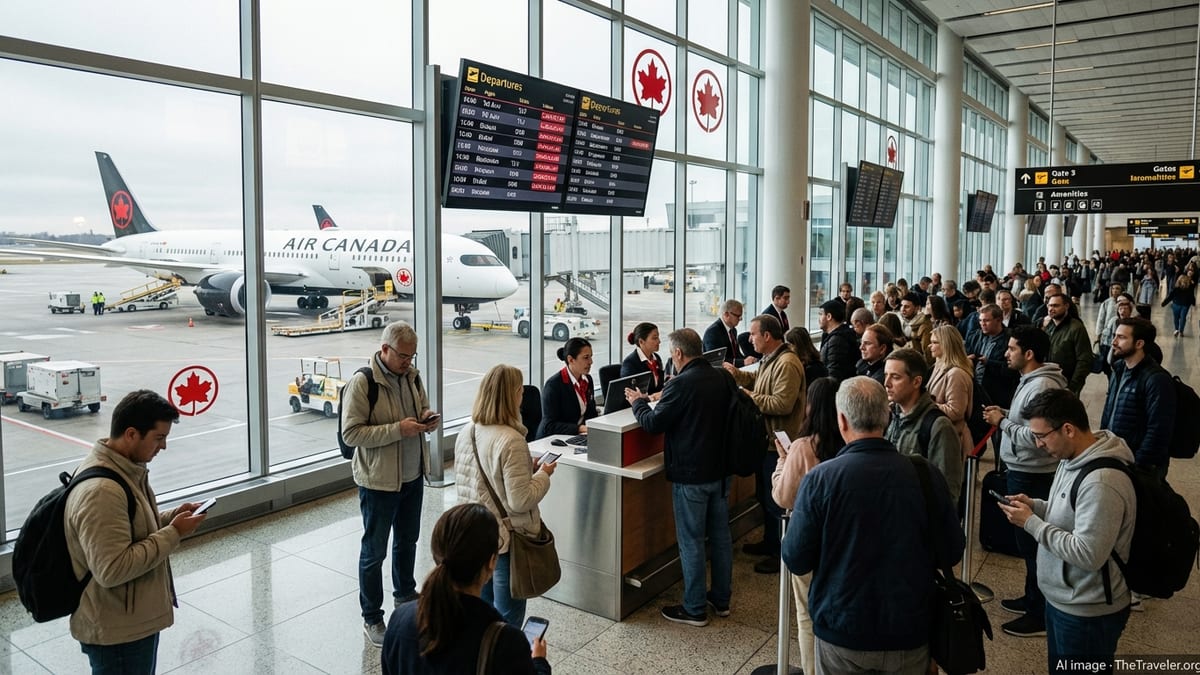
Publicly available U.S. guidance has emphasized that the security environment tied to Middle East tensions can shift with little warning, including disruptions to airport and airline operations. A State Department “Worldwide Caution” notice last updated July 22, 2026 specifically advises Americans outside the Middle East to reconsider travel to and through the region, and advises those who do travel to monitor airport and airline operations.
For Israel, the West Bank, and Gaza, the State Department’s travel advisories continue to flag elevated risks tied to unrest and terrorism. As of August 26, 2026, Israel is listed at Level 3 “Reconsider travel,” and the West Bank is also at Level 3 “Reconsider travel.” The advisory framework notes that conditions can change at any time and that Level 3 destinations are reviewed at least every six months, but updates can occur sooner if conditions change substantially.
Travelers may see overlapping or reinforcing messages across official channels. State Department pages for global events also direct Americans in the Middle East to enroll in STEP for security updates and provide the department’s contact numbers for those seeking consular information or assistance.
Why Jerusalem’s Old City is again in the spotlight
International coverage earlier in 2026 documented missile-related incidents affecting Jerusalem’s walled Old City, one of the world’s most sensitive historic and religious areas. Reuters reporting in March 2026 described missile shrapnel and interceptor debris falling around the Old City and in proximity to major holy sites, underscoring the risk that even intercepted attacks can create hazards on the ground.
Associated Press coverage during the same period described shrapnel striking rooftops near key Christian landmarks in the Old City, illustrating how quickly tourist corridors can become impacted even when the primary target is elsewhere. The Old City’s dense layout and constant visitor flow can compound the disruption, from temporary closures to heightened security postures in and around gates, markets, and religious sites.
For American visitors, the travel implications go beyond headline risk. An incident that triggers sirens or shelter instructions can also lead to road closures, access restrictions, and interruptions to tours that depend on tightly timed entry windows at religious sites.
Flight and airport disruption is a core practical risk
For many travelers, the most immediate concern is not only on-the-ground safety, but the possibility of abrupt schedule changes. The State Department’s Worldwide Caution language explicitly calls out the need to monitor airport and airline operations when traveling to or from the region.
In Israel, travelers also contend with predictable schedule pauses and operational changes around major holidays. Israel Airports Authority notices have outlined stepped reductions and resumptions of aviation activity around Yom Kippur, including published cutoffs for last departures from Ben Gurion Airport terminals on Sunday, September 20, 2026.
Travelers should also account for the reality that periodic airspace restrictions can happen with little notice during escalations. UK government travel advice for Israel has warned of possible disruption at Ben Gurion Airport and highlighted the risk of shrapnel from intercepted missiles falling across Israel and the Palestinian territories, a detail that reinforces why flight operations can become unpredictable even when airports remain open.
What to do if you already have a trip booked
U.S. guidance emphasizes preparation that does not depend on government assistance. That includes maintaining awareness, avoiding demonstrations and crowds, and having a plan to leave in an emergency that does not rely on U.S. government help. For the West Bank, U.S. advisory language also notes that additional movement restrictions may be imposed with little to no notice.
Travelers who proceed should consider practical safety steps commonly referenced in official advisories for the area, including knowing the location of the nearest hardened shelter and using local alert tools. The State Department’s West Bank advisory specifically mentions downloading the Home Front Command Red Alert application or similar apps to receive real-time alerts for rocket and missile attacks and armed UAV intrusions (availability can depend on the device and location).
Logistics planning matters as much as security planning. Reconfirm flights directly with carriers shortly before departure, build extra buffer time into connections, and consider flexible lodging and ground transport plans in case access routes or checkpoints change. Because airline policies and waivers can change quickly, travelers should review the terms attached to their specific ticket and insurance coverage rather than assume broad, region-wide flexibility.