


Standing on the deck of a snorkel boat off Maui, the last thing you want to realize is that your mask leaks, your sunscreen is not reef friendly, or your phone is in a wet backpack. A little packing discipline before you leave home can turn an average day on the water into one of your favorite travel memories. This guide walks you through a practical snorkel gear packing list, with real examples and boat-tour specific tips so you can hit the water prepared rather than scrambling on the dock.
Get the latest updates straight to your inbox!
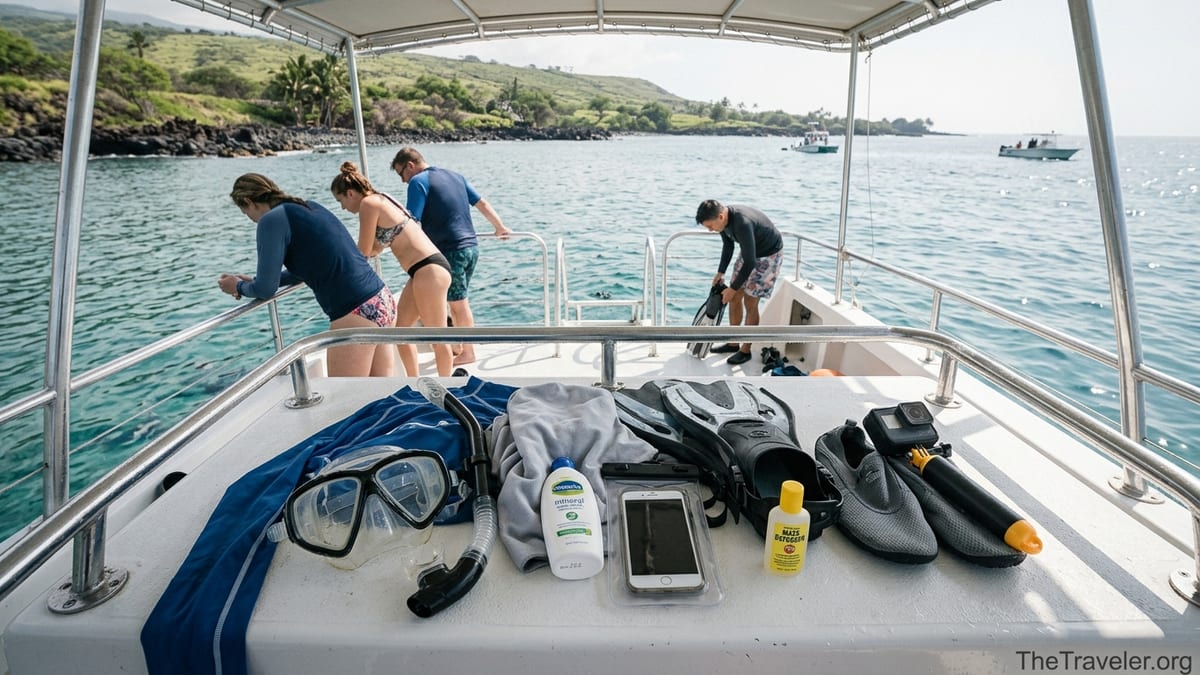
Choosing a Snorkel Mask That Actually Fits
Your mask is the single most important piece of snorkel gear. A good one seals comfortably on your face, does not fog constantly, and packs easily in a carry-on. Travel-tested models like the Cressi F1 or Scubapro Solo are popular because they use soft silicone skirts and a single tempered-glass lens, which helps them fold almost flat in a suitcase while still offering clear underwater views.
When you shop, look for a skirt made from silicone rather than PVC, and check that the lens is labeled “tempered glass.” To test fit at home, lightly press the mask to your face without using the strap and inhale through your nose. If it stays in place for a few seconds without you holding it, you are close to a good fit. Travelers with smaller faces often do better with “junior” or “medium fit” masks, while broad faces may require wide-frame designs from brands like TUSA or Mares.
If you wear glasses, you have a few options. Some mask brands sell corrective lenses you can swap in, which is worth considering for repeat snorkel trips. For an occasional vacation, many travelers simply wear contact lenses under a standard mask. Full-face masks are heavily marketed, but tour operators in places like Hawaii and the Caribbean increasingly discourage them for beginners because of concerns about improper use and difficulty clearing water. A simple, low-volume mask and separate snorkel remains the most versatile and travel-friendly setup.
Price-wise, a reliable adult mask from a mainstream brand generally starts around 30 to 60 US dollars. It can be tempting to grab a cheaper set at a big-box store near the beach, but these often use stiffer plastic skirts that are harder to seal and more likely to leak. Investing in a decent mask before you travel usually pays off the first time you drop into clear water and can relax instead of adjusting your gear every few minutes.
Snorkels, Fins, and Rash Guards: Core Comfort Items
A basic J-shaped snorkel is still the simplest and often the best choice for travel. Many snorkelers like a semi-dry snorkel, which has a splash guard at the top to reduce water entering when waves hit. Dry-top models go further and attempt to seal completely when submerged; these can be helpful for choppier boat trips, but they add bulk and sometimes feel harder to breathe through. For most calm, guided tours, a soft silicone mouthpiece and a purge valve at the bottom to help clear water are the features that matter most.
Fins are where packing gets tricky. Full-length fins provide powerful kicks and are ideal if you frequently snorkel or mix in some light freediving. However, they can take up half a suitcase. Travel fins like the Cressi Palau or Seavenger Torpedo are designed with shorter blades and often come with a compact mesh bag. Many travelers find these more practical, especially in destinations where you are mainly finning gently over shallow reefs rather than fighting strong currents.
When you are choosing between open-heel and full-foot fins, think about how you will use them. Open-heel fins worn with neoprene booties are great if you expect rocky shore entries, such as parts of Bonaire or the Big Island of Hawaii. Full-foot fins are lighter and simpler for classic boat tours where you step off the swim platform and back on again. Whichever style you choose, try them on with the socks or booties you plan to wear and walk a bit around your home; fins that rub in the living room will definitely rub after an hour in salt water.
For sun and skin protection, a long-sleeve rash guard or lightweight swim shirt is worth its space in your bag. In tropical destinations like Mexico’s Riviera Maya or the Maldives, mid-day UV can be intense even on cloudy days. Many travelers bring a 1 or 2 millimeter neoprene top if they get cold easily, while others prefer thin UPF 50+ surf shirts from brands like O’Neill or Patagonia. Unlike sunscreen, clothing protection does not wash off in the water, so a rash guard is one of the most reef-friendly sun solutions you can pack.
Reef-safe Sunscreen, Towels, and Basic Protection
Alongside clothing, sunscreen is still essential for any exposed skin. Several popular snorkeling destinations, including Hawaii and island nations in the Pacific and Caribbean, restrict the sale of sunscreens containing certain chemical filters like oxybenzone and octinoxate because of concerns about coral reef health. In practice, this means that what you usually buy at a drugstore at home might not be ideal or available in island shops.
To keep things simple, many travelers choose mineral-based formulas that use zinc oxide, titanium dioxide, or a combination, often labeled as “mineral” or “reef-conscious.” Well-known options you may see on snorkel boat decks include thick zinc sticks for noses and cheeks, and lotion-style mineral sunscreens in the SPF 30 to 50 range. These can feel heavier than traditional beach lotions, so it is smart to test a product once at home before committing to it for a long trip.
Apply sunscreen at least 15 to 20 minutes before you hit the water and pay attention to reapplication times listed on the bottle, often 80 minutes for water-resistant formulas. A wide-brimmed hat and polarized sunglasses are good companions on the boat ride, not only for sun but also for spotting reefs and turtles from the deck. Lip balm with SPF is another small item that makes a disproportionate difference after a full day in salty wind.
As for towels, many boat tours in places like Key West or Phuket provide basic cotton or microfiber towels, but not all do. Check your tour confirmation email carefully. A fast-drying travel towel, roughly the size of a standard bath towel, can fit easily into a daypack and is useful beyond snorkeling days. Microfiber towels from outdoor brands fold down to the size of a paperback book and dry quickly on a cabin rail or balcony.
Water Shoes, Defogger, and Keeping Your Vision Clear
Water shoes are one of those items you may barely use on a pure boat tour, yet they are invaluable if you plan any shore entries. In places like the Florida Keys, the Big Island’s tide pools, or rocky coves in the Mediterranean, entering the water from a beach can mean walking over sharp coral rubble or slippery lava rock. Lightweight water shoes or thin-soled reef booties give enough grip and protection while still allowing you to slip on full-foot fins if needed.
When you book a dedicated snorkel cruise, the crew will usually ask you to take water shoes off once you are on the vessel, especially if they have a smooth fiberglass deck. The shoes come back into play for beach landings on sandbars or uninhabited islands, common on tours in places like Belize’s cayes or Thailand’s Phang Nga Bay. Look for soles that do not leave black marks and uppers that drain quickly, so you are not sitting for an hour in soggy footwear on the ride back.
Good visibility starts with a clean mask, and that is where defogger comes in. Some travelers swear by dedicated anti-fog drops or gels, often sold in small bottles that easily pass through airport security. Brands marketed for diving and swimming typically require just a drop or two rubbed inside the lens and rinsed lightly before you gear up. If you forget defogger, many boats provide a communal spray bottle, but having your own guarantees you are not waiting in line when everyone else is already in the water.
Whether you use commercial defogger or a simple diluted baby shampoo mixture in a travel bottle, make defogging part of your pre-snorkel routine. Apply it before you first enter the water, and again if you return to the boat for a break. Avoid touching the inside of the lens during the trip, because fingerprints and sunscreen residue are some of the fastest ways to ruin your view of a reef.
Waterproof Pouches, GoPro Mounts, and Small Tech Extras
Modern snorkel packing lists almost always include some way to protect a phone and valuables. A basic waterproof phone pouch with a clear front and back lets you bring your phone on the boat for photos during the ride while keeping it safe from spray. On many day trips out of Cancun, Maui, or the Greek islands, tour companies strongly recommend not leaving your wallet or passport in a rented car, so having a pouch or small dry bag that can live under your seat is practical security.
For dedicated photography in the water, action cameras like a GoPro or similar devices are significantly more reliable than a phone in a pouch. If you bring one, think through how you want to mount it. A simple wrist strap or hand grip is often better for relaxed snorkeling than a head strap, which can interfere with your mask strap and feel awkward. Floaty backdoor attachments are inexpensive and can save your camera if you accidentally let go in deep water.
Always pack extra memory card space and at least one full battery. Many snorkel boats run morning and afternoon trips back-to-back, meaning there may be nowhere to charge your camera between sessions. A small mesh bag helps keep your tech gear, defogger, and other small items together in your daypack so you are not rummaging around under the bench while everyone else is listening to the safety briefing.
If you plan to edit or share footage each evening, consider how you will back up images. Travelers often use a lightweight tablet or a phone with ample storage and transfer clips via Wi-Fi or cable in their hotel room. While it is not essential, this habit protects your memories if a card ever gets lost or damaged before you fly home.
Boat-Tour Specific Extras That Make a Big Difference
Boat-based snorkel tours have their own rhythm and constraints that influence what you should pack. Space is limited, decks get wet, and you may be sharing the boat with a few dozen other travelers. A compact, soft-sided daypack or dry backpack is usually all the personal storage space you will have. Inside it, pack essentials that can survive getting damp, and keep anything truly critical, like a passport, back at your hotel safe if possible.
Hydration matters more than many people expect. Sun, salt, and excitement can add up quickly, especially on tropical crossings. Many operators in places like Hawaii, the Bahamas, and Australia’s Great Barrier Reef provide water coolers and reusable cups rather than single-use plastic bottles. Bringing your own insulated bottle means you can fill it early and have cold water on demand. If you know you are prone to seasickness, talk to your doctor in advance about appropriate medication and follow the timing instructions carefully so it has time to take effect before the boat leaves the harbor.
On the comfort side, a lightweight cover-up or quick-drying shirt is great for the ride between snorkel sites. Wind on wet skin can make you chilly even in the tropics, especially after your second or third dip. A small, soft-sided snack like a granola bar or crackers can be useful if the tour schedule does not align with your usual meal times, although some charters serve lunch or fruit on board. Read your confirmation details ahead of time so you know whether you should eat a solid breakfast or if food is included.
Finally, think through labeling and packing your personal gear. On busy boats departing from places like Cancun or Cairns, standard rental fins and masks can look identical. If you bring your own, a small strip of colored tape or a distinctive gear bag makes them easy to spot in the jumble under the benches. Keep small valuables in a zipped inner pocket of your bag, and slide the whole bag under or behind your seat to reduce trip hazards on deck.
How to Pack Snorkel Gear in a Carry-on or Checked Bag
Fitting snorkel gear into limited luggage space comes down to planning and a few simple packing tricks. Start by deciding whether you will pack fins at all. For many travelers flying to resort areas like Oahu, Curacao, or Cozumel where rental fins are widely available, bringing only a mask, snorkel, and rash guard is a reasonable compromise. A mask and snorkel fit easily into a padded case or even wrapped in a T-shirt inside your carry-on.
If you prefer your own fins, put them in your checked luggage and use the space inside the fin pockets for smaller, soft items such as socks, rash guards, or a rolled-up towel. This not only saves space but also helps protect the fin foot pockets from being crushed. Place your mask in the center of the suitcase, surrounded by clothing for cushioning, and avoid packing heavy items like shoes directly on top of it.
Travel-sized liquids like defogger, baby shampoo, or sunscreen must follow your airline’s rules if you carry them on. Many snorkel-focused products are sold in 1 to 3 ounce bottles, which fit easily into a quart-size clear bag. Larger sunscreen bottles are usually fine in checked bags. Remember that tropical destinations sometimes have more limited product selection or higher prices for specialty items like mineral sunscreen or anti-fog, so if you rely on a particular brand, it is safer to pack it from home.
When you return from a snorkel day and you are packing to move to your next destination, rinse saltwater gear thoroughly in fresh water and let it dry overnight if possible. Rolling a damp rash guard or mask strap into your main suitcase can create unpleasant odors and mildew over the course of a trip. Many hotels in beach destinations provide small balconies, railings, or even dedicated drying racks just for this reason.
The Takeaway
A thoughtful snorkel gear packing list balances comfort, safety, reef awareness, and the realities of airline baggage rules. At minimum, bringing a well-fitted mask, a comfortable snorkel, a rash guard or swim shirt, and reef-conscious sunscreen can transform a basic tour into a relaxed, enjoyable day. Adding compact fins, water shoes for rocky entries, a small bottle of defogger, and a waterproof pouch for your phone and wallet rounds out a kit that works in most warm-water destinations.
Beyond the core gear, the small details often matter most: labeling your equipment so it does not disappear into the rental pile, planning for hydration and sun exposure on long boat rides, and packing tech extras like a secure GoPro mount so you can focus on the experience instead of worrying about losing your camera. With a bit of preparation before you leave home, you can step onto the dock confident that everything you need for a memorable snorkel day is already in your bag.
FAQ
Q1. Do I really need to bring my own mask, or are rental masks fine?
Rental masks are adequate for occasional snorkelers, but fit and cleanliness vary. If you plan more than a couple of snorkel days or have a smaller or larger than average face, bringing your own well-fitted mask greatly improves comfort and reduces leaks.
Q2. Are short travel fins good enough for open-ocean boat tours?
Yes, short travel fins work well for most guided boat tours in calm to moderate conditions. They are designed to strike a balance between packability and propulsion. If you expect strong currents or plan independent snorkeling far from a boat, longer fins provide more power.
Q3. What counts as reef-safe sunscreen when I pack for places like Hawaii?
Regulations focus on restricting certain chemical filters such as oxybenzone and octinoxate. Many visitors choose mineral formulas with zinc oxide or titanium dioxide and pair them with rash guards and hats to minimize how much sunscreen they wash into the water.
Q4. Can I wear water shoes with my fins?
With open-heel fins, you typically wear neoprene booties or thin-soled water shoes for comfort and protection. With full-foot fins, you usually go barefoot or use thin socks. Always test the combination at home to make sure the shoes do not make the fins too tight.
Q5. Is commercial defogger better than home remedies?
Dedicated anti-fog drops or gels are reliable and convenient, especially in small travel bottles. Mild, diluted baby shampoo can also work if used sparingly. Avoid harsh soaps or anything that might irritate your eyes.
Q6. Should I bring a full-face snorkel mask?
Full-face masks are comfortable for some snorkelers, but they are bulkier to pack and some operators discourage them for beginners. Many travelers prefer a traditional mask and separate snorkel because they are easier to clear and fit into luggage.
Q7. Do most snorkel boats provide towels and reef-safe sunscreen?
Some higher-end tours provide both, while budget or shorter excursions often do not. Always read your booking confirmation and pack at least a lightweight travel towel and your preferred sunscreen so you are not dependent on what the boat stocks.
Q8. Can I bring my phone in a waterproof pouch into the water?
Many people do, but it is not risk-free. Even good pouches can fail, and touchscreens are harder to use underwater. For frequent snorkeling or deeper water, an action camera with a proper housing is more dependable, while the pouch mainly protects your phone from splashes on the boat.
Q9. How do I avoid getting cold during multiple snorkel stops?
Wear a long-sleeve rash guard or thin neoprene top, and bring a dry cover-up or T-shirt for boat rides between sites. Even in warm destinations, repeated entries can make you chilly, especially when wind hits wet skin.
Q10. Is it better to pack snorkel gear in carry-on or checked luggage?
Masks, snorkels, and small items usually ride safely in carry-on bags, while fins and larger liquids go in checked luggage. The best approach is often a mix: keep critical, custom-fit gear with you and place bulky, easily replaced items in your checked suitcase.