


More news on this day
A new generation of Amtrak trains is on track to reshape short-distance rail travel from the Pacific Northwest to the Mid-Atlantic, as the carrier’s Airo fleet begins rolling out from 2026 with higher speeds, modern interiors and streamlined boarding aimed at riders in key hubs such as Portland and across Virginia.
Get the latest news straight to your inbox!
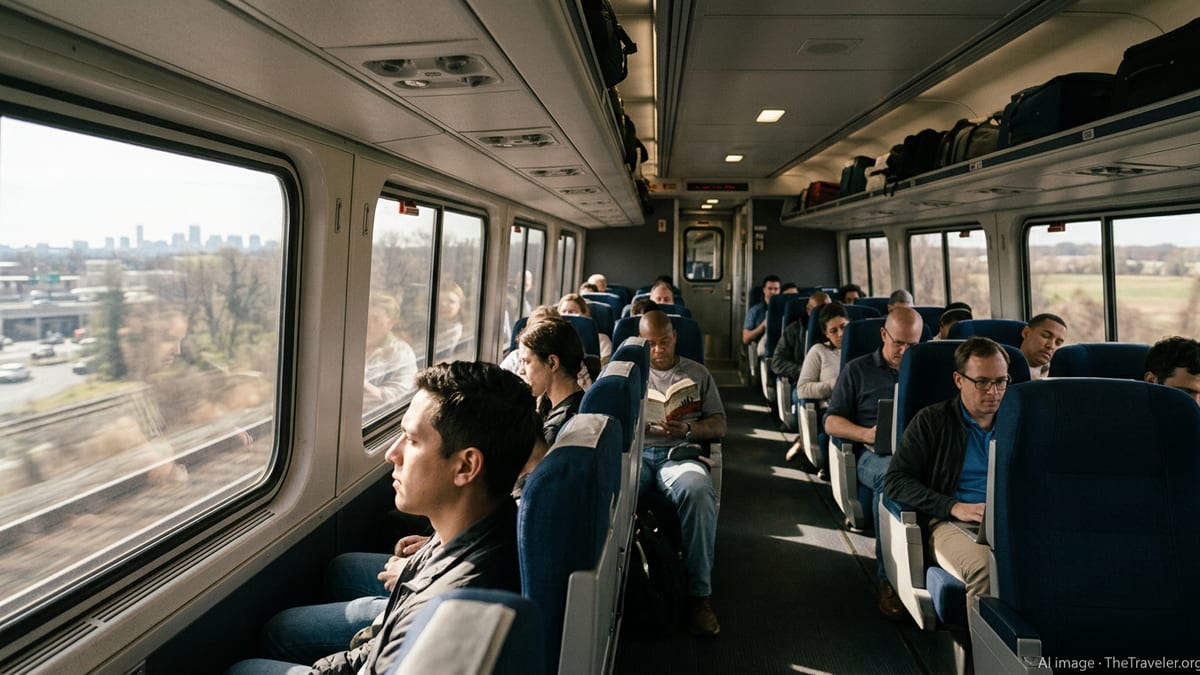
New 125 MPH Fleet Targets Portland and Virginia Corridors
Publicly available information from Amtrak and recent industry coverage shows that the Airo program will introduce 83 new trainsets across several state-supported and Northeast Corridor routes, with first entries into service planned in 2026. The Cascades corridor serving Portland, Oregon, is slated to be among the earliest beneficiaries, while Amtrak Virginia services, which operate under the Northeast Regional brand, are part of the broader rollout in the following years.
The Airo trainsets are built around Siemens ALC 42E technology, designed for maximum operating speeds of up to 125 miles per hour where infrastructure allows. While actual schedules will still depend on track conditions and signaling, this capability positions the new fleet to shorten travel times over today’s diesel powered equipment, particularly on segments of upgraded corridor track in the Pacific Northwest and along portions of the Northeast Corridor serving Virginia.
According to Amtrak fleet planning documents and recent news reports, the Cascades route linking Portland with Seattle, Vancouver in British Columbia and Eugene is expected to see the first Airo sets in revenue service. On the East Coast, Virginia supported trains that extend Northeast Regional service to cities such as Richmond, Norfolk, Newport News and Roanoke are in line to transition from aging Amfleet cars to the new semi permanent Airo consists later in the decade.
For travelers in Portland and Virginia, the change is significant because many of these corridor services function as daily work and leisure lifelines rather than occasional long distance trips. Higher speeds, improved reliability and smoother transitions across electrified and non electrified territory are being framed by analysts as central to keeping rail competitive with driving and short haul flights.
Modern Interiors Designed Around the Connected Traveler
Renderings and early previews of the Airo interiors highlight a noticeable departure from the tubular, airline style Amfleet cars that have dominated Amtrak’s short distance routes since the 1970s. The new trainsets feature larger windows, brighter LED lighting and a more open visual layout aimed at making shorter journeys feel less confined, particularly on heavily used day trains into Portland and Northern Virginia hubs.
Seating across coach and business class is being reconfigured with contemporary fabrics, integrated headrests and more ergonomic spacing, with reports indicating a focus on aligning comfort levels more closely with modern regional European and Asian trains. Each seat is expected to offer individual power outlets and USB ports, along with folding trays sized to handle laptops and tablets, reflecting the needs of remote workers and students who make up a growing share of corridor ridership.
Onboard amenities are also being refreshed. Café cars will continue to anchor food and beverage service but with equipment and layouts designed for faster throughput and more efficient queuing, a change that could be particularly welcome on busy Friday and Sunday trains in and out of Portland and Richmond. Digital signage inside the coaches is planned to provide real time information about upcoming stops, connections and service updates, replacing static placards with dynamic displays.
Accessibility is another pillar of the redesign. Public descriptions of the Airo fleet emphasize wider aisles in designated areas, improved wheelchair spaces and accessible restrooms that meet or exceed current federal accessibility standards. For travelers boarding at smaller stations in Virginia or intermediate stops south of Portland, this is expected to translate into more seamless movement through the train once on board.
Faster, Smoother Boarding for Crowded Corridor Stations
Alongside the technical upgrades, Amtrak and partner agencies have focused the Airo program on rethinking how passengers get on and off the train, a key pain point at popular stations. The new trainsets are being built with consistent door locations and more level boarding interfaces where platforms allow, which is expected to simplify station dwell times and reduce the stop and start surges that can delay tightly scheduled corridor services.
In the Pacific Northwest, where stations such as Portland Union Station and Seattle’s King Street Station already handle substantial volumes of Cascades and long distance passengers, the emphasis on clearer door layouts and wider vestibules is intended to ease pinch points during peak departures. In Virginia, corridor hubs like Richmond’s Main Street and Staples Mill Road stations are likely to see similar benefits as trains transition from legacy equipment to standardized Airo sets.
Boarding improvements extend beyond the physical doors. Reports indicate that Airo trainsets will integrate more seamlessly with Amtrak’s mobile ticketing and reservation systems, allowing conductors and service attendants to verify tickets and manage seat assignments through updated handheld devices. For riders, especially those connecting from regional buses or commuter trains, this could help cut down on confusion over car locations and reduce time spent queuing on narrow platforms.
Industry observers note that even modest reductions in station dwell times can compound into more reliable timetables on busy corridors. On routes serving Portland and Virginia, which share track with freight and commuter operations, the combination of faster acceleration from modern power units and more efficient boarding practices is viewed as an important step toward recovering from small disruptions and maintaining turn around schedules.
Tech Upgrades Target Reliability, Sustainability and Flexibility
Beneath the sleek exteriors, the Airo fleet incorporates a mix of overhead electric and diesel power that aims to address one of the longstanding challenges of the U.S. rail network. Many routes, including services into Virginia, run partly over electrified Northeast Corridor infrastructure and partly over non electrified track farther south or west. The ALC 42E locomotives paired with specialized power cars are intended to switch between power sources without the lengthy locomotive changes that have historically taken place at major junctions.
For riders, this behind the scenes flexibility is expected to remove some of the long station pauses associated with power changes and to make schedule planning more predictable. For the network, it also reduces the need to maintain separate fleets of single mode electric and diesel locomotives, concentrating maintenance expertise on a newer, more standardized platform.
Environmental performance is another focus. Published materials on the Airo program emphasize Tier 4 compliant diesel engines, more efficient energy management and regenerative capabilities when operating under electric power. Analysts say that when fully deployed on corridors such as Cascades and the Virginia supported Northeast Regional extensions, the trains could help cut per passenger emissions compared with both older rolling stock and competing car travel.
Onboard technology upgrades also reach into the passenger experience in more subtle ways. Networked systems are expected to support more stable Wi Fi connectivity, improved cellular signal repeaters and better integration with real time arrival information on the Amtrak app. For frequent travelers shuttling between Portland and Seattle or commuting from Virginia cities into Washington, these changes may prove as important as the headline speed improvements.
What the 2026 Rollout Means for Regional Travelers
Timelines compiled from Amtrak planning documents and recent reporting suggest that 2026 will be a pivotal year rather than a single launch moment. The first Airo sets are projected to enter service on the Cascades corridor that year, with additional trains coming online through the late 2020s across the Northeast Regional network, including Virginia services, and on other state supported routes.
In the near term, travelers in Portland and Virginia may notice a gradual mix of old and new equipment as Amfleet coaches and older locomotives cycle out of service. Rail advocates point out that this transition phase will be critical, as operators test the new trainsets in regular service, refine boarding procedures and adjust schedules to take advantage of the Airo fleet’s performance envelope.
Looking slightly further ahead, the expectation in public planning documents is that Airo trainsets will become the dominant equipment on many short distance routes that now rely on a patchwork of older cars. For frequent riders, this points toward a more consistent onboard experience whether the trip is a morning commute from Norfolk to Washington, an evening departure from Portland to Seattle, or a longer regional journey connecting Virginia with New England.
Although the ultimate impact will depend on parallel investments in track, stations and signaling, the 2026 debut of Amtrak Airo on routes touching Portland and Virginia is widely being viewed as a visible symbol of a broader rail modernization push. For passengers, the practical takeaway is straightforward: faster trains, more comfortable interiors, smoother boarding and a technology package that better matches how people travel in 2026 and beyond.