


More news on this day
A stretch of Britain’s rail network from the soon to open Cambridge South station to London Blackfriars is emerging as a powerful testbed for how green energy and biodiversity can be woven into the everyday fabric of commuter travel in 2026.
Get the latest news straight to your inbox!
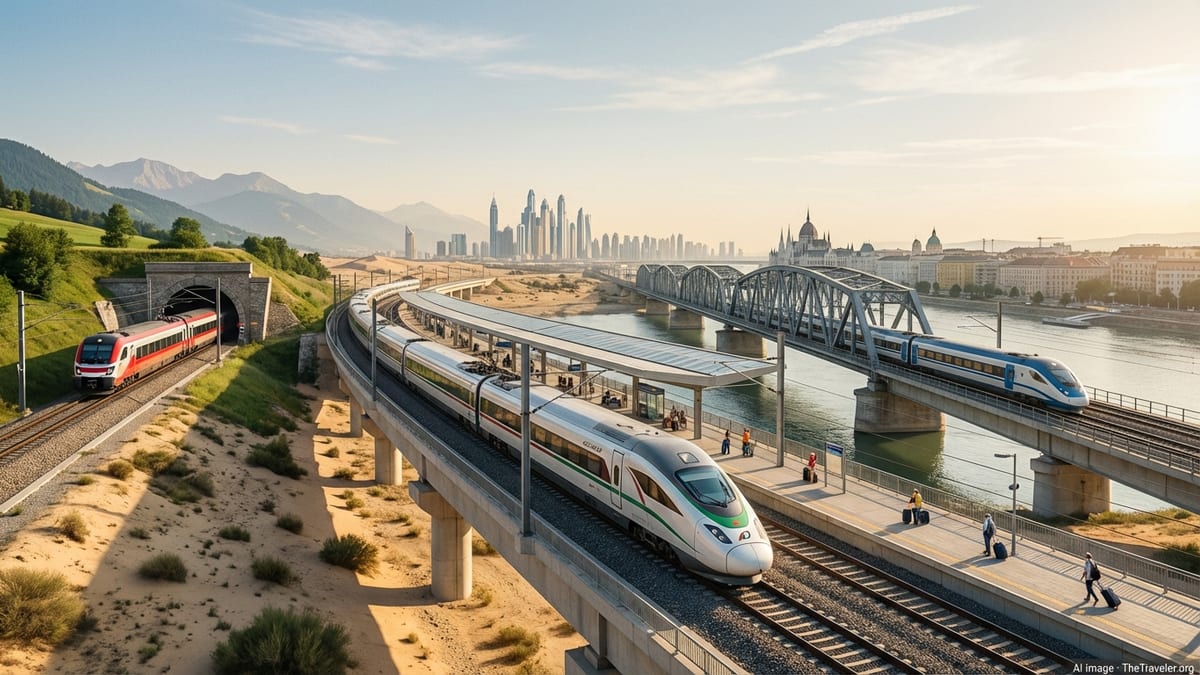
Cambridge South Prepares to Open as a Low-Carbon Gateway
Cambridge South, located beside the Cambridge Biomedical Campus and major research institutions, is expected to open to passengers in June 2026, creating a new southern gateway into the city. Publicly available information indicates that Network Rail anticipates all trains currently passing the site on the main line between Cambridge and London to call at the station once it is operational, significantly increasing public transport options for the rapidly growing science and technology district.
The station has been framed within a wider climate and nature agenda for the city. Recent strategy documents from Cambridge authorities highlight a push for bigger, better and more connected green spaces, and for new developments to contribute to that network of habitats. In practice, this is encouraging features such as planted embankments, rain gardens, tree planting and wildflower verges around transport hubs, including new rail infrastructure.
Plans and promotional material for Cambridge South have emphasised step-free access, integrated walking and cycling links and improved public transport interchange. While the primary function is to relieve pressure on existing stations and shorten journey times for workers at the biomedical campus, the scheme is also being presented as an enabler of mode shift from private cars to rail. That aligns with national efforts to cut transport emissions by offering reliable, electrified rail options into London and across the region.
Design guidance used by rail engineers points toward a growing expectation that new stations should support biodiversity as well as decarbonisation. This can include using native planting, green roofs where structurally possible and careful management of trackside vegetation to create continuous wildlife corridors along the line connecting Cambridge to the capital.
Blackfriars’ Solar Bridge Sets the Standard for Renewable-Powered Stations
At the opposite end of the corridor, London Blackfriars has spent the past decade acting as an early benchmark for on-site renewable power at major stations. The reconstruction of the station across the River Thames included the installation of around 4,400 photovoltaic panels on the roof of the railway bridge, described in published coverage as forming the largest solar bridge of its kind in the world.
Those panels have been reported as capable of generating roughly half of the station’s electricity demand in favourable conditions, making Blackfriars a widely cited example of how historic rail infrastructure can be retrofitted to support the energy transition. The solar array, combined with measures such as rainwater harvesting systems and improved natural lighting, positioned the station as a flagship for lower carbon operations well before similar ideas became mainstream.
Blackfriars now sits at the London end of a corridor where rail operators, engineers and local authorities are exploring how to repeat that model at different scales. While not every station has a broad river span suitable for a solar bridge, the basic principle of using available roof space, platform canopies and depots for generating renewable electricity is increasingly central to UK rail decarbonisation debates.
The visual impact of the solar bridge has also helped normalise the presence of clean energy technology in the heart of the city. Trains traveling between Cambridge South and Blackfriars will be using a line where passengers can see everything from trackside wildflower banks to a station roof that functions as a small urban power plant.
Network Rail Targets Biodiversity Net Gain Along the Green Corridor
Behind these high profile projects, Network Rail has set out a series of national commitments on biodiversity that are shaping how the rail estate between Cambridge and London is planned and managed. Publicly accessible documents describe an ambition for no net loss of biodiversity across the network by the mid 2020s and a shift to biodiversity net gain by the 2030s and early 2040s, going beyond basic mitigation.
To deliver on those goals, the organisation has characterised the railway as a continuous green corridor, with embankments, cuttings and station surroundings acting as linked habitats for a wide range of species. Recent strategies highlight measures such as targeted tree planting, more diverse grassland management, wetland creation in suitable low lying areas and the installation of features like bird and bat boxes in structures along the line.
Consultancy case studies and technical guidance indicate that biodiversity mapping, climate risk assessment for habitats and long term monitoring are increasingly built into station and route upgrades. For corridors like Cambridge to London, this can translate into new woodland blocks and hedgerows near junctions, pollinator friendly planting in station forecourts and car parks, and more sensitive vegetation management where safety allows.
The emphasis on net gain means that projects such as Cambridge South are expected to leave the natural environment measurably better than before construction. Combined with ongoing enhancements around existing hubs like Blackfriars, the result is a patchwork of local interventions that collectively start to reshape the ecological value of one of the country’s busiest rail corridors.
Decarbonisation Plans Put Rail at the Heart of a Greener Transport Mix
The developments at Cambridge South and Blackfriars fit into a wider national conversation about how to decarbonise transport while expanding rail capacity. Government roadmaps and industry strategies have pointed to electrification of busy routes as the most mature option for rapidly cutting emissions from passenger and freight services, supported by cleaner electricity generation.
Although the pace of conventional overhead electrification has fluctuated, published analysis from museums, think tanks and industry bodies continues to underline that the UK rail network has substantial untapped potential for using renewable power. Reports reference large offshore wind projects and the growing viability of trackside and rooftop solar as providing the clean electricity that low carbon rail requires.
Along the Cambridge to London axis, this thinking is reflected in sustained debate over how far to extend overhead wires, the role of battery or hybrid trains on partially electrified routes and the possibility of further on-site generation at stations and depots. Each new station or refurbishment is increasingly viewed as an opportunity to lock in energy saving technologies, from LED lighting and advanced controls to smart ventilation and regenerative braking systems on trains.
Public information from rail decarbonisation initiatives suggests that, while rail accounts for a relatively small share of UK greenhouse gas emissions, shifting more journeys from road and air to electric rail can provide outsized benefits. The Cambridge South to Blackfriars corridor, linking knowledge hubs in eastern England with central London, is seen as a natural candidate for showcasing what that shift can look like in practice.
Passengers to Experience a More Nature-Rich, Climate-Conscious Journey
For passengers, the cumulative effect of these environmental initiatives is likely to be felt in subtle but noticeable ways. New stations built with wider use of natural light, planted forecourts and energy efficient systems can feel cooler in summer, brighter in winter and more welcoming year round. At the same time, quieter, cleaner rolling stock on electrified sections reduces local air pollution and noise for both travellers and nearby residents.
Along the route itself, work to enhance biodiverse verges, plant native trees and connect habitats across bridges and culverts promises to change the view from the carriage window. Instead of uniform closely mown embankments, stretches of line are being managed to support wildflowers, shrubs and woodland edges where safety requirements permit, creating seasonal variety and new resources for pollinators and birds.
These changes also intersect with community expectations around access to green space. Strategies in Cambridge and London alike call for nature rich environments to be within easy reach of homes and workplaces. Rail stations that integrate pocket parks, green roofs, rain gardens and active travel links contribute directly to that objective, turning transport access points into small but important ecological assets.
As Cambridge South moves toward opening in 2026 and Blackfriars continues to operate as a high profile solar landmark, the corridor between them is increasingly seen in planning documents, technical guidance and public debate as a living laboratory for greener rail. The combination of renewable energy generation, biodiversity net gain and modernised electric services positions this route at the forefront of the United Kingdom’s efforts to align everyday commuting with long term climate and nature goals.