


Capri may be a small island in the Bay of Naples, but deciding whether to base yourself in Capri Town or Anacapri can completely change the feel of your trip. One side is all glossy boutiques and late-night aperitivo, the other is quieter lanes, family-run trattorias, and long views over the Tyrrhenian Sea. Both are beautiful, both are well connected by buses and taxis, and both work for a short stay or a longer escape. The difference lies in the pace, the prices, and what you want your days (and nights) on the island to look like.
Get the latest updates straight to your inbox!
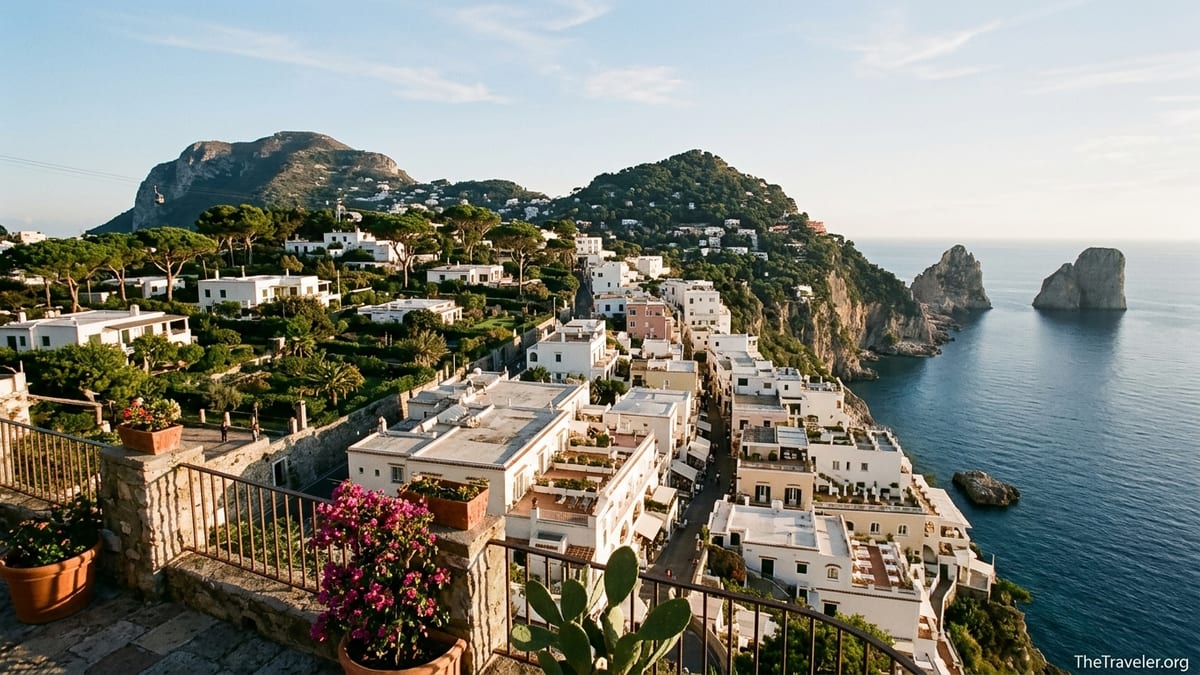
Getting Your Bearings: Two Towns, One Island
Capri Town and Anacapri share the same compact island, but they feel almost like different destinations. Capri Town sits above the main port of Marina Grande, at the eastern side of the island. This is where most ferries feed day-trippers into a web of narrow shopping streets around the famous Piazzetta, where luxury stores and high-end hotels line lanes like Via Camerelle and Via Vittorio Emanuele.
Anacapri spreads across the higher, western plateau of the island, reached by a winding road or bus from Capri Town. It is closer to Monte Solaro, Capri’s highest peak, and to the Punta Carena lighthouse, one of the island’s best sunset spots. Streets feel more residential, with small supermarkets, local bars, and modest churches mixed in with a growing number of boutique hotels and stylish guesthouses.
In practical terms, you will almost certainly arrive at Marina Grande by ferry or hydrofoil from Naples, Sorrento, or the Amalfi Coast. From there, most travelers either take the funicular up to Capri Town in about four minutes or a bus/taxi directly to Anacapri. Single bus and funicular tickets cost around 2.40 euros, and taxis from the port to Capri or Anacapri typically follow fixed fares that start around 25 to 30 euros for up to four people. The journey time to Capri Town is around 10 minutes by road, and to Anacapri around 20 to 25 minutes, depending on traffic.
Understanding this layout is important when you choose where to stay. Capri Town gives you immediate access to the island’s social and shopping hub, while Anacapri trades proximity for a quieter, more spacious setting that still connects back to the main sights by frequent buses.
Atmosphere and Vibe: Glamour vs Slow Island Life
If you picture Capri as celebrities in linen blazers stepping out of convertible taxis, you are thinking of Capri Town. Around the Piazzetta in the late afternoon, terraces fill with visitors in pressed resort wear sipping spritzes that can easily cost 15 to 20 euros. Designer storefronts from Italian and international fashion houses line the main streets, and you will see everything from carefully dressed couples posing for photos to cruise ship passengers in excursion stickers following guides with umbrellas.
Capri Town is lively from mid-morning through late at night in peak season. When multiple large ferries arrive between 10:00 and 11:00 each day, queues can form outside the funicular and bus stops, and narrow streets near Via Roma and Via Vittorio Emanuele become crowded. After the last ferries leave in the early evening, the mood shifts: hotel bars open, restaurants on side streets like Via Le Botteghe and Via Longano start serving multi-course dinners, and the nightlife scene kicks in with late-opening cocktail bars and a few clubs.
Anacapri offers a different rhythm. Its main square, Piazza Vittoria, is busy during the day with visitors heading to the chairlift for Monte Solaro or the bus to the Blue Grotto, but step a few streets back and you are in a neighborhood of whitewashed houses, small artisan shops, and local kids on scooters. Aperitivo often happens at simple bars where a glass of wine might cost 6 to 8 euros instead of 10 to 12, and snacks are a small plate of potato chips rather than a polished platter.
At night in Anacapri, things are generally quieter. Many restaurants close earlier than in Capri Town, and there are fewer late-night bars. You are more likely to hear plates being cleared from a family-run trattoria such as those on Via Orlandi than music from a DJ set. For travelers who want evenings that involve a slow dinner, a stroll, and an early night, this lower-key energy is a major advantage.
Costs, Hotels, and Where Your Money Goes
Capri is not a budget destination, but Capri Town and Anacapri differ in how far your money stretches. In Capri Town, central five-star hotels such as those near the Piazzetta or along Via Tragara cater to a luxury crowd and can easily charge several hundred euros per night in high season, sometimes far beyond that for suites with sea views. Even mid-range boutique hotels here may start around 300 euros per night in September for a standard double, and simple lunches in the most central spots often exceed 25 euros per person for a main dish and a drink.
Anacapri tends to offer better value for similar comfort. A stylish four-star property with a pool and views over the Gulf of Naples might be priced similarly to or below a three-star in Capri Town. Hotels like those clustered around central streets in Anacapri often include breakfast and a more spacious room for the same nightly price you would pay for a smaller, more compact room in Capri Town. Simple trattorias in Anacapri commonly serve generous plates of pasta alla Nerano or ravioli capresi for around 15 to 20 euros, and a carafe of house wine for 10 to 15 euros.
Transport costs are similar from each base, but they affect your daily budget differently. From either town, local bus tickets remain around 2.40 euros per ride. If you stay in Anacapri yet plan to dine in Capri Town most nights, assume an additional 10 to 15 euros per person per day for those extra bus rides or occasional taxis, especially late at night when buses are less frequent and you want to avoid crowded stops. On the other hand, if you stay in Capri Town and spend most of your days exploring Anacapri’s hikes and viewpoints, the same daily transit cost applies in reverse.
Think about where you want to spend most of your time rather than only the nightly rate. For example, a couple staying three nights in a mid-range Capri Town hotel at 350 euros per night might spend relatively little on evening transport. Another couple in a 260-euro-per-night Anacapri guesthouse could save on accommodation but potentially add 50 to 80 euros total on extra buses and a taxi or two if they are out late in Capri Town every night.
Sights and Experiences: What Each Side Does Best
Capri Town’s strengths lie in its iconic viewpoints, glamorous strolls, and easy access to Marina Piccola. From the town center, a short walk along Via Tragara leads to the Belvedere di Tragara, where you get a postcard-perfect view of the Faraglioni rock formations rising from the sea. The paved path to the Gardens of Augustus is equally popular, with its tidy terraces and sweeping views of the Marina Piccola bay and the serpentine Via Krupp road cut into the cliff below.
Capri Town also puts you closer to the south side of the island. From the bus stop near the center, it is a 10-minute ride down to Marina Piccola, where you can rent a sunbed and umbrella at one of the beach clubs or choose a public patch of pebbles to stretch your towel. A simple chair-and-umbrella rental at a modest lido might start around 30 to 40 euros per person in high season. For those who want to alternate between shopping, short walks, and swims without spending long on buses, this convenience matters.
Anacapri shines with nature and panoramic views. Piazza Vittoria hosts the base station for the single-seat chairlift to Monte Solaro. A round-trip ticket is currently in the mid-teens in euros, and the 12-minute ascent floats you above terraced gardens and pine trees to the island’s highest point at about 589 meters above sea level. At the top, a small café and multiple terraces look out over the Faraglioni, the Amalfi Coast, and the Gulf of Naples, making it one of the most memorable experiences on Capri for many visitors.
From Anacapri you also have easier access to the Blue Grotto area and to the walking paths around the western coast. A local bus from the town center reaches the Blue Grotto in roughly 10 minutes, where small rowing boats bring visitors into the cave when sea conditions allow. Another bus runs to the Punta Carena lighthouse, where rocky platforms and beach clubs create a more relaxed, local-feeling swimming environment. Many travelers staying in Anacapri enjoy spending a late afternoon at Punta Carena before catching the sunset and an inexpensive bus back to town for dinner.
Getting Around: Buses, Funicular, and Taxis in Real Life
Regardless of where you stay, you will likely mix buses, the funicular, walking, and taxis. The crucial detail is how often you are willing to stand in line. From Marina Grande, the funicular is the fastest way up to Capri Town, taking about four minutes. In summer, though, queues at the lower station can snake across the marina, especially in late morning when day-trippers arrive from Naples and Sorrento. For some travelers, that means a 30-minute wait before even starting the ride.
Buses connect Marina Grande, Capri Town, Anacapri, Marina Piccola, the Blue Grotto, and Punta Carena. They are small, with limited seats and standing room, and in July and August they often run full. A bus from Capri Town to Anacapri can take 15 to 25 minutes depending on traffic along the narrow coastal road. Single tickets are inexpensive, but you should budget extra time and patience, particularly if you are trying to sync with a departing ferry.
Taxis are more expensive but save time and stress, especially if you are arriving with luggage or traveling as a group. The island uses distinctive open-top convertible taxis, and official fixed fares commonly start from around 25 euros for Capri Town to Marina Grande, and around 30 euros for Marina Grande to Anacapri for up to four passengers. If you split that between three or four people, the per-person cost can be similar to taking a crowded bus, especially when you add the value of going door-to-door instead of walking uphill with bags.
In practice, if you stay in Capri Town and pack light, you might arrive by funicular, wheel your suitcase along flat lanes, and hardly use taxis again. If you stay in Anacapri, many travelers find it worth taking a taxi at least once, either on arrival or departure, then relying on buses and walking for the rest of their stay. Those who are nervous about steep stairs or long walks often find Anacapri more manageable, as many accommodations are closer to bus stops and the terrain is flatter within the town itself.
Who Should Stay Where: Matching Town to Travel Style
The easiest way to decide between Anacapri and Capri Town is to imagine a typical day on your trip. If your ideal morning starts with a cappuccino at a stylish café, followed by browsing designer shops, then a short scenic walk and a dip at a beach club, Capri Town suits you well. You can wander out of a central hotel, be at the Piazzetta in minutes, and walk to multiple viewpoints without needing a bus. In the evening, you will have a dozen restaurant options within a 10-minute stroll, from refined seafood places to classic pizzerias, and you can linger over a digestivo without checking bus schedules.
Capri Town is a stronger choice for travelers who enjoy people-watching, nightlife, and being in the heart of the action. It works for short, high-energy stays of one or two nights, when you want to feel the island’s glamorous side and do not mind crowds. It is also convenient if you plan to join private boat tours that depart from Marina Piccola or arrange bespoke experiences through high-end hotel concierges.
Anacapri is a better fit if you prefer quiet evenings, panoramic hikes, and accommodations that feel more like a retreat. Nature-oriented travelers often choose Anacapri so they can walk to the Monte Solaro chairlift early, hike down along paths such as the trail toward Cetrella, or spend multiple afternoons at Punta Carena without shuttling back and forth across the island. Families with children and older travelers may appreciate the calmer streets and slightly lower prices for everyday items like snacks, bus tickets, and casual meals.
For example, a couple on a five-night trip might stay in Anacapri, dedicating three days to local walks, Monte Solaro, and the lighthouse, and two days to outings into Capri Town and boat trips. A honeymoon pair on a shorter three-night stay, especially outside high summer, might opt for Capri Town to make the most of restaurant choices and evening atmosphere, then visit Anacapri for a single long day of views and hiking before returning to a hotel terrace in the center for a late cocktail.
Trip Length, Season, and Sample Itineraries
Your trip length and season heavily influence which side of Capri is more comfortable. In high season, roughly late June through early September, Capri Town can feel intense during the day. Streets are crowded, queues for the funicular and buses are long, and restaurant reservations in central areas are often necessary. In this period, many travelers find it pleasant to base in Anacapri to escape the densest foot traffic, then dip into Capri Town for a few hours at a time.
In shoulder seasons such as late April to May or late September to October, the equation changes. With fewer cruise excursions and day-tripping groups, Capri Town’s lanes are easier to navigate, and it becomes more appealing as a base. Outdoor terraces in the Piazzetta and on Via Camerelle are busy without feeling overwhelmed, and you may find better rates at hotels that command premium prices in July and August. Anacapri during shoulder season is particularly restful, and its position higher on the island can feel fresher when early spring or late autumn bring cooler evenings.
For a one-night stay, Capri Town often makes more logistical sense. You can arrive by ferry, take the funicular or a short taxi ride, drop bags at your hotel, visit the Gardens of Augustus and Belvedere di Tragara, then enjoy dinner and a late stroll without worrying about catching the last bus back. The next morning, a quick ride down to the port gives you flexibility for an early departure or a boat tour before you leave.
For stays of three nights or more, Anacapri becomes increasingly attractive. You have time to settle into a slower pace, enjoy multiple sunsets at Punta Carena, and schedule your Monte Solaro visit outside the busiest midday period. Many travelers on such trips split their time, spending one or two nights in each town. For example, you might start with a night in Capri Town to enjoy the evening scene and early-morning Piazzetta, then move up to Anacapri for two or three quieter nights focused on walking paths and long pool days.
The Takeaway
Choosing between Anacapri and Capri Town is less about right or wrong and more about what you want Capri to feel like. Capri Town delivers the classic image of the island: busy piazzas, polished luxury stores, lively aperitivo hours, and straightforward access to famous viewpoints and beaches on the south side. It works best if you have limited time, love being in the center of things, and do not mind higher prices in exchange for convenience and atmosphere.
Anacapri offers an alternative that is just as beautiful but more relaxed. Here, your days revolve around slow breakfasts on hotel terraces, quiet lanes leading to Monte Solaro, afternoon swims by the lighthouse, and dinners at trattorias where you are just as likely to sit next to island residents as other visitors. Your budget may stretch a little further, and you will experience more of Capri’s residential side while still being just a bus ride away from the island’s more glamorous corners.
If you are still undecided, ask yourself two questions: Do I want my evenings to be busy or calm, and how many times am I willing to stand in line for a bus or funicular? If you crave nightlife and do not mind crowds, Capri Town is your town. If you prefer quiet streets and wide horizons, Anacapri is likely to feel like home. And remember that on such a small island, you are never really locked into one experience: wherever you stay, the other side of Capri is always within a short ride, ready to show you a different version of this famous rock in the sea.
FAQ
Q1. Is it easier to get to Capri Town or Anacapri from the ferry port?
Capri Town is easier because the funicular links Marina Grande directly to the center in about four minutes. To reach Anacapri, you need a bus or taxi up the hill, which takes around 20 to 25 minutes, though taxis are straightforward if you have luggage or arrive at a busy time.
Q2. Which is cheaper overall, Capri Town or Anacapri?
Accommodation and everyday prices tend to be lower in Anacapri. You can often find larger rooms and quieter hotels for less than central options in Capri Town, and casual meals and aperitivo are usually a bit cheaper, though Capri as a whole is a relatively expensive destination.
Q3. Where should I stay if I want nightlife and bars?
Capri Town is the better base for nightlife. Around the Piazzetta and nearby streets, you will find late-opening cocktail bars, wine bars, and a handful of clubs, all within a short walk of many hotels. In Anacapri, evenings are quieter and options lean more toward relaxed restaurants and low-key bars.
Q4. Is Anacapri too far from the main sights?
No, but you will use buses more often. From Anacapri, buses run regularly to Capri Town, Marina Grande, the Blue Grotto, and Punta Carena. You should allow extra time for queues in high season, but most journeys are under 30 minutes. Many of Anacapri’s own highlights, such as Monte Solaro and sunset at the lighthouse, are actually closer if you stay there.
Q5. Which town is better for families with children?
Many families prefer Anacapri because of its quieter streets, slightly more spacious accommodations, and proximity to outdoor activities like the Monte Solaro chairlift and the lighthouse area. That said, Capri Town can work well if you want quick access to the funicular, Marina Piccola, and a wide choice of restaurants for early dinners.
Q6. Can I visit both Capri Town and Anacapri in one day?
Yes, it is very common. Travelers often take the funicular to Capri Town in the morning, explore the Piazzetta and viewpoints, then catch a bus up to Anacapri for the Monte Solaro chairlift or a walk, returning to the port in the late afternoon. It is a full day and involves queues in high season, but it is manageable.
Q7. Do I need a car to get around Capri and Anacapri?
No, visitors generally do not drive on Capri. The island is served by a network of small public buses, the funicular between Marina Grande and Capri Town, and plenty of taxis. Most streets in both towns are pedestrian-only or too narrow for regular traffic, so walking, buses, and taxis are the main ways to get around.
Q8. Which side of the island has better views?
Both offer excellent views, but in different ways. Capri Town has classic vistas over the Faraglioni and Marina Piccola from viewpoints like the Gardens of Augustus and Belvedere di Tragara. Anacapri offers higher, more expansive panoramas from Monte Solaro and sweeping sea views from Punta Carena, especially at sunset.
Q9. What if I am visiting Capri as a day trip, not staying overnight?
If you are on a day trip, start with whichever town matches your priorities. For shopping, piazzas, and iconic views, go first to Capri Town via the funicular. For a calmer experience and the Monte Solaro chairlift, take the bus to Anacapri instead. With careful timing, you can sample both, but it is better to focus rather than rush between them all day.
Q10. Is it worth splitting my stay between Capri Town and Anacapri?
For trips of three nights or more, splitting your stay can work very well. You might spend a night or two in Capri Town to enjoy the evening scene and easy access to central sights, then move up to Anacapri for a quieter few days focused on hikes, pool time, and sunsets. On very short trips, however, it is usually simpler to choose one base to avoid packing and moving.