


More news on this day
Thick volcanic ash from Indonesia’s Anak Krakatau volcano kept Jakarta’s Soekarno-Hatta International Airport closed for a second day on Monday, extending widespread disruption across one of Southeast Asia’s busiest air corridors.
Get the latest news straight to your inbox!
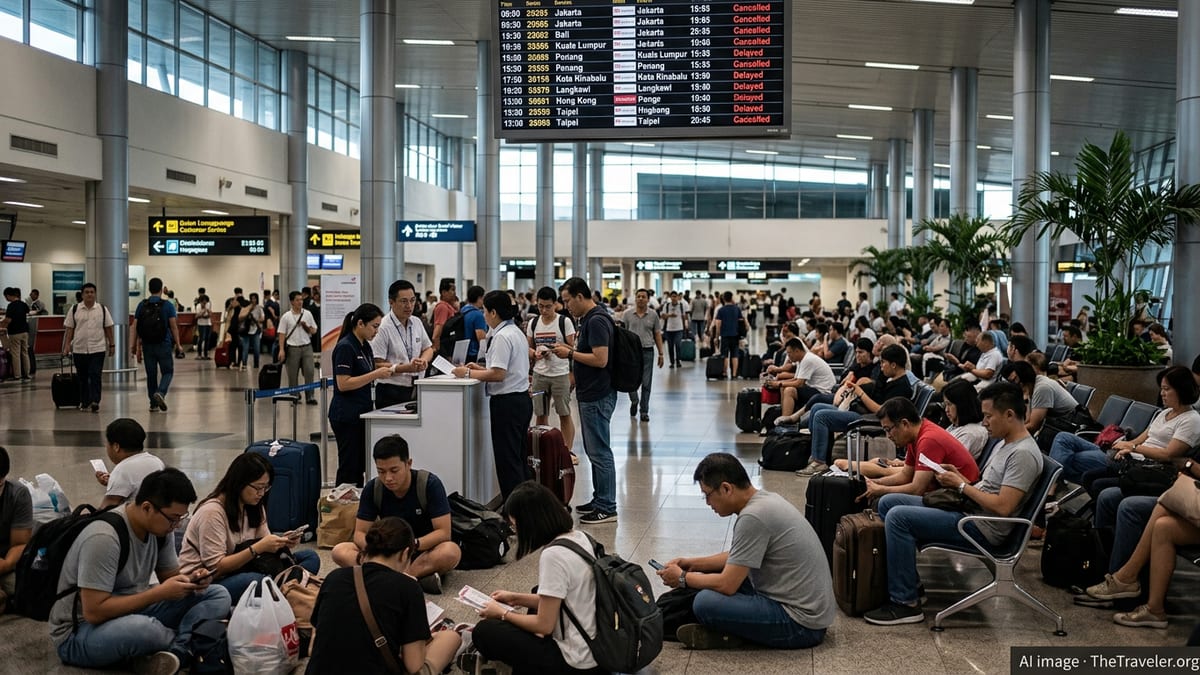
Jakarta hub closure extended as ash blankets western Indonesia
Jakarta’s Soekarno-Hatta International Airport, the country’s main aviation gateway, remained shut through at least 6 p.m. local time on Monday, September 7, as a dispersing ash cloud from Anak Krakatau continued to drift over key flight paths. Airport operator Angkasa Pura reported that the shutdown, which began early Sunday, had to be prolonged after new assessments showed ash lingering in the airspace above the capital and surrounding regions.
Publicly available information from the Transportation Ministry indicates that a total of eight airports, including Soekarno-Hatta and Jakarta’s Halim Perdanakusuma, halted operations over the weekend due to volcanic ash detected at cruising altitudes. The blanket of ash has affected large parts of western Java and southern Sumatra, forcing aviation authorities to maintain conservative safety margins and keep runways idle until visibility and engine risk assessments improve.
Reports from local media describe ashfall across the Jakarta metropolitan area since late Friday, when Anak Krakatau began a new eruptive phase in the Sunda Strait between Java and Sumatra. Satellite analysis and ash advisories suggest plumes reaching up to around 6,000 meters on the Java side and even higher over parts of Sumatra, high enough to intersect with busy flight routes serving the capital.
Although some domestic routes in unaffected regions are operating normally, Jakarta’s continued closure has effectively clogged a central hub in Indonesia’s transport network, with airlines struggling to reposition aircraft and crew as the ash plume shifts with changing winds.
Hundreds of flights disrupted and 170,000 passengers stranded
The extended shutdown has rippled far beyond Jakarta, with cancellations and delays reported across Indonesia and in neighboring countries that rely on connections through the capital. Published coverage citing Transport Ministry data notes that more than 1,500 flights have been delayed or canceled at the eight affected airports, including over 900 movements to and from Soekarno-Hatta alone.
News reports from regional outlets indicate that about 170,000 passengers have been stranded by the closures, many of them at Jakarta’s main terminals where departures boards show rows of canceled flights to domestic and international destinations. Images from the scene show long queues at airline service desks, as travelers seek rebooking options or refunds and look for alternative routes via still-open airports.
The disruption has extended to foreign carriers and regional hubs. Malaysia’s main airport operator reported that at least 31 Jakarta-bound flights from multiple Malaysian airports were canceled on Sunday, while low-cost carriers with dense schedules into Indonesia have also adjusted timetables and temporarily halted services to the capital. Airline advisories urge passengers bound for Jakarta or transiting through the city to check flight status frequently and consider flexible rebooking policies.
Indonesian carriers are similarly scaling back, with several domestic airlines publicly announcing the suspension of services to Jakarta, Bandung and Lampung for much of Monday morning. Schedules are being reviewed on a rolling basis, depending on updated ash forecasts and aviation weather bulletins issued through regional advisory centers.
Eight airports affected as authorities favor safety-first approach
According to official notices to airmen and statements published by Indonesia’s Transportation Ministry, eight airports remained closed at least part of Monday due to ash from Anak Krakatau. Besides Soekarno-Hatta and Halim Perdanakusuma in the Jakarta area, closures or suspensions have also been imposed at Radin Inten II in Lampung, Husein Sastranegara in Bandung, Budiarto in Curug, Pondok Cabe in South Tangerang, Taufik Kiemas in Pesisir Barat Lampung, and Atung Bungsu in Pagar Alam, South Sumatra.
Publicly available information emphasizes that the duration of the closures is tied directly to aviation safety assessments, particularly the risk volcanic ash poses to jet engines and flight instruments. Meteorological and volcanology agencies are issuing frequent updates based on satellite imagery, ground-based observation and Volcano Observatory Notices for Aviation, which guide decisions on whether to reopen airspace.
Data from the Indonesian Geological Agency and regional ash advisory centers show that Anak Krakatau’s recent eruptive phase began late on Friday, September 4, and intensified over the weekend with multiple explosive bursts. At times, the ash plume has pushed more than 150 kilometers from the volcano, reaching the skies above the greater Jakarta region and blanketing parts of Banten, Lampung and Bengkulu provinces.
Transport authorities have stated through public channels that airport operations will only resume once assessments show ash concentrations have fallen below thresholds for safe engine performance. In practice, that means closures can be extended at short notice if wind patterns keep ash over flight paths or if renewed eruptions inject more material into the atmosphere.
Life on the ground: ashfall, school disruptions and travel uncertainty
Beyond the airport perimeter, Anak Krakatau’s ash has affected everyday life across parts of Java and Sumatra. Local reporting describes fine gray dust accumulating on streets, vehicles and rooftops in Jakarta and nearby cities, prompting advice for residents to limit outdoor activity and use masks or face coverings where ashfall is heaviest. Social media posts and local forums show commuters and runners encountering hazy skies and dusty air during the city’s normally bustling weekend car-free events.
The eruption has also led to temporary suspensions of some school activities and coastal fishing trips in ash-affected areas, according to coverage from regional news outlets. Authorities monitoring the volcano have warned communities in the Sunda Strait region to remain vigilant, though Anak Krakatau’s current activity is focused on ash emission rather than large-scale lava flows.
For travelers already en route, the uncertainty is particularly challenging. Passengers connecting through other Asian hubs to reach Jakarta have reported abrupt diversions and overnight delays, while some long-haul flights bound for the Indonesian capital have been rerouted or terminated at alternative destinations. Travel advisories from airlines urge passengers heading to Indonesia in the coming days to build in extra time, anticipate possible last-minute changes and monitor airline and airport announcements closely.
Accommodation providers in Jakarta and nearby cities are beginning to see a wave of unscheduled stays as stranded passengers seek hotel rooms near the airport or in the city center. Tourism operators are advising visitors already in Indonesia to avoid nonessential travel into the ash-affected region until the situation stabilizes and flight schedules normalize.
What travelers should watch in the next 24 to 48 hours
In the short term, the outlook for air travel around Jakarta hinges on both the behavior of Anak Krakatau and the movement of the ash plume. Volcanology agencies continue to track eruption intensity, while meteorological services monitor upper-level winds that can carry ash into or away from the capital’s airspace. If ash concentrations diminish and no major new eruptions occur, partial reopening of some airports could begin as early as late Monday or Tuesday, according to timelines referenced in published notices.
Travelers with imminent plans involving Jakarta are being encouraged through airline and airport channels to consider free date changes where available, or to reroute through unaffected Indonesian airports if their itineraries allow. Some carriers have introduced waivers for change fees on tickets to and from Jakarta, Bandung and Lampung for travel dates around September 6 and 7.
Industry analysts note that even after Soekarno-Hatta reopens, it may take several days for airlines to unsnarl schedules and reposition aircraft and crew. Backlogs of stranded passengers and aircraft parked out of sequence can lead to rolling delays, especially on popular regional routes between Jakarta and other Southeast Asian hubs.
For now, publicly available information suggests that safety remains the overriding priority, with aviation and geological agencies closely coordinating ash monitoring, forecast modeling and airspace advisories. Travelers are advised to rely on official airline channels, airport websites and reputable news outlets for the latest updates, as the situation around Anak Krakatau and Jakarta’s airports continues to evolve.
Jakarta international airport extends closure after Anak Krakatau eruption
Thousands stranded as Anak Krakatau eruption shutters Indonesian airports
Volcanic island in Indonesia erupts, canceling hundreds of flights and stranding thousands