


In summer 2027, Alaska Airlines plans to link Anchorage directly with Tokyo Narita, giving Alaska travelers a rare nonstop option to Japan and opening new ways to connect the state with Asia. With service subject to government approval, the route is already generating interest among Alaskans who currently detour through Seattle, Los Angeles or Honolulu to reach Japan. Here is how the new flight is scheduled to operate, what we know so far about fares and baggage, and how to plan your trip to make the most of this seasonal connection.
Get the latest updates straight to your inbox!
Route launch, schedule and aircraft
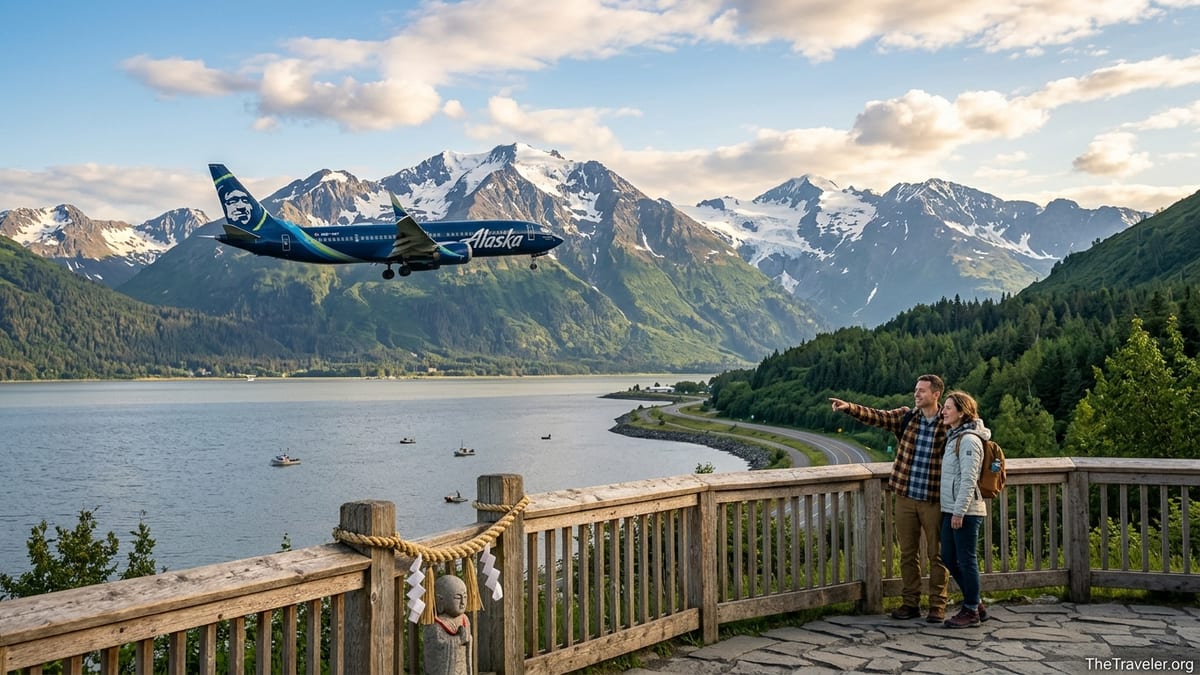
According to Alaska Airlines’ fall 2026 network announcement, the carrier intends to launch daily seasonal nonstop service between Ted Stevens Anchorage International Airport and Tokyo Narita International Airport on May 13, 2027, pending regulatory approval. Local coverage in Alaska has reported that the flight will run through roughly mid September 2027, aligning with the peak summer travel season from Japan to Alaska as well as Alaska residents heading to Asia for vacations and family visits. The route will operate in both directions once per day, giving travelers a predictable schedule to plan around.
Alaska has indicated that the new Anchorage to Narita flight will use a version of the Boeing 737 MAX configured for longer routes. Aviation enthusiasts in Anchorage expect a block time of about 8 hours and 15 minutes from Anchorage to Tokyo and around 7 hours and 15 minutes westbound back to Alaska, based on internal projections that have circulated in the aviation community. That timing would place it among the longer narrow-body flights in Alaska’s network but still within the practical range of the newest 737 variants.
Exact departure and arrival times for summer 2027 have not yet been loaded into public booking systems at the time of writing. However, Narita’s long history as a hub for late morning and afternoon arrivals from North America makes it likely that Alaska will schedule the Anchorage flight to connect into mid day and late afternoon departures to other Japanese cities and some Asian destinations on partner airlines. Travelers should watch Alaska’s timetable updates and the carrier’s published schedules for final times as government approvals are completed.
Because the service is seasonal, Anchorage based travelers planning Japan trips in late fall, winter or early spring of 2027 to 2028 will still need to route through another gateway such as Seattle, Los Angeles, San Francisco or Honolulu. The nonstop is best suited for trips that fall entirely within the May to September operating window and for visitors from Japan who want to experience Alaska during the long daylight of summer.
Fares and how to find realistic pricing
Alaska Airlines has not yet opened revenue or award bookings specifically for the Anchorage to Narita nonstop in summer 2027, so there are no firm prices to quote for that exact flight. Still, current fares from Anchorage to Tokyo via Seattle and other hubs, combined with Alaska’s pricing patterns on similar length routes, offer a useful guide for planning a budget. In late 2026, round trip economy tickets from Anchorage to Tokyo that connect through Seattle or Los Angeles commonly price around 1,100 to 1,600 dollars for peak summer dates when purchased a few months in advance, with occasional sales dropping some itineraries just under 1,000 dollars for shoulder season departures.
On comparable long narrow-body routes such as Seattle to Honolulu and Anchorage to New York, Alaska often prices nonstop services slightly above connecting options at launch, then adjusts once competitors respond. It is reasonable to expect that many Anchorage to Narita round trips in standard economy during the inaugural 2027 season will fall somewhere between roughly 1,200 and 1,800 dollars for mid July departures booked in spring, with higher prices likely during late June and early August holiday peaks. Travelers willing to depart in mid May or early September, or to buy tickets as soon as the schedule opens, may see lower promotional fares as Alaska seeks to stimulate early demand.
For Mileage Plan members, award space will be an important part of the equation. Alaska currently prices partner awards between North America and Japan at levels that often start around 45,000 to 60,000 miles one way in economy, depending on carrier and date, while its own long haul international services are typically organized into saver and higher level awards that change with demand. Once Anchorage to Narita inventory appears, it is worth checking both one way awards on the nonstop and mixed itineraries that combine the new flight with an intra Japan segment on a partner airline, particularly for travelers looking to visit destinations such as Sapporo, Fukuoka or Okinawa.
In practice, an Anchorage family of four planning a two week trip to Tokyo in July 2027 should be prepared to set aside a flight budget in the range of 4,800 to 7,000 dollars for standard economy tickets if buying with cash, not including seat selection fees or optional extras. Those who hold large Mileage Plan balances might instead aim for two tickets booked with miles and two paid in cash, especially if introductory award availability proves generous in the first operating season.
Baggage rules and what they mean for Alaska to Japan trips
Alaska Airlines overhauled its checked baggage fees and allowances in 2026, and those policies will apply to the Anchorage to Tokyo route unless the airline introduces a specific transpacific exception closer to launch. As of mid 2026, standard passengers on domestic and international Alaska flights generally pay 45 dollars for the first checked bag and 55 dollars for the second, with higher charges for additional pieces or overweight items. These fees apply per direction, so a round trip with two checked bags per person could add several hundred dollars to the cost of a family vacation.
There are important exceptions that Anchorage based travelers can use to keep costs under control. Alaska’s Club 49 program for eligible Alaska residents continues to provide up to two free checked bags on many itineraries that begin and end within or from the state, and that benefit is particularly valuable on a long haul route where packing light is more difficult. In addition, holders of Alaska’s co branded credit cards often receive the first checked bag free for themselves and sometimes for companions on the same reservation, though benefit details have been tightened in recent years so that multiple free bag benefits usually cannot be stacked.
For a concrete example, consider an Anchorage couple planning a 10 day trip to Tokyo in June 2027 without elite status or special baggage eligibility. If each traveler checks one medium suitcase at 23 kilograms or less, they would currently expect to pay about 45 dollars each way per person, or 180 dollars total for the round trip. If they decide to check a second bag each, perhaps to bring back souvenirs or outdoor gear, the cost under current rules would rise to roughly 400 dollars for the pair across the full journey. By comparison, a Club 49 member making the same trip with two checked bags might still pay nothing in standard fees if the program coverage applies in full to the international segment.
Carry on rules will continue to matter as well. Alaska presently allows one standard carry on bag plus one personal item at no additional charge, subject to its published size limits that align with overhead bins on 737 aircraft. For a long flight to Japan, many travelers will want to pack a roll aboard with several changes of clothes, medications and essentials, both to stay comfortable during the journey and to be prepared in case of delayed checked luggage on the return through Anchorage.
Connections within Alaska and onward to Japan and Asia
One of the strategic goals of the Anchorage to Tokyo route is to turn Anchorage into a more effective summer gateway, linking Alaska’s in state network to Asia. Alaska Airlines already operates extensive intrastate service to cities including Fairbanks, Juneau, Kodiak, Bethel, Nome and smaller communities, many with schedules that tilt toward same day connectivity into Anchorage. With the new daily Narita departure, it will be possible in many cases to travel from places like Fairbanks or Juneau to Tokyo with a single connection in Anchorage, all on one ticket and under a single baggage policy.
For example, a traveler from Fairbanks could take a morning Alaska flight into Anchorage, connect after a few hours to the nonstop bound for Narita, and step off in Tokyo later that same calendar day. On the return, Alaska can schedule Narita departures to land back in Anchorage with enough buffer for passengers to clear any inspections and recheck bags if necessary before continuing to Fairbanks in the evening. That kind of same day connectivity is particularly attractive for business travelers or university students who want to minimize overnight stops in Seattle or other mainland hubs.
At the Tokyo end, Narita remains a major international gateway with numerous connections deeper into Japan and across Asia on Japanese and international carriers. While Alaska itself will operate only the Anchorage segment, travelers can stitch together practical multi stop itineraries using partner airlines. An Anchorage resident could fly nonstop to Narita, connect to a domestic flight to Sapporo or Osaka for a week, then return to Narita for a final three days in Tokyo before flying back to Alaska, all while checking luggage through on coordinated tickets if the itinerary is booked with cooperating carriers.
Although specific interline and codeshare details for the Anchorage to Narita route have not yet been fully published, Alaska has existing partnerships with several Asia focused airlines at other gateways, and Narita already sees a mix of Japanese and foreign carriers operating onward services. Travelers should pay close attention when booking to ensure that minimum connection times are respected, especially when self connecting between Alaska and a non partner airline at Narita. Leaving a buffer of at least two to three hours between flights is wise if bags must be collected and rechecked.
Japan entry rules and practical arrival logistics
As of late 2026, U.S. citizens traveling to Japan for tourism for less than 90 days do not need to apply for a visa in advance. Official guidance from Japanese consulates in the United States confirms that Americans entering as short term visitors for purposes such as sightseeing, visiting family or attending business meetings receive permission to stay for up to 90 days on arrival, provided their passport is valid for the duration of their stay and they can show evidence of onward travel and sufficient funds if requested. That policy applies across ports of entry, including Narita Airport.
Travelers from countries that are not part of Japan’s visa waiver arrangements will still need to apply for a short term visitor visa in advance through the Japanese embassy or consulate responsible for their place of residence. In recent years, Japan has expanded online application options through its eVISA platform for many nationalities, allowing applicants to submit documents and receive an electronic visa approval before boarding. Processing times and requirements can vary by consulate and by nationality, so non U.S. travelers planning to use the Anchorage to Narita flight should consult updated instructions at least several months before departure.
On arrival at Narita, passengers will first proceed through immigration, where they may have their photo and fingerprints taken and will receive a landing permission sticker or notation confirming their status and length of stay. Afterward, they collect checked baggage and pass through customs, declaring items such as large amounts of cash or goods exceeding duty free allowances. Japan’s customs authorities require anyone carrying the equivalent of 1 million yen or more in cash to make a declaration, a threshold that roughly equates to several thousand U.S. dollars at current exchange rates.
From the arrivals hall at Narita, Anchorage passengers have several options for reaching central Tokyo. Two of the most common are the Narita Express train, which connects to Tokyo Station and major hubs such as Shinjuku, and airport limousine buses that serve large hotels and districts across the city. Travelers arriving on the Anchorage flight late in the afternoon might opt for the Narita Express to reach Tokyo Station in roughly an hour, then transfer to the local rail network or taxis, while those with bulky luggage may prefer a direct bus to a hotel in Shibuya or Shinjuku even if the road journey takes closer to 90 minutes depending on traffic.
Designing multi stop itineraries that use the new route
Alaska’s new Anchorage to Tokyo nonstop does more than link one city pair. It creates opportunities to design multi stop itineraries that combine Alaska and Japan in a single journey. For travelers based in the lower 48 states, one attractive option will be to fly to Anchorage for a few days of sightseeing or fishing in Southcentral Alaska, then continue to Tokyo on the nonstop before returning home from Japan via another gateway such as Seattle or Los Angeles. With Alaska Airlines expanding its summer 2027 network to include nonstop routes from Anchorage to cities like Austin, Nashville and Dallas Fort Worth, there will be new ways to connect into and out of the Anchorage hub.
Consider a traveler from Dallas who wants to see both Alaska and Japan in one vacation. In mid June 2027, they could fly Dallas to Anchorage on Alaska’s new seasonal nonstop, spend five days exploring Anchorage, Denali National Park and nearby towns, then board the Anchorage to Narita flight for a week in Tokyo and Kyoto. For the return, they might fly Tokyo to Seattle on a partner airline and connect back to Dallas. Booked on a single ticket, the airline’s baggage rules would apply across the entire sequence, and the traveler would experience three distinct regions without backtracking.
Anchorage residents can also use the nonstop to string together creative routings within Asia. Someone with family in both Japan and Southeast Asia might fly Anchorage to Narita, spend several days visiting relatives in Tokyo, then continue on a low cost carrier or partner airline to Bangkok, Singapore or Taipei. On the way home, they could return to Narita and then take the nonstop back to Alaska. This pattern reduces total flying time compared with connecting through multiple North American hubs, especially if Narita schedules allow for tight but workable same day transfers.
When constructing these itineraries, travelers should weigh the tradeoffs between buying a single through ticket and piecing together separate legs. A single ticket usually offers better protection during irregular operations such as delays or missed connections, while separate tickets might yield lower prices but require more generous self connection buffers and duplicate baggage check in. For many leisure travelers looking to combine Alaska and Japan in 2027, working through a travel adviser familiar with Alaska’s network or carefully reviewing airline booking rules can help avoid surprises.
Booking strategies, timing and inaugural season tips
Because the Anchorage to Tokyo Narita route will debut in May 2027, the first season is likely to attract aviation enthusiasts and local travelers eager to try the nonstop while it is still new. When Alaska loads the schedule and opens sales, seats on the first and last few flights of the season could sell quickly, and promotional fares may appear with limited availability. Travelers who know they want to be among the first should consider setting fare alerts through flight search tools or watching Alaska’s announcements closely in early 2027 so they can book within days of sales opening.
For most travelers, the more important factor will be booking far enough in advance to secure both the nonstop and preferred connection times within Alaska or Japan. Summer trips from mid June to late August often see the highest demand, especially when major events or school holidays line up in both countries. Purchasing tickets three to six months ahead of departure typically provides a balance between price and flexibility, though some travelers may find value in waiting for targeted sales that focus on shoulder season dates in May and September.
It is also wise to think about seat selection and comfort on this relatively long narrow body flight. Alaska generally charges extra for preferred seats with more legroom, even in standard economy, and those seats can make an eight hour sector more comfortable, particularly for taller passengers. A traveler flying Anchorage to Narita in mid July might choose to pay an additional 60 to 120 dollars round trip for premium economy style seating if available, building that amount into the trip budget alongside baggage fees, airport meals and ground transportation in Tokyo.
Finally, travelers should keep an eye on any evolving entry or health protocols that could affect international travel in 2027. While Japan fully reopened to independent tourists after the pandemic and has been operating under stable entry rules in 2025 and 2026, governments retain the ability to adjust health documentation requirements or screening measures. Checking both Japanese government sites and Alaska Airlines travel advisories in the weeks before departure will help ensure that Anchorage passengers board the nonstop to Narita with the correct documents and realistic expectations.
Conclusion: A new bridge between Alaska and Japan
The planned seasonal nonstop between Anchorage and Tokyo Narita in summer 2027 promises to reshape how Alaskans reach Asia and how Japanese visitors experience the state’s landscapes and long daylight. With daily service set to run from May 13 through the peak summer months, the route will shorten travel times, reduce the need for overnight layovers in the lower 48, and create new options for multi stop itineraries that combine Alaska, Japan and other parts of Asia.
Travelers considering the flight should start thinking now about realistic fare budgets, how Alaska’s updated baggage rules will affect total trip costs, and which connections within Alaska and Japan will turn a simple nonstop into a broader journey. By matching travel dates to the seasonal schedule, understanding entry requirements for Japan, and booking with enough lead time to secure seats on the inaugural season, passengers can make the most of this new link across the North Pacific.
Whether you are an Anchorage local visiting Tokyo for the first time, a Japanese traveler heading for salmon fishing and midnight sun, or a lower 48 resident looking to pair Denali with Shibuya crossing in one ambitious vacation, Alaska’s new Anchorage to Narita nonstop in 2027 offers a practical and imaginative way to connect two very different but complementary worlds.