


Anse Chastanet, on the lush southwest coast of Saint Lucia near Soufrière, is one of the island’s most accessible coral reefs for casual snorkelers. With a protected marine reserve that hugs the shoreline, easy entries right off the black-sand beach, and a full-service dive center on site, it is a rare place where beginners and experienced snorkelers can enjoy a healthy Caribbean reef without ever boarding a boat.
Get the latest updates straight to your inbox!
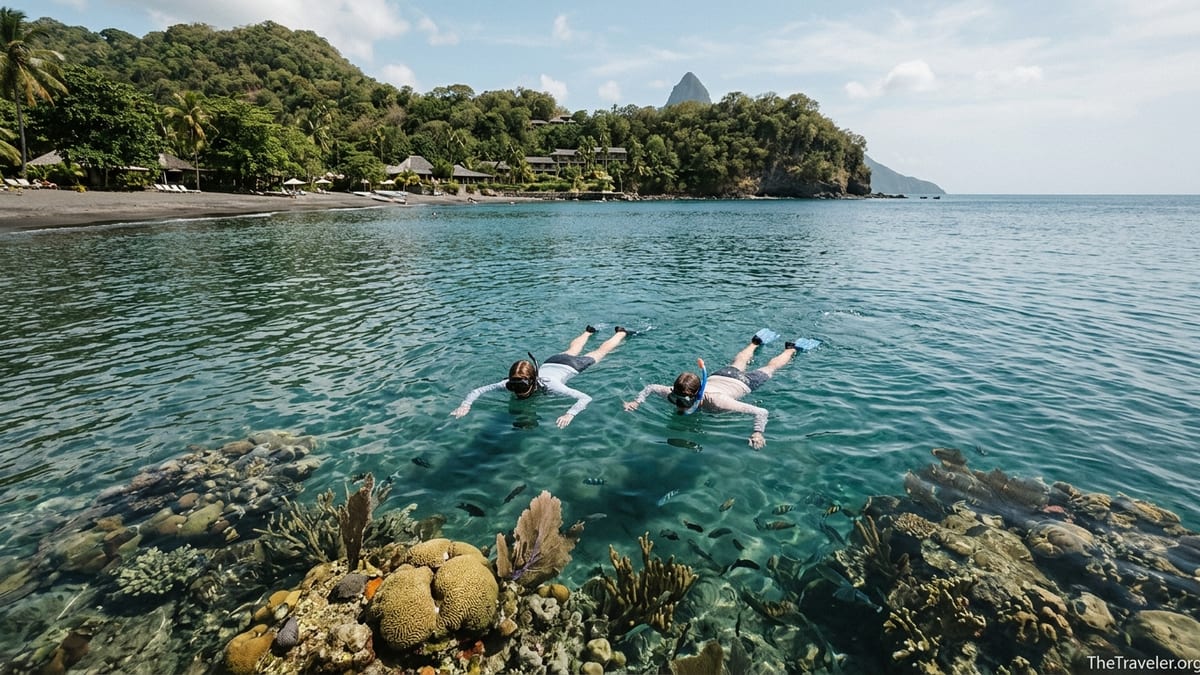
Understanding Anse Chastanet’s Reef and Marine Reserve
Anse Chastanet sits inside the Soufrière Marine Management Area, a protected stretch of coast created to safeguard coral reefs from overfishing and boat damage. Within this zone, the Anse Chastanet Marine Reserve starts just off the beach and extends around the rocky headlands toward the open Caribbean. Floating marker ropes in front of the resort clearly separate the protected snorkeling area from the boating lane, making it easy to understand where you can swim safely.
The reef itself is a classic fringing reef that begins only a few yards from the sand and steps down gradually from shallow seagrass into coral gardens. Closer to shore you will see patches of turtle grass and sand, which then give way to spur-and-groove formations of coral running roughly parallel to the shoreline. Farther out, near the point sometimes nicknamed “Fairyland” by divers and snorkelers, the reef drops more steeply and currents can be stronger, so it is typically recommended for confident swimmers and guided outings.
Because this is a resort reef that receives regular visitors, it is not completely pristine, but compared with many heavily used Caribbean beaches it remains in good condition. You can still find living stands of brain, star and elkhorn coral, plus large sponges and colorful sea fans. The combination of easy shore access and continued marine protection makes it one of the most reliable places in Saint Lucia for seeing Caribbean reef life without a long boat ride or advanced skills.
The protected status also means you are snorkeling in an active conservation area rather than a free-for-all beach. Anchoring is restricted, fishing is tightly controlled, and local operators are required to follow specific rules for using the reserve. As a visitor, your role is to enjoy the reef while adding as little impact as possible, which starts with understanding how to enter the water, where to go, and what not to touch.
Shore Entry and Snorkeling Layout: How to Get in the Water
One of the main appeals of Anse Chastanet is that you can simply walk from your beach chair straight into a marine reserve. There are two practical entry points used by most snorkelers. On the south side of the beach, near the Scuba St. Lucia dive center, a small jetty with concrete steps drops directly into deeper water at the edge of the reef. This is the preferred entry for exploring the best coral zones because you bypass the shallow seagrass and avoid most sand and wave chop.
If you prefer to wade in gradually, you can enter from the main beach in front of the resort’s sun loungers. Here the sea floor slopes gently from sand into seagrass beds and then to scattered coral heads. This route is especially comfortable for beginners and families, since you can stand for quite a distance before the water reaches chest height. Just pay attention to the roped-off swim area and any boat traffic beyond it. Beach staff often point out the safest line to follow if you tell them you are snorkeling for the first time.
Once in the water, most snorkelers follow the shoreline to the right when facing the sea, toward the rocky point beneath the cliff. This side is where the coral cover thickens, visibility tends to be better, and fish life is more concentrated. If you continue far enough, you eventually reach the area that local guides often call Fairyland, where the reef steps away into deeper blue water. For a more relaxed swim, you can stay entirely within the clearly marked shallow reserve and simply loop back toward the beach when you start to feel tired.
The other direction, to the left toward neighboring Anse Mamin, offers a quieter experience with fewer people but slightly more open water. Some guests choose to walk to Anse Mamin along the coastal path, then snorkel back one way with a buddy when conditions are calm. Because currents and swell can change, it is wise to ask the dive center about that plan the same morning, especially if anyone in your group is not a strong swimmer.
What You’ll See: Coral, Fish and Possible Turtle Encounters
Even in the shallows just off the beach, the first thing you are likely to notice is the variety of hard corals: domed brain corals with intricate maze patterns, boulder star corals forming knobby towers, and plates of elkhorn and staghorn where conditions allow. Interspersed are purple sea fans, barrel sponges and occasional sea whips, creating a three-dimensional landscape that shelter smaller creatures. Visibility commonly ranges from about 10 to 20 meters in calm, dry-season weather, enough to appreciate the structure of the reef below.
Fish life is typically abundant, especially around the main reef slope and at the base of the rocky point. It is common to see schools of blue tang flashing electric blue as they graze, sergeant majors hovering above the corals, and yellowtail snapper and chub cruising in mid-water. Closer inspection of the coral heads often reveals parrotfish scraping algae from the surface, butterflyfish weaving in pairs, and spotted trunkfish nosing around the sand. Near the jetty steps, resident French angelfish and squirrelfish are frequently reported by returning snorkelers.
Turtles are not guaranteed, but sightings are regular enough that you should keep an eye on the seagrass and open sand. Green sea turtles sometimes glide through the bay to feed on the grass beds in front of the resort, and hawksbills occasionally appear over the reef slope or near the deeper drop-off. Your best chance of spotting one is to move slowly and maintain a bit of distance from other groups, scanning ahead rather than focusing only on the coral directly beneath you.
Other creatures to look for include southern stingrays resting on the sand, trumpetfish hanging vertically among sea fans, and cleaner shrimp working stations inside coral heads. At dusk or on a guided night snorkel, lobsters and octopus become more active. While you should avoid using bright handheld lights on your own in busy areas, joining an organized evening snorkel from the Scuba St. Lucia center can be a safe way to experience a different side of the reef.
Equipment Rental, Costs and Facilities on the Beach
If you are staying at Anse Chastanet Resort or its sister property Jade Mountain, basic snorkel gear is typically provided on a complimentary basis for use around the house reef and at Anse Mamin. The resort’s watersports and scuba centers on the beach offer masks, snorkels, fins and flotation vests in a range of sizes, and you can usually sign gear out for a morning or afternoon session by showing your room number. This is ideal if you plan to snorkel every day and do not want to pack your own fins in a carry-on.
Day visitors who come by taxi or boat can also arrange rentals through the Scuba St. Lucia dive center at the south end of the beach. Prices change periodically, but as a ballpark expectation many Caribbean resorts charge in the region of 15 to 30 US dollars per person for a full set of snorkel gear for the day, with options for shorter hourly rentals. If you are chartering a private boat, ask your captain whether snorkel gear is included, as many Soufrière-based operators keep masks and fins on board for guests heading to Anse Chastanet.
For those who own prescription masks or are particular about fit, bringing your own mask and snorkel is recommended, while renting fins locally to save luggage space. The beach centers also provide life vests and, in some cases, foam noodles for less confident swimmers, and there are freshwater showers where you can rinse off gear and salt after your session. Beach chairs and umbrellas are available to resort guests, and day visitors can often rent them for a fee, creating a convenient base between swims.
If you intend to join a guided snorkel such as a coral nursery tour or a supervised night snorkel, these are booked through the dive center, usually with dedicated departure times and small-group sizes. Expect typical rates in the order of 25 to 60 US dollars per person depending on the length and type of experience, sometimes plus service charges and local taxes. Booking a morning slot often gives you clearer water and more active fish life, particularly during the drier months.
Beginner Conditions, Tips and Marine Protection Rules
Conditions at Anse Chastanet are generally favorable for beginners, with a gently sloping beach, a protected bay and clearly defined no-boat zones. The southwest coast of Saint Lucia is normally more sheltered than the Atlantic side, and from about December to May the prevailing dry-season weather tends to bring calmer seas and better visibility. On a typical calm day, you can comfortably float over coral only a few meters from the surface without needing to swim far from shore.
That said, first-time snorkelers should still treat the sea with caution. Before you enter the water, watch the surface for five or ten minutes to understand wave patterns and boat traffic, and ask beach staff or the dive center where they recommend beginners go that particular day. Avoid snorkeling alone, use a brightly colored flotation device if you are nervous, and start in the shallow seagrass area to practice clearing your mask and snorkel before heading to the reef slope.
Because Anse Chastanet’s reef lies within a marine reserve, there are specific rules designed to protect the ecosystem. Collecting shells or coral is prohibited, feeding fish is strongly discouraged, and touching or standing on coral is not allowed. Even a single kick of a fin can break fragile branches or scrape living tissue from a coral head. Wearing a UV-rated rash guard and reef-safe sunscreen instead of traditional lotions helps reduce the amount of harmful chemicals entering the water, which is particularly important on a heavily visited resort reef.
The reserve also restricts motorized sports within the main snorkel zone, but you are still responsible for staying inside marked swim areas and watching for dive boats at the edges of the reserve. If you plan to explore deeper or closer to the point, consider using a surface marker float so you remain visible. Local regulations sometimes require small daily permit fees for snorkeling inside certain protected areas; these are often bundled into tour costs or resort packages, but if you are coming with an independent operator, confirm in advance how any marine reserve fees are handled.
Best Time of Day and Season to Snorkel at Anse Chastanet
You can technically snorkel Anse Chastanet year-round, but certain times of day and season offer a better experience. Morning, roughly between 8 and 11 a.m., is usually the ideal window. Winds are often lighter, surface chop is reduced, and fewer boats are moving in and out of the bay. The lower angle of the sun also makes it easier to see beneath the surface without too much glare, particularly over lighter sand and seagrass. Many guests plan breakfast early and head straight to the water to catch this calmer period.
Midday snorkeling can still be enjoyable, especially in the shade of the headland, but direct overhead sun and higher winds sometimes increase surface reflections and small waves. Late afternoon brings softer light and dramatic views of the Piton-like peaks in the distance, yet currents and boat activity can pick up again. If you are not an experienced swimmer, avoid going out in the last hour of daylight unless you are part of an organized group, as it is easy to underestimate distances and lose track of time.
On a broader scale, the dry season from roughly December through May tends to deliver the clearest water across Saint Lucia’s west coast. During these months, there is usually less runoff from the steep inland hills, so visibility around Anse Chastanet’s reef often improves. The wet season, particularly around heavy rain events, can bring plumes of sediment that temporarily cloud the shallows. If you are visiting during the wetter months, simply be flexible: choose your snorkeling days when the sea looks clearer and save inland activities for times when rains stir up the water.
Water temperatures in the bay typically sit in the upper 70s to low 80s Fahrenheit for most of the year, which is comfortable for extended snorkel sessions without a wetsuit. If you chill easily, a thin 1 to 2 millimeter shorty or a long-sleeve rash guard will add warmth and sun protection. Planning shorter but more frequent snorkels, such as a 45-minute session in the morning and another in the afternoon, can help you enjoy the reef without getting tired or cold.
Safety, Local Services and Day-Trip Logistics
Although Anse Chastanet is welcoming to first-time snorkelers, you are still swimming in open water, so basic ocean safety remains important. Never snorkel under the influence of alcohol, keep an eye on children at all times, and agree on a simple hand signal system with your buddy before entering the water. Waves are usually modest in the bay, but occasional swells can push you toward shallow coral or rocks if you get too close, so maintain a few arm lengths of distance from any hard structure and keep your fins high.
The resort staffs lifeguards and beach attendants who can advise on daily conditions, and the on-site dive center provides additional support. If anyone in your group is anxious about snorkeling, consider booking a short introductory session with a guide who can accompany you for your first 20 to 30 minutes in the water, show you the safest route and help you adjust your gear. This kind of personalized attention, while an added cost, can make the difference between a stressful and a memorable first reef experience.
For visitors staying elsewhere on the island, Anse Chastanet is most easily accessed by road from Soufrière or by boat as part of a snorkeling excursion. Taxis from popular resort areas in the north typically quote fixed one-way or round-trip fares, and some hotels partner with drivers who do regular day runs to the Soufrière coast. Many boat tours, including small-group charters, stop at Anse Chastanet along with nearby Sugar Beach and Anse Cochon, giving you a chance to compare several of Saint Lucia’s best shore-accessible reefs in one outing.
If you are driving a rental car, note that the final stretch of road to Anse Chastanet from Soufrière is steep and curvy, with some narrow sections. Day visitors may be asked to check in at a security gate and directed to parking before walking down to the beach. Once there, you can rent chairs, organize snorkel gear and arrange meals at the beachside restaurants, then build your snorkel sessions around longer breaks on shore. Planning your day with a generous buffer for the drive back to your hotel is wise, especially if you are navigating the coastal roads for the first time.
The Takeaway
Anse Chastanet combines several advantages that are increasingly rare in the Caribbean: a reef that starts a few fin kicks from the sand, a protected marine reserve that keeps heavy boat traffic away, and on-site services that make it easy to rent gear, ask questions and join guided experiences. Whether you are a first-time snorkeler or an experienced traveler who has seen reefs across the region, it offers a convenient and rewarding way to experience Saint Lucia’s underwater life without committing to long boat rides or advanced dives.
If you arrive with realistic expectations, respect the marine protection rules and choose your timing around calmer water and better light, you are likely to come away with vivid memories of gliding over coral gardens, watching parrotfish graze and perhaps following a turtle across the seagrass beds. Paired with the dramatic rainforest hills and volcanic sand beach above the surface, snorkeling at Anse Chastanet can easily become a highlight of a Saint Lucia trip, and a reminder of why healthy coastal reefs are worth protecting.
FAQ
Q1. Do I need to be a strong swimmer to snorkel at Anse Chastanet?
Beginners can enjoy the shallow areas close to shore, especially near the main beach entry, but you should be comfortable floating and kicking in open water. Using a snorkel vest or noodle and staying within the marked swim zone makes the experience much easier for less confident swimmers.
Q2. Is snorkeling at Anse Chastanet possible for day visitors, or do I have to stay at the resort?
Day visitors can snorkel here by arriving with a taxi, rental car or boat tour. You will check in at the entrance, then arrange snorkel gear rental and, if available, beach chair rentals on the sand. Staying at the resort simply adds the convenience of complimentary gear and easy access throughout your trip.
Q3. What is the best time of year to see clear water and good coral at Anse Chastanet?
The west coast of Saint Lucia generally has its calmest seas and clearest water from about December through May, when there is less rain and runoff. You can still snorkel outside these months, but after heavy rains visibility in the bay can temporarily drop, so it is worth choosing clearer days.
Q4. Are turtles and rays common enough that I am likely to see them?
Turtles and rays are regularly reported by guests, especially over the seagrass beds and sandy patches, but they are wild animals and never guaranteed. Moving slowly, scanning ahead and spending more time in the water increases your chances, as does snorkeling during quieter morning hours.
Q5. Can children snorkel safely at Anse Chastanet?
Older children who are comfortable in the water can usually snorkel here under close adult supervision, particularly in the shallow areas near the beach. Consider starting them with a short guided session or practicing in waist-deep water before venturing farther over the reef.
Q6. Do I need to bring my own snorkel gear, or is rental equipment good enough?
The on-site centers offer decent-quality masks, fins and snorkels suitable for casual use, and many guests are happy to rent. If you snorkel frequently or need a prescription mask, bringing your own mask and snorkel while renting fins locally gives you the best combination of fit and convenience.
Q7. Are there strong currents at Anse Chastanet that I should worry about?
Inside the main bay and marked swim areas currents are usually mild, which is one reason the site is popular with beginners. Around the outer point and on windier days, currents can become stronger, so less experienced snorkelers should stay within the protected areas and check conditions with the dive center before going farther.
Q8. Is reef-safe sunscreen really necessary here?
Because Anse Chastanet is a heavily used resort reef inside a marine reserve, minimizing chemical sunscreen is especially important. Wearing a rash guard, hat and using mineral-based, reef-friendly sunscreen helps protect both your skin and the corals you came to see.
Q9. Can I join a guided snorkel or night snorkeling trip from the beach?
Yes, the resort’s dive center typically offers guided daytime snorkel tours and, at certain times, night snorkeling along the house reef. These trips are a good choice if you want extra safety, local knowledge of the best spots, or the chance to see nocturnal creatures in a controlled setting.
Q10. How does Anse Chastanet compare with other snorkeling spots in Saint Lucia?
Anse Chastanet is one of the island’s top shore-accessible reefs, combining easy entry, marine protection and solid coral and fish life. Nearby bays such as Sugar Beach and Anse Cochon also offer excellent snorkeling, but many travelers appreciate Anse Chastanet for the ability to walk straight from a comfortable beach into a well-marked marine reserve.