


More news on this day
Miami’s growing role as a gateway to the Caribbean is gaining fresh momentum as Dominican ultra low cost carrier Arajet launches flights from Santo Domingo, spotlighting Dominican heritage, culture and regional pride for South Florida travelers.
Get the latest news straight to your inbox!
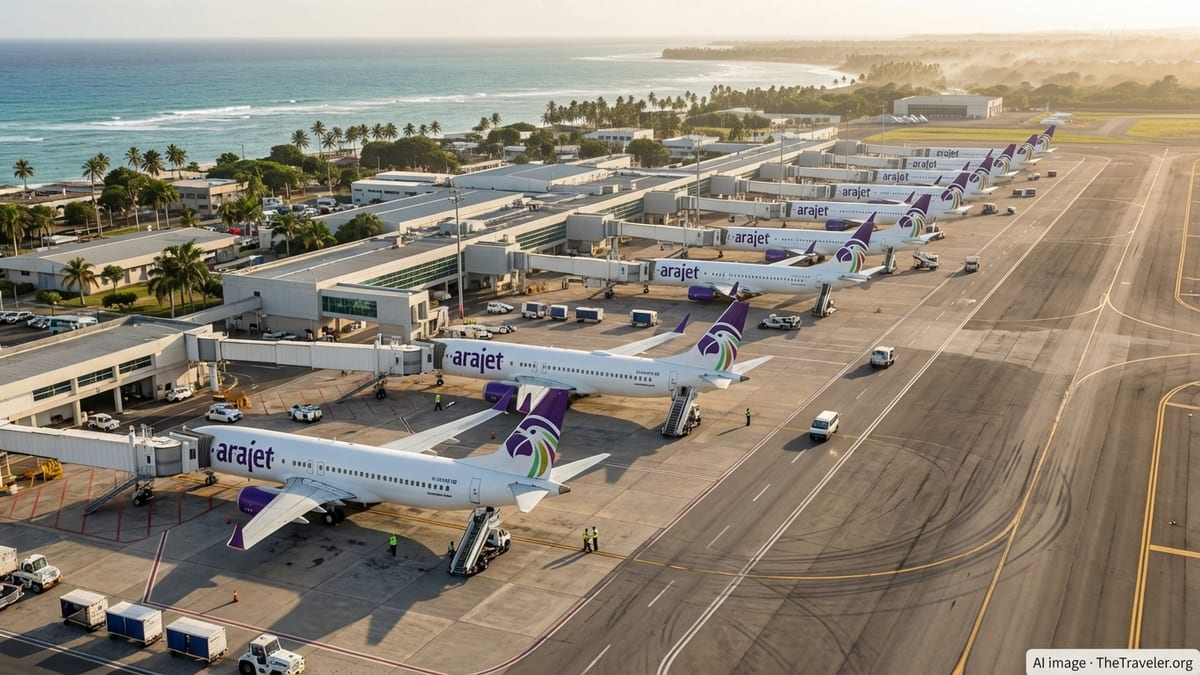
A New Low Cost Bridge Between Santo Domingo and Miami
Publicly available information from Miami International Airport shows that Arajet selected Miami as its first United States destination, inaugurating service from Santo Domingo’s Las Américas International Airport to Miami with flight DM2100. The route connects the Dominican capital directly with one of the hemisphere’s busiest international hubs, creating a new low cost option in a market long dominated by larger North American airlines.
Route filings and schedule data indicate that Arajet’s Santo Domingo Miami service began in April 2025 with Boeing 737 MAX 8 aircraft, initially at four weekly frequencies and ramping up to daily flights as the carrier scales its United States network. As an ultra low cost airline, Arajet is targeting price sensitive travelers who move frequently between South Florida and the Dominican Republic, including a large Dominican diaspora community in the wider Miami area.
According to network analyses by industry trackers, Miami is strategically important to Arajet’s long term plan to turn Santo Domingo into a north south connecting hub. The carrier already links the Dominican capital with cities across Mexico, Central America and South America, and Miami adds a high profile United States gateway to that growing web of routes.
For Miami International Airport, the new entrant expands competitive options to the Dominican Republic, one of South Florida’s key leisure and visiting friends and relatives markets. Visitor data from the Greater Miami Convention & Visitors Bureau show the Dominican Republic among the Caribbean sources of overnight visitors to the region in recent years, underlining the strength of links between the two destinations.
Dominican Republic Tourism Momentum Meets Expanding Airlift
Arajet’s expansion into Miami comes as the Dominican Republic continues to report record tourism levels. Government tourism statistics and international tourism coverage highlight that the country has been surpassing previous arrival records, supported by strong demand from North American travelers seeking beach resorts, cultural cities and year round sunshine.
The Dominican Republic’s strategy has focused on broadening air connectivity from major source markets, including the United States, while encouraging new entrants that can stimulate demand through competitive fares. As an ultra low cost carrier based in Santo Domingo and Punta Cana, Arajet aligns with that objective by offering lower base fares and simplified services across its route map.
Reports from aviation analysts describe Arajet as the first dedicated ultra low cost carrier in the Caribbean, positioning the Dominican Republic as a price competitive gateway for regional and long haul connections. With the addition of Miami, the airline can pair United States originating traffic with onward links to secondary destinations in Central and South America that may not yet have nonstop service from South Florida.
For travelers in the United States, the combination of a high frequency Miami route and Arajet’s regional network increases options for multi stop itineraries that combine time in the Dominican Republic with visits to neighboring countries. This added flexibility supports the broader vision of turning the Dominican Republic into a Caribbean hub instead of only a point to point beach destination.
Heritage, Culture and Caribbean Pride in the Air
Brand materials and promotional campaigns from Arajet emphasize Dominican identity, with the airline presenting itself as a source of national pride and a standard bearer for the country’s culture. Liveries, cabin imagery and marketing often incorporate Dominican colors and motifs, highlighting the flag and references to local landscapes and traditions.
According to company background information, Arajet traces its roots to Dominican aviation ventures that sought to create a modern, efficient carrier based in Santo Domingo. The airline now presents its hub at Las Américas International Airport as a gateway to Dominican beaches, colonial heritage in Santo Domingo’s Ciudad Colonial and inland attractions such as mountain regions and eco tourism sites.
Miami’s large Dominican and broader Caribbean communities make the new route more than a practical connection. It becomes a cultural corridor linking music, food, language and shared history on both sides of the Caribbean Sea. Travelers flying the route have direct access from Miami to Santo Domingo’s historic streets, merengue and bachata clubs, and local gastronomy, while Dominican visitors arriving in Miami step into one of the most diverse Latin and Caribbean cultural mosaics in the United States.
By leaning into this identity rather than downplaying it, Arajet positions the Santo Domingo Miami corridor as both an economic and cultural bridge. The carrier’s presence highlights how aviation can reinforce intangible connections of heritage and belonging while also supporting tourism receipts and trade.
Santo Domingo’s Hub Ambitions and the Wider Caribbean Network
Arajet operates from Las Américas International Airport in Santo Domingo and from Punta Cana International Airport, with publicly available guidance from the airline describing a goal of establishing the Dominican Republic as the new hub of the Caribbean. From these bases, the carrier connects to destinations across the Caribbean, Mexico, Central America and the northern tier of South America.
Industry profiles note that Arajet follows a hub and spoke model built on an ultra low cost cost base, a structure that remains relatively rare among Caribbean airlines. This approach allows the carrier to schedule banked connections through Santo Domingo, linking passengers from cities as varied as Mexico City, Guatemala City or Lima with onward flights to Caribbean and North American points, including Miami.
The addition of Miami also subtly repositions competitive dynamics within the region. Traditional hubs such as Panama City and established carriers based in larger economies have long captured flows between North and South America. Arajet’s strategy suggests that a smaller Caribbean nation can contest some of that traffic by offering efficient connections, new aircraft and lower fares from a central geographic position.
If the Santo Domingo hub model scales successfully, Miami’s role could expand beyond an origin destination point into a major spoke feeding passengers into a wider Caribbean and Latin American network under a Dominican flag. That possibility underscores how a single new route can carry broader implications for regional aviation and tourism flows.
What Miami Travelers Can Expect From Arajet
Available fleet information shows that Arajet operates Boeing 737 MAX aircraft, with manufacturers and the airline highlighting the type’s fuel efficiency and lower operating costs compared with previous generation narrow bodies. Recognition as one of the youngest fleets in the Americas supports Arajet’s positioning as a modern, cost efficient carrier.
As an ultra low cost airline, Arajet’s business model generally centers on unbundled fares, where travelers pay a low base price and add extras such as checked baggage or seat selection as needed. This structure has become familiar to United States passengers who fly similar models on domestic and transborder routes, and it allows price sensitive travelers on the Miami Santo Domingo route to tailor spending to their priorities.
For South Florida residents, Arajet’s entry adds competition to a route that has historically been served by larger United States and Dominican carriers at higher average fares. Early reports from consumer and aviation forums suggest that promotional prices have stimulated interest among both leisure travelers and members of the Dominican community in Florida who make regular trips home.
As schedules mature, the combination of competitive pricing, cultural resonance and growing regional connectivity is likely to keep Miami in the spotlight as a key United States gateway for Dominican Republic tourism. The new link symbolizes how a young Dominican carrier can project heritage, culture and Caribbean pride onto one of the world’s most visible aviation stages.
Miami International Airport Arajet route announcement
Arajet official background and hub information
CAPA airline profile and network overview