


Rising above the turquoise rivers and storybook lakes of northwestern Slovenia, the Julian Alps have quietly become one of Europe’s most talked‑about mountain regions. For travelers weighing up whether they are really worth a detour from Ljubljana, or even a dedicated trip, the short answer is yes: if you enjoy dramatic landscapes, accessible hiking, and small‑scale Alpine culture, the Julian Alps are one of the most rewarding corners of the continent. The longer answer is more nuanced, and that is where this guide comes in.
Get the latest updates straight to your inbox!
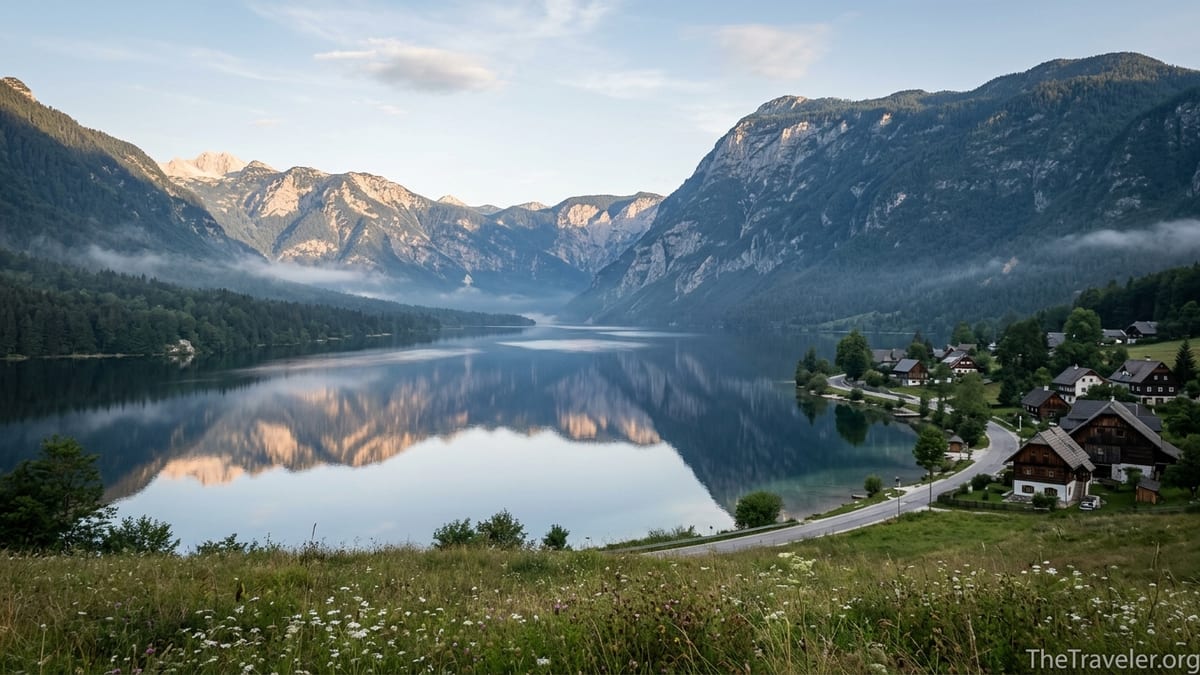
Where Are the Julian Alps and What Exactly Are They?
The Julian Alps form the easternmost stretch of the great Alpine chain, spilling across Slovenia’s northwest and into northeastern Italy. On the Slovenian side, the heart of the range is protected inside Triglav National Park, the country’s only national park and one of Europe’s smaller but most varied high‑mountain reserves. Peaks here reach just under 2,900 meters at Mount Triglav, ridges are carved by glaciers, and deep valleys funnel rivers like the emerald Soča and the Sava Bohinjka.
For visitors, it helps to think of the Julian Alps not as one single destination, but as a loose cluster of distinct valleys and bases. On the eastern flank are the famous lakes of Bled and Bohinj, often the first stop for people coming from Ljubljana. Farther west, the Vršič Pass drops into the Soča Valley and towns like Bovec and Kobarid, known for white‑water sports and World War I history. To the north, almost on the Austrian and Italian borders, sits Kranjska Gora, an all‑season resort town surrounded by gentler hiking and ski slopes. All of these are within Triglav National Park or its immediate buffer zone, which keeps development relatively low‑key compared to mass‑tourism Alpine regions.
Because the area is compact, it is realistic to experience several of these pockets in a single trip of a week or more. Public buses link Ljubljana to Bled and Bohinj, and in summer there are seasonal shuttles deeper into the valleys inside the park, which helps reduce traffic. Many travelers with limited time choose one base, such as Bohinj or Kranjska Gora, and make day trips from there rather than constantly switching accommodation.
In practical terms, the Julian Alps are close enough to feel effortless but remote enough to still feel like an escape. From Ljubljana, buses to Bled typically take around 75 minutes and usually cost under 10 euros one way, making a mountain escape viable even for budget travelers or those without a rental car.
Landscape Drama: Lakes, Peaks, Rivers and High Pastures
The first reason the Julian Alps are worth visiting is the sheer variety of landscapes packed into a relatively small area. In a single day, you might watch sunrise over a still glacial lake, hike through spruce forest and meadows dotted with old wooden hayracks, then end the afternoon beside a river so vividly turquoise it looks edited, even in unfiltered photos. The scale is Alpine, but the distances are short enough that even casual visitors can dip into truly wild areas without committing to long expeditions.
Lake Bled, with its tiny island church and clifftop castle, is often the first image people see of Slovenia. While it can feel busy in peak July and August, Bled still works as a gentle introduction to the Julian Alps. A flat, 6‑kilometer path encircles the lake, and viewpoints like Ojstrica and Mala Osojnica are steep but short hikes that reward you with the classic panorama of water, island, and snowy peaks beyond. Ten minutes’ drive away, Vintgar Gorge narrows into a boardwalk‑lined chasm where the Radovna River thunders between mossy walls.
Just 30 minutes farther into the mountains, Lake Bohinj gives a very different mood. Here the lake is larger, framed by steeper slopes, and the villages around it are smaller and quieter. On a clear day you can take the cable car up to Vogel ski area and look down on Bohinj’s still surface, with Mount Triglav and its neighbors lining the skyline. On the western side of the range, the Soča Valley offers yet another character. The river here is nicknamed the Emerald River for its luminous blue‑green color, created by glacial minerals and light‑colored limestone. Between Bovec, Kobarid and Tolmin you will find hanging valleys, limestone gorges like Tolminska korita, and waterfalls such as Kozjak and Boka, all within short hikes from the road.
Higher up, above the treeline, the Julian Alps reveal their more rugged side. Alpine pastures such as Planina Zajamniki or Planina Konjščica spread out as undulating meadows with scattered shepherd huts, especially atmospheric in June and July when wildflowers bloom and cows are brought up for summer grazing. Several of these pastures are reachable by relatively moderate hikes from Bohinj or from trailheads above Bled, allowing visitors who are not hardcore mountaineers to taste true high‑country scenery.
Outdoor Experiences: From Easy Lakeside Strolls to Serious Summits
If you are trying to decide whether the Julian Alps are worth it for your travel style, look closely at the range of outdoor activities. This region caters not only to experienced alpinists, but also to families with children, older travelers, and first‑time hikers who just want to stretch their legs in beautiful surroundings. Well‑marked trails, frequent mountain huts, and clearly signposted difficulty levels make trip planning surprisingly straightforward.
On the gentler end of the spectrum, you can fill several days with low‑effort but high‑reward walks. Strolling around Lake Bled takes roughly an hour and a half at an easy pace. The shore path at Lake Bohinj is similarly flat and passes pebble beaches where locals swim in summer. In the Soča Valley, short walks along sections of the Alpe Adria Trail allow you to follow the river without big elevation gains; wooden suspension bridges near Bovec and Kobarid add a dash of adventure suitable for most ages.
For intermediate hikers, classic day routes include the ascent of Mount Vogel from the cable car station, the hike to the Savica waterfall above Bohinj, or circuits on the Pokljuka Plateau, a forested karst plateau with viewpoints toward Triglav. On the western side, a drive over the Vršič Pass, Slovenia’s highest road pass, leads to stone switchbacks, World War I remnants, and trailheads for hikes to peaks like Mala Mojstrovka. Many of these trails involve a few hours of steady climbing, good footwear, and a head for heights, but they do not require technical climbing equipment in summer conditions.
At the serious end, the Julian Alps are famous in the region for hut‑to‑hut trekking and via ferrata routes, including the climb of Mount Triglav itself. While Triglav is not particularly high by global standards, the final ridge involves exposed sections secured by steel cables and pegs. Guided ascents, which usually take two days with a night in a mountain hut, typically cost a few hundred euros per person, including guide and equipment rental. These trips are best suited to fit hikers who are comfortable with steep, airy terrain and are prepared for rapidly changing weather.
Cultural Character: Small‑Scale Tourism and Alpine Traditions
Another aspect that makes the Julian Alps feel special, especially to travelers used to bigger Alpine hubs in Switzerland or Austria, is the region’s small‑scale, locally rooted tourism model. Outside a few busy pockets in Bled and Bovec, you are more likely to stay in family‑run guesthouses, simple mountain huts, or apartments in village homes than in large international hotels. That has a tangible impact on the atmosphere: interactions tend to be more personal, and your spending often goes directly to local families.
Traditional Alpine farming is still visible here, particularly around Bohinj and on the plateaus and pastures. In summer, you may encounter small cheese dairies on planinas like Uskovnica or Zajamniki, where herders sell slices of fresh or aged cow’s‑milk cheese and sour‑milk drinks to passing hikers. In the Soča Valley, culinary traditions like Kobarid štruklji, a rich dumpling dessert, and frika, a skillet dish of potatoes, eggs and cheese, are celebrated at local festivals in autumn. Even if you are not in the valley during events, restaurants in Kobarid and Tolmin often highlight these dishes on their menus.
Villages themselves reflect a layered history. Kobarid and the upper Soča Valley were a major World War I front, and open‑air remains such as trenches and bunkers still line some ridges. The Kobarid museum contextualizes this with exhibitions on the Isonzo Front. Around Bled and Bohinj, small churches and wayside chapels dot the hillsides, and farmhouses often feature wooden balconies piled with drying hay. In the north, Kranjska Gora blends traditional architecture with facilities you would expect in a ski resort town, such as equipment rental shops and cafes geared toward visiting hikers and skiers.
Because the area is relatively compact, you can combine outdoor activities with cultural visits in a single day. For example, you might hike to a viewpoint above Kobarid in the morning, visit the museum in town after lunch, then end the day tasting locally made Tolminc cheese at a countryside restaurant. That multiplicity of experiences, without long drives between them, is part of the region’s appeal.
Costs, Crowds and Seasonality: Is It Still “Worth It” in 2026?
As the Julian Alps have gained attention on social media and in travel media, they have inevitably become busier and more expensive than they were a decade ago. Whether they still feel “worth it” depends on your expectations and when you choose to visit. Relative to well‑known mountain regions in neighboring countries, however, prices remain moderate and crowds manageable with a bit of planning.
Accommodation around Lake Bled, especially on summer weekends, is where you will notice the biggest price pressure. Double rooms in mid‑range hotels or highly rated guesthouses can reach or exceed 150 to 200 euros per night in July and August, and some properties require two‑night minimum stays. By comparison, staying in nearby Bohinj, Kranjska Gora, or villages in the Soča Valley often brings prices down into the 80 to 130 euro range for a comfortable double room or apartment outside the very busiest weeks, particularly in May, June, September and early October.
Daily costs for food and activities are still reasonable by Western European standards. Simple mountain hut meals, such as stews, polenta with goulash, or a plate of sausages and sauerkraut, often fall in the 10 to 15 euro range, with coffee or tea a few euros more. A sit‑down meal in a mid‑range restaurant in Bohinj or Kobarid, with a main course and drink, might come to 15 to 25 euros per person. Entrance fees to highlights like Vintgar Gorge or certain waterfalls tend to be in the single‑digit to low double‑digit euro range, partly to help fund trail maintenance and crowd management.
In terms of seasonality, July and August bring the best weather for high‑altitude hiking and hut‑to‑hut trips, but also the heaviest crowds and the most competition for parking and accommodation. Shoulder months like late May, June, September and the first half of October offer a strong compromise. Trails at mid‑elevations are usually snow‑free, lakes are warm enough for hardy swimmers by mid‑June, and autumn colors in the Soča Valley can be spectacular from late September. Winter is a separate story: Kranjska Gora becomes a ski center, and certain areas in Triglav National Park shift focus to snowshoeing and ski touring, but many high huts and trails are closed or require alpine skills.
Who Will Love the Julian Alps (and Who Might Not)
Understanding whether the Julian Alps fit your travel profile is key to deciding if they are worth the trip. If your ideal mountain holiday prioritizes quiet trails, clear waymarking, and a feeling of being in genuine countryside rather than a purpose‑built resort, this region is likely to hit the sweet spot. It particularly suits travelers who enjoy self‑guided hiking, scenic driving, and relaxed evenings in small villages rather than nightlife or luxury shopping.
Families often find the Julian Alps approachable. Many lakeside paths, shorter waterfall hikes, and valley‑bottom cycling routes can be done with children who have basic stamina. Towns like Bled, Bohinj, Bovec and Kranjska Gora offer enough infrastructure to keep things practical: grocery stores, gear rental shops for bikes or kayaks, and tourist information centers with up‑to‑date maps and advised routes. In summer, some valleys operate shuttle buses into trailheads to reduce private traffic, so even those uneasy about mountain driving can reach starting points for walks.
On the other hand, travelers seeking a fully polished, resort‑style Alpine experience with extensive nightlife, designer boutiques, and large spa complexes might find the Julian Alps a touch too low‑key. Infrastructure is good but not flashy. Public transport between some valleys is limited outside peak seasons, so visitors who want to see both Bohinj and the Soča Valley, for instance, often find renting a car the most efficient option. Those uninterested in outdoor activities may also feel they have “run out” of things to do after a couple of days, although day trips to towns like Kranj or the wine regions to the south can extend the variety.
Weather sensitivity is another factor. Mountain conditions are changeable, with summer thunderstorms, occasional multi‑day rain, and patches of lingering snow at higher passes even into early summer. If your schedule is very tight and you expect guaranteed blue skies for a single, high‑stakes day, there is always a risk that conditions do not cooperate. Building in flexibility, such as a week‑long trip instead of just a weekend, makes it more likely you will find weather windows that showcase the Julian Alps at their best.
How Long to Stay and How to Structure a Trip
For most travelers, three to five days is the minimum time needed for the Julian Alps to feel worth it, and a week allows a more relaxed pace or the chance to explore multiple valleys. A common approach for first‑time visitors is to choose two contrasting bases. For example, you might spend three nights at Lake Bohinj, focusing on lakeside relaxation, cable‑car accessible viewpoints and moderate hikes on the Pokljuka Plateau, then move for three nights to Bovec or Kobarid in the Soča Valley for river‑based activities and different scenery.
If you are short on time, basing yourself in Bohinj or Bled and adding day trips works too. From Bohinj, a day could be spent hiking to Savica waterfall in the morning, then taking a relaxing boat ride across the lake in the afternoon. Another day might combine a drive to the Pokljuka Plateau with short walks through spruce forests and a visit to a high pasture dairy for cheese tasting. From Bled, you could devote one full day to the lake and its viewpoints, and another to Vintgar Gorge and a side trip up a nearby valley like Radovna.
Travelers with a stronger hiking focus might dedicate four or five days to a hut‑to‑hut circuit entirely within Triglav National Park, overnighting in mountain refuges and carrying only a small pack. Typical itineraries include loops around the Triglav Lakes Valley or routes traversing from the Bohinj side toward the Soča side over high passes. These treks require prior planning, reservations in huts during peak season, and realistic assessment of fitness and comfort with exposed terrain.
Logistically, the Julian Alps integrate smoothly into a wider Slovenia itinerary. Many visitors spend two or three days in Ljubljana, then transfer by bus or car to Bled or Bohinj. After several days in the mountains, they continue south to wine regions like Goriška Brda or Vipava Valley, or to the short Adriatic coastline near Piran, before looping back to Ljubljana or onward international flights. This compactness is part of why Slovenia in general, and the Julian Alps in particular, feel so rewarding for a week‑to‑ten‑day trip.
The Takeaway
So, are the Julian Alps worth visiting today, in an era when every hidden gem seems to be discovered the moment it appears on social media? For travelers who value landscapes over luxury, and time spent outdoors over time spent shopping, the answer remains a clear yes. What sets this region apart is not just its beauty, but how accessible that beauty is: from the relative ease of reaching mountain lakes by public transport, to the dense network of waymarked trails that let you tailor each day to your energy level and the weather.
There are trade‑offs to consider. Certain hotspots, especially Lake Bled in high summer, can feel crowded, and popular viewpoints are no secret. Prices in the most in‑demand towns have risen, and you will not have the mountains entirely to yourself on classic routes on clear July weekends. Yet step just a little off the main circuit, by staying in Bohinj rather than directly on Bled’s shore, or by spending a few extra days in the Soča Valley or on quieter plateaus, and you will find a slower, less commercial side of the Alps that is increasingly rare elsewhere in Europe.
Ultimately, the Julian Alps are special not because they are untouched, but because they balance conservation, access, and local character in a way that still feels human‑scale. Whether your goal is to summit Triglav, paddle beneath the cliffs of Lake Bohinj, or simply sit on a farmhouse terrace watching evening light fade on the peaks, this compact Alpine corner offers experiences that linger long after you have left. For many visitors, one trip here is not an item to be ticked off, but the beginning of a long‑term love affair with Slovenia’s mountains.
FAQ
Q1. Are the Julian Alps suitable for first‑time hikers?
Yes, many routes are beginner‑friendly, such as the lakeside paths around Bled and Bohinj, short waterfall walks, and marked valley trails in the Soča Valley. More demanding routes and summits can be added as you gain confidence.
Q2. Do I need a car to explore the Julian Alps?
No, but it helps. Lakes Bled and Bohinj are well connected by bus to Ljubljana, and there are seasonal shuttles to some trailheads. However, having a car makes it easier to combine multiple valleys, reach early‑morning trailheads, and avoid relying on limited off‑season timetables.
Q3. When is the best time of year to visit the Julian Alps?
For hiking, late May to early October is generally best, with July and August offering the most stable weather but also the biggest crowds. Shoulder months like June and September balance quieter trails with usually good conditions, though high passes can still see lingering snow in early summer and sudden storms at any time.
Q4. Is climbing Mount Triglav worth it for non‑technical climbers?
It can be, but only if conditions are right and you are prepared. The final section involves exposed ridges with fixed cables and requires a good head for heights, proper footwear, and ideally a helmet and via ferrata gear. Many visitors choose to go with a certified guide on a two‑day ascent, staying in a hut overnight.
Q5. How expensive is a trip to the Julian Alps compared to Switzerland or Austria?
On average, lodging and dining in the Julian Alps are more affordable than in most well‑known Swiss or Austrian Alpine resorts. Mid‑range guesthouses and apartments in places like Bohinj or the Soča Valley are often significantly cheaper than equivalent accommodation in major Swiss ski towns, though prices have risen in popular spots such as Bled.
Q6. Can I visit the Julian Alps on a short trip from Ljubljana?
Yes. A day trip to Lake Bled is easy by bus, and with an early start you can add Bled viewpoints or Vintgar Gorge. An overnight or two in Bohinj or Kranjska Gora, however, gives a far richer experience, allowing time for relaxed hiking, boat trips, and mountain viewpoints without rushing.
Q7. Are the Julian Alps family‑friendly?
Very much so. Lakeside walks, gentle cycling routes, cable cars to viewpoints, and short waterfall hikes make it easy to plan days suitable for children. Many accommodations offer family rooms or apartments with kitchens, and outdoor activities like kayaking or rafting are available in the Soča Valley for older kids and teenagers.
Q8. What should I pack for a summer visit to the Julian Alps?
Sturdy walking shoes or light hiking boots, a waterproof jacket, warm mid‑layer, sun protection, and a small daypack are essential. Even in summer, temperatures can drop quickly at higher elevations or during storms. If you plan hut‑to‑hut hikes or via ferrata routes, a lightweight sleeping liner, trekking poles, and gloves are also useful.
Q9. How crowded are the trails in peak season?
Popular routes near Bled, Bohinj, and along main sections of the Soča River can be busy in July and August, especially midday and on weekends. Starting early in the morning, choosing less‑known paths, or visiting in June or September greatly reduces crowding. Once you move away from the most photographed spots, you can still find surprising quiet, even in high season.
Q10. Is it necessary to book accommodation and huts in advance?
For July and August, advance reservations are strongly recommended, particularly for mountain huts and for accommodation around Bled, Bohinj, Bovec, and Kranjska Gora. In shoulder seasons, you may find more flexibility, but booking a few key nights ahead is still wise if your dates are fixed or you are planning a specific hut‑to‑hut route.