


Choosing between the Julian Alps in Slovenia and the Swiss Alps can feel like picking a favorite among mountain royalty. Both offer cinematic peaks, emerald lakes and world-class hiking and skiing, yet the experience on the ground can be very different. Your budget, travel style and appetite for adventure will largely determine which range feels like your ideal alpine escape.
Get the latest updates straight to your inbox!
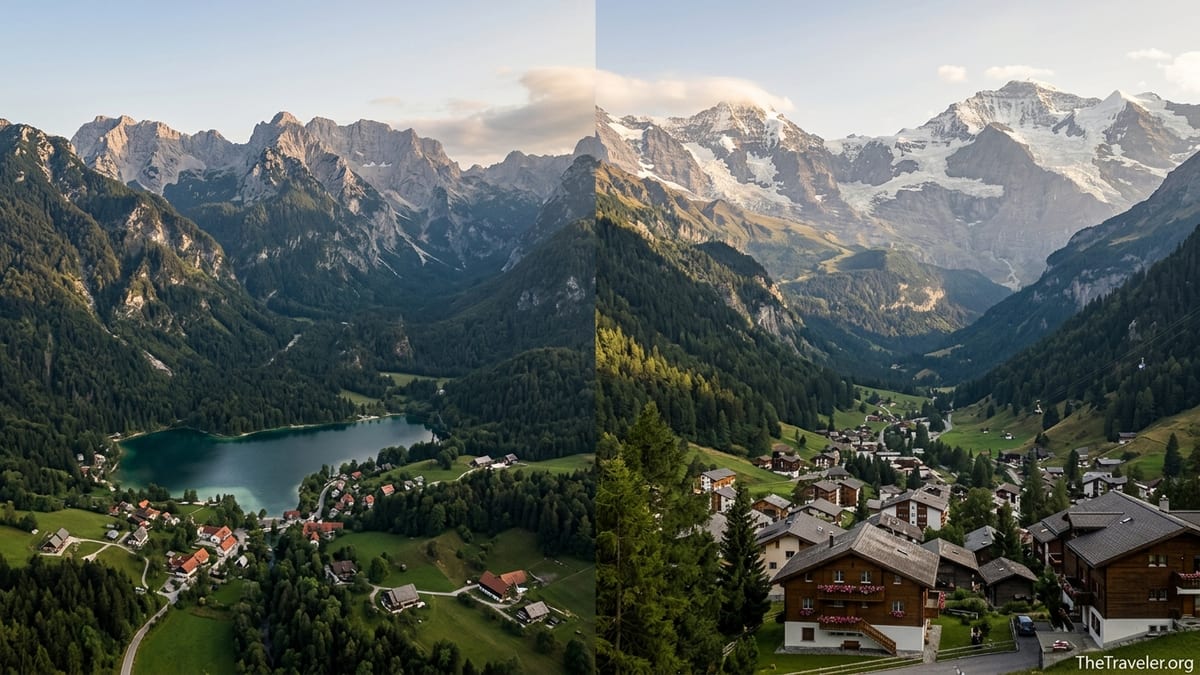
Getting Your Bearings: Two Alpine Worlds, One Decision
The Julian Alps occupy the northwestern corner of Slovenia, spilling into northeastern Italy and forming the backbone of Triglav National Park. Mount Triglav, at 2,864 meters, is Slovenia’s highest peak and a national symbol, surrounded by glacial valleys, turquoise rivers and compact alpine villages. The area feels intimate and uncrowded, with most visitors based around Lake Bled, Lake Bohinj, Kranjska Gora or Bovec.
The Swiss Alps stretch across much of southern Switzerland, with famous subregions like the Bernese Oberland, Valais and Graubünden. Names such as Zermatt, Interlaken, Grindelwald and St. Moritz are synonymous with high-altitude glamour, polished tourism infrastructure and some of Europe’s most dramatic 4,000-meter peaks. Here, everything is bigger: the mountains, the network of cable cars and trains, and generally, the prices.
For many travelers, the question is not which range is objectively “better,” but which fits their expectations. If you picture quiet trails, locally run guesthouses and a sense of discovery, the Julian Alps may appeal more. If your alpine dream involves iconic peaks like the Matterhorn, scenic trains and perfectly timed connections, the Swiss Alps might be the better match.
Think, too, about how long you have. With a week or less, basing in one or two hubs and exploring the surrounding valleys works well in both regions. In the Julian Alps, a five-night stay in Bohinj or Kranjska Gora can cover lakes, gorges and summit viewpoints. In Switzerland, a similar-length stay in Interlaken or Zermatt still leaves you with a long list of cable cars and mountain railways to choose from.
Budget & Value: How Far Your Money Goes
On cost, the contrast is stark. Slovenia is generally much more affordable than Switzerland, especially when it comes to accommodation, dining and everyday expenses like coffee or groceries. A midrange guesthouse room in Bohinj or Kranjska Gora outside the absolute peak of August might run around the equivalent of 80 to 130 US dollars per night for two people, often including breakfast. Simple mountain huts in Triglav National Park can be significantly cheaper, though prices climb during high season and for private rooms.
In the Swiss Alps, comparable comfort costs more. Standard double rooms in popular hubs such as Zermatt, Wengen or Grindelwald routinely start much higher in summer and winter high seasons, and it is common to pay the equivalent of 200 US dollars or more per night for a central, well-reviewed hotel. Self-catering apartments and village stays can soften the blow, but Switzerland remains one of Europe’s pricier mountain destinations.
Lift passes highlight the gap even more. In mid-sized Swiss resorts, a six-day ski pass in the 2025/26 season typically comes in at several hundred Swiss francs per person. A family of four planning a full week of skiing in places like Verbier or Zermatt is often looking at well over a thousand francs just for lifts. In Slovenia’s Julian Alps, ski areas like Vogel above Lake Bohinj or Kranjska Gora offer much more modest price tags. The terrain is smaller and lower, but for many intermediate skiers that trade-off is acceptable given the savings.
Day-to-day costs also favor Slovenia. A casual dinner with local specialties in Bohinj or Bovec might total the equivalent of 15 to 25 dollars per person, compared with easily 30 to 50 dollars in Swiss hotspots like Zermatt or Mürren, especially if wine is involved. For budget-conscious travelers or those planning longer stays, the Julian Alps offer a noticeably better value-to-scenery ratio.
Scenery & Atmosphere: Intimate vs Monumental Peaks
Scenically, both mountain ranges deliver in spades, but the mood is different. The Julian Alps feel rugged but accessible, with dense forests, limestone peaks and a strong sense of wilderness only a short distance from villages. In Triglav National Park you might drive from the calm shores of Lake Bohinj up to the Vogel cable car, then spend the afternoon looking across a panorama of craggy summits that still feel mostly local, rather than world-famous.
Highlights are packed close together. Around Bled and Bohinj, hikers can combine moderate trails such as the vantage points around Ojstrica and Mala Osojnica above Lake Bled with full-day excursions deeper into the park. In the Soča Valley near Bovec, you can walk parts of the Soča Trail along brilliantly turquoise water, then detour to waterfalls such as Virje or Boka. The scenery has a softer, more intimate quality than the towering walls of some Swiss valleys, but still feels dramatic, especially at sunrise and sunset.
The Swiss Alps, by contrast, specialize in grand vistas. The amphitheater of peaks surrounding the Lauterbrunnen and Grindelwald valleys, the pyramid of the Matterhorn above Zermatt and the icefields of the Aletsch Glacier create a sense of scale that is difficult to match. Cable cars and cog railways take you to high platforms like Jungfraujoch or Gornergrat where you are eye-level with glaciers and 4,000-meter summits. Even short walks from mountain stations can deliver vast horizons and heavy icefalls rumbling in the distance.
Atmosphere is where personal preference really comes in. Some travelers love the polished, almost resort-like feel of car-free Swiss villages, where streets are lined with bakeries, gear shops and hotels catering to international visitors. Others find that the quieter streets of Bohinj, the farmhouses of Stara Fužina or the small-town feel of Kranjska Gora provide a more relaxed and authentic base, even if the infrastructure is simpler and evenings are quieter.
Outdoor Activities: Hikers, Skiers and Adventure Seekers
Both regions excel at hiking, but the Julian Alps stand out for travelers who enjoy hut-to-hut trekking without the crowds. Classic routes in Triglav National Park might connect mountain huts above the Seven Lakes Valley with descents to Lake Bohinj, or traverse from Kranjska Gora over passes such as Vršič toward Bovec. Many of these itineraries can be done in three to five days, sleeping in staffed huts that serve simple hot meals and offer bunk rooms or limited private rooms. Bookings are essential in July and August when Europeans are on holiday.
In Switzerland, hikers are spoiled with pristine, well-signposted trails and frequent mountain transport. Day hikes around Grindelwald First, Schynige Platte, or along the Männlichen ridge place you amid vast scenery without demanding heavy elevation gain. Multi-day treks like the Haute Route or sections of the Via Alpina appeal to experienced walkers seeking long-distance challenges. Many hikers appreciate the security and comfort of reaching towns with full services at the end of each stage, though costs are higher and popular paths can be busy in peak months.
For winter sports, the Swiss Alps offer bigger, more varied resorts and more reliable snow at higher elevations. Zermatt, for example, combines glacier skiing with a huge lift network and long seasons, while areas like Davos Klosters or the vast 4 Vallées system provide hundreds of kilometers of pistes. Off-piste and ski touring options are extensive for those with the skills and safety gear. The Julian Alps cater more to relaxed skiers and boarders. Resorts such as Vogel, Kranjska Gora or Kanin-Sella Nevea are smaller but scenic, ideal for a few days on the slopes woven into a broader winter itinerary of snowshoeing and thermal spa visits.
Summer adventure activities skew differently too. The Soča Valley in the Julian Alps is a hotspot for white-water rafting, kayaking and canyoning on striking blue water, often at prices that undercut equivalent outings in Switzerland. Mountain biking is slowly developing, with trail centers near Kranjska Gora and Bohinj. In the Swiss Alps, paragliding above Interlaken, via ferrata routes in places like Mürren and advanced mountain bike parks such as Lenzerheide or Laax cater to thrill-seekers wanting top-tier facilities and guiding options.
Access & Transport: Ease vs Exploration
Switzerland is famous for its public transport, and the Swiss Alps showcase this strength. From Zurich or Geneva you can reach Interlaken, Lucerne, Zermatt or Chur by train with generally straightforward connections. Trains between Zurich and Interlaken, for instance, run at least hourly and typically take under two and a half hours via Bern, while scenic routes via Lucerne connect into panoramic trains such as the Luzern–Interlaken Express. In many mountain valleys, car-free villages and dense bus networks mean you can explore without driving at all.
Once in the Swiss Alps, the range of passes and rail cards can substantially lower the cost of getting around if you plan well. Regional passes give unlimited or discounted travel on trains, buses, boats and many mountain lifts in defined areas, and national rail passes cover extensive routes. This is particularly attractive for travelers planning to move bases frequently or ride several scenic lines like the GoldenPass or Glacier Express within a single trip.
Reaching the Julian Alps often requires a bit more planning, but rewards those who enjoy a sense of discovery. Most visitors fly into Ljubljana or nearby airports such as Venice or Trieste and then take buses, trains or rental cars onward. Bled is relatively easy to reach by bus or train from Ljubljana, and from there local buses fan out toward Bohinj. Kranjska Gora links by bus to the capital and to other regional towns, with a few seasonal services over high passes connecting to Bovec in summer.
Public transport in the Julian Alps is improving but still noticeably less frequent than in Switzerland. In some valleys, certain buses only run a few times a day, and some cross-mountain routes operate mainly in high summer. Renting a car is often the most flexible option if you want to explore more remote trailheads, mountain passes and side valleys at your own pace. Roads can be narrow and winding but are generally well maintained, and distances between hubs are short enough that you can base in one village and still reach several others on day trips.
When to Go: Seasons and Crowd Levels
Timing your visit can affect which range makes more sense. In the Julian Alps, prime hiking season typically runs from late June to September, when most snow is gone from higher trails and mountain huts are open. July and August are the busiest months, especially around Bled and Bohinj, yet even then you can often find quieter paths by walking a little farther from the lakes or venturing into less-known valleys. Shoulder seasons in May and October bring fewer visitors and lower prices, but some higher routes may still hold snow, and certain hut services and buses reduce operations.
The Swiss Alps are more strongly divided between summer hiking and winter skiing seasons, with many resorts operating lifts extensively from late June through September and again from December into April. High-altitude areas with glaciers can support year-round or near year-round skiing, although specific openings vary by year and snow conditions. Peak crowding coincides with European school holidays in late July and August and the Christmas to New Year period, when the most famous resorts and scenic trains are at their busiest and priciest.
Weather in both regions can change quickly. The Julian Alps tend to have slightly milder valley temperatures in summer than some of Switzerland’s high-elevation towns, which can be appealing for travelers who dislike cool, changeable mountain weather. However, intense sun on pale limestone above the treeline can quickly feel harsh, and afternoon thunderstorms are not uncommon. In Switzerland, higher towns and mountain stations can feel quite cool even in mid-summer, so layers are essential, especially if you plan to ride cable cars to viewpoints above 3,000 meters.
For those chasing quieter trails and lower prices, June and September are sweet spots in both destinations. In the Julian Alps, early June may still see patches of snow on north-facing routes, but lower trails around lakes, plateaus like Pokljuka and mid-level ridges often open earlier. In Switzerland, September can feel golden, with fewer crowds, stable weather and autumn colors starting to appear in larch forests at altitude.
Who Each Destination Suits Best
So which mountain world is right for you. If your ideal trip blends affordability, uncrowded landscapes and a feeling of stepping slightly off the mainstream tourist circuit, the Julian Alps are a strong candidate. Couples and friends who enjoy moderately challenging day hikes, occasional hut nights and unhurried evenings in small villages tend to thrive here. Travelers who prioritize value will particularly appreciate being able to linger over coffee in lakeside towns or sample local dishes in mountain inns without watching the bill too nervously.
The Julian Alps also suit flexible travelers who do not mind a bit of logistical puzzle-solving. Planning bus times to reach trailheads, adjusting plans based on weather and occasionally hitching a ride with a local taxi or shuttle becomes part of the adventure. Those who are comfortable with less polished infrastructure and some variability in service levels will likely find the region rewarding rather than frustrating.
The Swiss Alps, by contrast, fit travelers who prize seamless logistics, iconic sights and a wide menu of structured activities. First-time visitors to the Alps, families with children, older travelers and anyone uneasy about driving mountain roads often appreciate the clarity and reliability of Swiss trains and lifts. If standing on a high ice plateau with views of the Jungfrau or looking straight at the Matterhorn from your hotel balcony has long been a dream, Switzerland delivers that postcard experience with very little guesswork required.
For skiers and snowboarders focused on mileage, snow reliability and variety, the Swiss Alps are hard to beat. Serious mountaineers and alpine climbers also tend to gravitate to Switzerland for access to big glaciated peaks and established guiding services. That said, many travelers find a balance by pairing a few intense, high-budget days in a Swiss resort with a longer, more relaxed stay in the Julian Alps before or after, creating a trip that samples both atmospheres.
The Takeaway
The choice between the Julian Alps and the Swiss Alps ultimately comes down to your priorities rather than any objective ranking of one as “better.” The Julian Alps favor travelers seeking quieter valleys, strong value for money and a sense of discovery in a compact, easily explored corner of Europe. The Swiss Alps shine for those who want iconic peaks, near-frictionless transport and a huge range of lifts, viewpoints and well-organized activities.
If your budget is moderate, you enjoy planning and do not need famous names on your itinerary, a week around Lake Bohinj, Kranjska Gora and the Soča Valley can deliver superb hiking, clear rivers and cozy mountain huts without straining your wallet. If you have more to spend and want a once-in-a-lifetime alpine showcase, a circuit through Interlaken, Zermatt or other Swiss hubs offers unforgettable vistas and smooth logistics, at a premium price.
Many seasoned mountain travelers end up loving both and tailoring each trip to their current needs. Families might start with the Swiss Alps for ease and predictability, then return to Europe later for a slower, more exploratory journey through Slovenia. Whichever you choose, approaching the mountains with respect, flexible plans and realistic expectations about weather and costs will go a long way toward making your alpine escape feel like the right fit.
FAQ
Q1. Are the Julian Alps or Swiss Alps better for first-time visitors to Europe?
The Swiss Alps generally suit first-time visitors thanks to extremely reliable trains, clear signage and a dense network of mountain lifts. The Julian Alps are also manageable for newcomers, but public transport is less frequent and some planning is required, so they appeal more to travelers comfortable with a little improvisation.
Q2. Which destination is more budget-friendly overall?
The Julian Alps are usually significantly more budget-friendly. Accommodation, food and activities in Slovenia tend to cost less than in Switzerland, making it easier to stay longer or opt for nicer rooms without exceeding a moderate budget.
Q3. Where will I find more dramatic mountain scenery?
Both regions are spectacular, but the Swiss Alps offer more extremely high peaks and glaciers in close view, especially around Zermatt and the Jungfrau region. The Julian Alps feel slightly lower and more intimate, with deep forests, limestone ridges and striking rivers rather than endless glaciated summits.
Q4. Do I need a car in the Julian Alps or Swiss Alps?
In the Swiss Alps, you can comfortably rely on public transport for almost all common itineraries, including reaching remote valleys and mountain viewpoints. In the Julian Alps, a car is not essential but provides much more flexibility, especially for reaching trailheads and smaller villages with limited bus service.
Q5. Which is better for serious skiing and snowboarding?
The Swiss Alps are better for serious skiers and snowboarders seeking big, varied terrain and higher elevations. Large Swiss resorts offer extensive piste networks and more off-piste options, while Julian Alps resorts are smaller and more relaxed, ideal for a few enjoyable days on the slopes rather than a dedicated performance-focused ski week.
Q6. How do the hiking experiences compare?
Hiking in the Julian Alps feels wilder and less crowded, with excellent mid-distance hut-to-hut routes and a strong sense of being immersed in nature. In the Swiss Alps, trails are extremely well maintained and signed, with easy access to high viewpoints via lifts, but popular paths can be busier and accommodation is typically in valleys rather than mountain huts on multi-day treks.
Q7. Is one region better for families with children?
The Swiss Alps often work very well for families thanks to short, scenic walks from lift stations, playgrounds and family-oriented activities like toboggan runs and theme trails. The Julian Alps can also be family-friendly, especially around lakes and gentle valleys, but require a bit more planning around transport and distances.
Q8. How many days should I spend in each destination?
For a good taste, plan at least four to five nights in either the Julian Alps or a major Swiss alpine region. A week allows you to mix hiking days with rest or sightseeing days. If you hope to combine both ranges in one trip, two weeks is a more comfortable timeframe.
Q9. Are English speakers easily understood in both regions?
In both the Julian Alps and Swiss Alps, English is widely spoken in hotels, restaurants and tourism services, especially in popular towns and resorts. In smaller Slovenian villages or purely local establishments, you may encounter fewer English speakers, but basic communication is usually still possible with a mix of simple words and gestures.
Q10. Can I visit both the Julian Alps and Swiss Alps on one trip?
Yes, many travelers combine both, often flying into one country and out of the other. For example, you might spend a week around Interlaken or Zermatt, then travel by train and bus toward Slovenia for another week in Bohinj, Bled and the Soča Valley, balancing Switzerland’s polished classic alpine feel with Slovenia’s quieter, more affordable landscapes.