


The Julian Alps look wonderfully simple on a map: one compact corner of Slovenia with turquoise rivers, a single national park, and a famous peak, Triglav. In reality, this region is a complex alpine environment where timing, logistics, reservations, and safety all matter. Before you lock in flights and nonrefundable bookings, it pays to understand the most common mistakes travelers make here, and how to avoid them.
Get the latest updates straight to your inbox!
Underestimating How Big and Slow the Julian Alps Really Are
One of the easiest mistakes is to assume that because the Julian Alps sit in a relatively small country, you can see everything in a couple of busy days. Distances look short on a map, but narrow valleys, twisting passes and strict speed limits mean journeys take far longer than many visitors expect. Driving from Lake Bled to the Soča Valley, for example, may only be around 80 kilometers, yet can easily take two hours in summer traffic, especially if you cross via the Vršič Pass with its 50 tight hairpin bends.
Travelers often stack their itineraries with a morning hike in Bohinj, an afternoon drive over the Vršič Pass, and an evening rafting trip on the Soča River. On paper it seems feasible. In practice, a late start, a queue behind campervans on the pass, or a summer storm over Triglav can quickly turn that plan into a stressful race across the mountains. A better approach is to treat each valley or lake as its own mini destination and allow at least two or three nights in any base you choose.
It also surprises visitors how slow even “short” transfers can be. A taxi between Kranjska Gora and Bovec looks like a quick hop, but the driver still has to negotiate the high pass, hairpins and potential roadworks. Public buses can add another hour due to limited schedules and intermediate stops. When you are planning hut-to-hut trips, remember that reaching your starting point and returning to your car or train at the end can easily consume half a day each.
If you are combining the Julian Alps with Ljubljana or Lake Bled, factor in timing there too. Leaving Bled at 9 a.m. and expecting to be on a high alpine trail by late morning leaves almost no margin for weather, traffic, or the time it takes to check into a hut or hotel. Build in slower days and treat transfers as part of the trip rather than an afterthought.
Booking the Wrong Time of Year for Your Goals
Another frequent mistake is choosing travel dates that do not match what you actually want to do. The main hiking season in the Julian Alps typically runs from mid or late June through September, but conditions and access can vary significantly within that window. In early June, north-facing slopes and high passes around Triglav often still hold snow. You might find classic hut-to-hut routes passable only with crampons and ice axe, which many casual hikers do not carry or know how to use.
On the other end of the season, many mountain huts close by late September, some even earlier in poor weather years. That October long weekend you booked for a “quiet hut-to-hut hike” may coincide with closed huts and the first significant snowfalls on the passes. Even in high summer, afternoon thunderstorms are a real pattern, not an exception, especially around Triglav’s summit ridges. Travelers who plan all their big routes to start at midday often end up turning back in the face of booming thunder or slick, exposed rock.
The season also affects road access. The Vršič Pass, the historic road link between Kranjska Gora and the Soča Valley, typically closes from roughly late October to sometime in spring due to snow, leaving you with a long detour via Italy if you booked accommodation on both sides within the same short stay. From June 2026, a tighter traffic regime is planned on the pass to reduce congestion, meaning you cannot assume you will be able to drive it freely all day in high season. If your trip hinges on crossing this pass, check current regulations before you commit to nonrefundable bookings.
Before you settle on your dates, decide whether your priority is alpine summits like Triglav, hut-to-hut trekking, wildflower meadows, or quieter shoulder-season photography. A traveler who wants calm lakes, open attractions and mostly valley walks may adore late May or early October around Bohinj and Bled, while someone set on a multi-day traverse between mountain huts will generally do better with a mid-July or early September window.
Not Understanding the Mountain Hut System
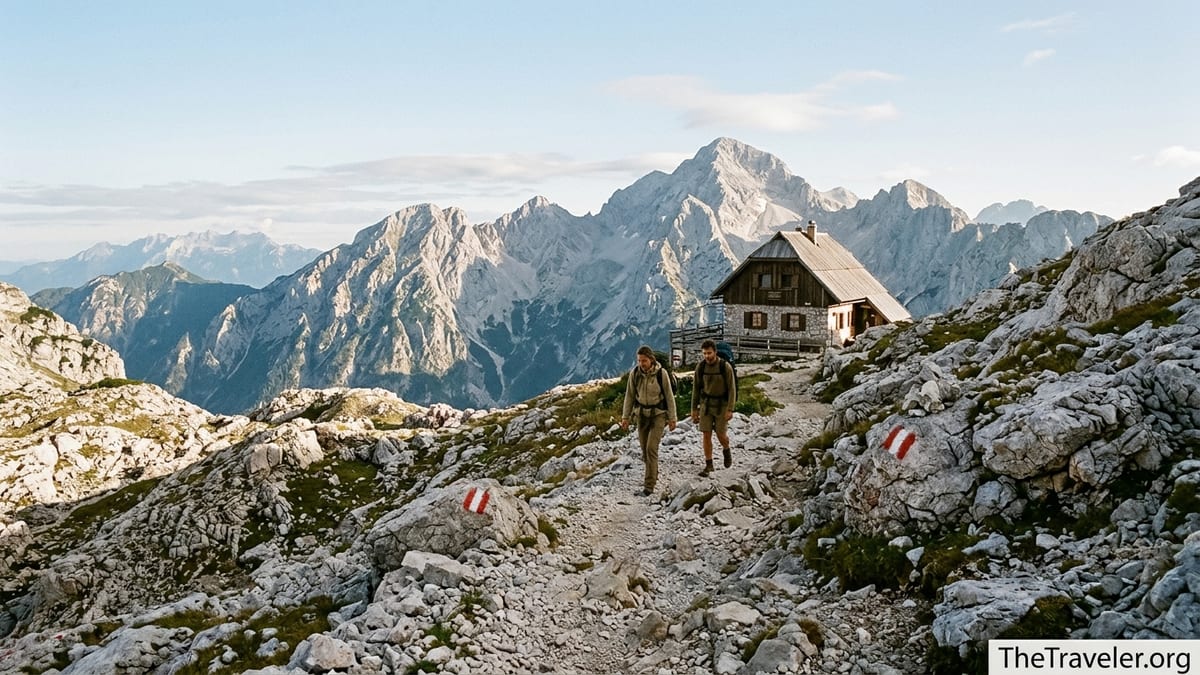
For many visitors, the network of mountain huts is a highlight of the Julian Alps. Yet the same huts cause headaches when travelers misunderstand how they work. Unlike casual refuges where you can simply show up late in the day and expect a bed, the more popular huts in Triglav National Park often require advance reservations in peak season, sometimes months ahead. A good example is Koča pri Triglavskih jezerih in the Valley of the Seven Lakes, one of the most visited huts in the region, which publishes its seasonal opening dates and takes reservations for summer long before the snow has melted.
Some visitors book huts as if they were standard hotels, without recognizing that each hut has limited capacity and simple shared facilities. On a busy August weekend, it is common for huts such as Triglav Lodge at Kredarica or Planika Lodge, both popular bases for summit attempts, to be fully booked. Turning up late, assuming emergency floor space will automatically be available, is not considerate to staff or safe for you. It also runs against the park’s efforts to manage visitor numbers responsibly in a fragile high-alpine environment.
Another common misstep concerns what huts actually provide. Many first-time visitors imagine ultra-basic shelters and pack full camping stoves, large gas canisters and several days of food, only to discover that most staffed huts offer hot meals, drinks and simple breakfasts for an additional fee. On the other hand, some travelers assume hotel-like comfort, expecting private bathrooms, guaranteed showers and card payments. In reality, many huts have dormitory-style sleeping rooms, shared toilets, limited or no showers, and rely on cash payments because card terminals can be unreliable in remote locations.
A practical strategy is to use the Slovenian Alpine Association and official Triglav National Park information as your baseline. Check which huts are open for your dates, confirm whether reservations are required, and ask directly what they provide. Then build your route around realistic daily distances between huts. For instance, planning a day that runs from Planina pri Jezeru to Koča pri Triglavskih jezerih and then onward to a high hut above 2,000 meters may look appealing on a map, but for many hikers that combination means a very long, exposed day with little margin for bad weather or fatigue.
Misjudging Difficulty and Safety in High Alpine Terrain
Perhaps the most serious mistake travelers make is underestimating how technical some routes in the Julian Alps can be. Slovenia’s highest peak, Triglav at roughly 2,864 meters, appears frequently in social media posts and short trip itineraries, which can create the impression that it is a straightforward hike. In reality, the final approach to the summit follows exposed ridges and secured routes with fixed cables and metal rungs. In dry, stable weather this is a thrilling experience for those comfortable with heights and sure-footed on rock, but it is far from a casual walk.
Rescue teams in Triglav National Park regularly highlight that many accidents involve people who start late, carry light city clothing and minimal water, and then push on into deteriorating weather on steep, rocky terrain. A traveler who has only done gentle walks around Lake Bled may not be prepared for the sustained exposure of the routes above Aljaž Lodge in the Vrata Valley or the long ascent from the Krma Valley to Kredarica hut. Snowfields that linger into early summer, loose scree underfoot, and rapid shifts from sunshine to thick fog can turn a pleasant outing into a serious situation.
Even non-summit hikes can be more challenging than expected. Some connecting paths between huts are graded as demanding mountain trails, involving steep zigzags, short scrambling sections, or narrow traverses high above valleys. Travelers using generic mapping apps sometimes discover that a suggested “shortcut” is in fact a route marked locally as very difficult, intended for experienced mountaineers. In a few well-known cases, guides have advised guests to change their entire hut-to-hut itinerary because one planned descent was notorious for accidents.
Honest self-assessment is crucial. Before you book a route that links, for example, a night at Koča pri Triglavskih jezerih with a summit of Triglav and a long descent to the Soča Valley, ask whether everyone in your party is comfortable with exposure, has solid mountain footwear, and is ready for an 8 to 10 hour day at altitude. If you are unsure, consider hiring a local guide for your most ambitious day, or choosing routes that stay below the most technical ridges while still delivering outstanding views of the Julian Alps.
Ignoring Local Weather Patterns and Microclimates
Photos of the Julian Alps often show crystal-clear skies over emerald rivers and sharp ridgelines, which can mislead travelers into assuming consistently stable weather. In reality, this corner of the Alps experiences rapid changes, especially in the warm months. Morning can dawn bright and still in the Bohinj valley, yet by early afternoon dark clouds can build over Triglav and the surrounding peaks, bringing thunderstorms, hail and sudden temperature drops.
Visitors frequently make the mistake of planning big alpine days without allowing for this pattern. They linger over a late hotel breakfast, only start hiking late morning, and then find themselves on an exposed ridge or via ferrata section at exactly the time storms tend to form. Even in mid-summer, wind at 2,500 meters can make temperatures feel close to freezing, and wet rock on secured routes increases fall risk. A lightweight waterproof jacket and extra insulating layer should be considered essentials, even when valley temperatures in Bled or Bovec climb above 25 degrees Celsius.
Winter and shoulder seasons bring their own challenges. In May or early June, heat in Ljubljana can tempt travelers to assume that high passes will be clear, yet snowfields and icy sections often remain above 2,000 meters. Nike-style running shoes that feel fine for a stroll along Lake Bohinj’s shore can perform very poorly on slushy snow or hard, refrozen tracks on the way to Planika Lodge. Conversely, in autumn, clear blue mornings can be followed by dense fog rolling into high valleys, reducing visibility and navigation comfort.
Checking the forecast is more nuanced here than simply glancing at a generic app. Mountain weather services, hut wardens, and local guiding companies often provide more relevant updates, including warnings about afternoon instability or lingering snow on specific routes. When booking, build flexible days into your schedule so you can swap a high route over a pass for a valley hike along the Soča River or a museum visit in Kobarid if conditions deteriorate.
Choosing the Wrong Base or Overloading Your Itinerary
The Julian Alps region stretches across several valleys and lakes, each with its own character. A common planning error is to book a single base and then attempt to cover everything from there. For example, staying four nights in Ljubljana and driving into the mountains each day can work for gentle day trips, but it means long, repetitive drives if you want to explore both Lake Bohinj and the remote corners of the Soča Valley. Similarly, booking your entire stay in Kranjska Gora might leave you facing long transfers when you wish to spend time rafting near Bovec or hiking above Tolmin.
A more relaxed strategy is to divide your trip between two or three bases. Many visitors pair two nights around Lake Bled or Bohinj for easier hikes and lake activities, a couple of nights in Kranjska Gora to explore the upper Sava valley and Vršič Pass, and then move to Bovec or Kobarid to focus on the Soča River and the western side of Triglav National Park. This reduces backtracking and means you can match accommodations to the type of activities you plan in each area, from family-friendly hotels to simple guesthouses or agritourism farms.
Another itinerary trap is trying to squeeze a multi-day hut trek, a Triglav summit, and full days of water sports into a single short visit. Even a relatively straightforward three-day hut-to-hut loop requires at least one buffer day for weather, plus half a day on each end for logistics. If you then also book a canyoning trip, a guided rafting day, and a sunrise photoshoot at Lake Bled, you leave no space for rest or unexpected changes.
When you are comparing options, be realistic about travel fatigue and the needs of everyone in your group. A family with younger children may be far happier spending four nights split between Bled and Bohinj, with one gentle excursion toward the Vogar viewpoint, than dragging suitcases between multiple mountain towns and huts. Couples planning a hut tour might prefer to end with a night in a comfortable spa hotel near Bled or in a stylish apartment in Bovec rather than driving straight to an early-morning flight after a strenuous final descent.
Overlooking Regulations, Reservations and Responsible Travel
Triglav National Park and the wider Julian Alps are protected landscapes with specific rules that visitors sometimes discover too late. Wild camping inside the national park is generally not allowed, yet every year travelers arrive assuming they can pitch tents anywhere they find a view. Rangers and locals are increasingly vigilant about enforcing regulations, particularly around popular areas like the Seven Lakes Valley and the upper Soča gorges. Beyond potential fines, unauthorized camping contributes to erosion and waste problems in fragile alpine zones.
Parking, traffic and visitor numbers are also managed more actively than many guests realize. In places like the shores of Lake Bohinj and certain Soča Valley trailheads, parking areas fill quickly on summer weekends and some operate shuttle systems or time-restricted access during peak hours. The planned tighter controls on Vršič Pass traffic from 2026 reflect a broader shift toward limiting congestion and pollution on iconic routes. If you book accommodation that relies heavily on private car access to specific viewpoints at certain times of day, build in the possibility that local authorities may change access rules between the time you book and the time you arrive.
Respecting local communities and nature also means thoughtful choices in smaller details. Booking locally owned guesthouses or farm stays spreads tourism benefits more evenly than concentrating everything in a handful of famous hotels. Buying cheese or honey from a mountain pasture near Pokljuka, or taking a guided walk with a local naturalist in the Trenta Valley, can have more positive impact than simply driving through for a quick photo stop. Conversely, flying a drone over quiet valleys without checking rules, venturing off marked trails to get closer to wildlife, or leaving litter in hut surroundings all contribute to the kind of pressure that can degrade the very landscape you came to enjoy.
Before you finalize bookings, it is worth checking the latest guidance from Triglav National Park and local tourism offices for updates on shuttle services, parking restrictions, and any seasonal trail closures. That ten-minute research step can save you from discovering at the last moment that your pre-dawn drive to a lakeside trailhead is no longer permitted, or that your preferred waterfall trail is closed for safety maintenance.
The Takeaway
A trip to the Julian Alps can be one of Europe’s most rewarding mountain experiences, but it rewards those who plan with the local reality in mind rather than relying on idealized photos and simplistic maps. The biggest mistakes travelers make are less about choosing the “wrong” peak or valley and more about mismatching their dates, routes, expectations and fitness levels to the character of these mountains.
To avoid disappointment, start by clarifying your priorities: treading high ridges, wandering between lakes and villages, or lingering beside the Soča’s luminous pools. Then choose your season carefully, allow generous time for travel days, book mountain huts realistically, and stay humble about weather and terrain. If in doubt, seek local advice or consider a guided day for your most ambitious objective.
Above all, remember that the Julian Alps are not simply a scenic backdrop for quick selfies. They are a living, protected landscape with deep cultural significance for Slovenia, shaped by shepherds, mountaineers, and careful conservation work. Approach them with patience and respect, and your trip will feel less like a rushed checklist and more like a genuine alpine journey.
FAQ
Q1. Do I really need to book Julian Alps mountain huts in advance?
In peak season it is strongly recommended, especially for popular huts like Triglav Lodge at Kredarica and Koča pri Triglavskih jezerih, which often fill weeks ahead.
Q2. When is the best time of year to hike in the Julian Alps?
For most people, the sweet spot is from mid-July to mid-September, when snow has usually melted from high passes and most huts and buses operate on full schedules.
Q3. Can beginners safely climb Mount Triglav?
Fit beginners with good footwear and no fear of heights can often climb Triglav safely with an experienced local guide, but it is not a casual walk and should be treated as a serious high-alpine day.
Q4. Is it possible to visit both Lake Bled and the Soča Valley in one day?
You can drive between them in a few hours, but it makes for a rushed experience. Most travelers are happier dedicating at least one full day, preferably several, to each area.
Q5. Do I need special equipment for summer hiking in the Julian Alps?
For most marked trails you need sturdy hiking boots, a waterproof jacket, warm layers, sun protection and enough water. Early in the season, some higher routes may still require crampons and an ice axe.
Q6. Can I camp wild inside Triglav National Park?
Wild camping is generally not allowed inside the park. You should use official campsites in the valleys or stay in mountain huts and designated accommodation.
Q7. How risky are afternoon thunderstorms in summer?
They are common enough that you should plan major ascents to finish exposed sections by early afternoon and always carry a waterproof layer, even if the morning is clear.
Q8. Is renting a car essential for exploring the Julian Alps?
A car offers flexibility, but you can reach many key areas using buses and shuttles in summer. However, public transport options are more limited early and late in the season.
Q9. Are card payments accepted in mountain huts?
Some huts now accept cards, but coverage is patchy and terminals can fail. It is wise to carry enough cash to cover meals and accommodation in case electronic payments are not available.
Q10. Should I hire a guide for hut-to-hut trekking?
If you are experienced with alpine navigation and reading mountain weather, you can trek independently. If not, or if you plan to include technical sections or a Triglav summit, hiring a local guide can significantly improve both safety and enjoyment.