


The Julian Alps, stretching across Slovenia and into northeastern Italy, are no longer a well-kept secret, but they still feel wonderfully wild. Between Lake Bled’s storybook shores, Lake Bohinj’s deep glacial waters, the high limestone ridges of Triglav National Park and the Soča Valley’s turquoise river, this compact region offers a huge variety of experiences. Whether you are a first-time visitor looking for easy scenic walks, an experienced trekker chasing hut-to-hut adventures, or a traveler who prefers spa hotels and scenic drives, there is a Julian Alps itinerary tailored to you.
Get the latest updates straight to your inbox!
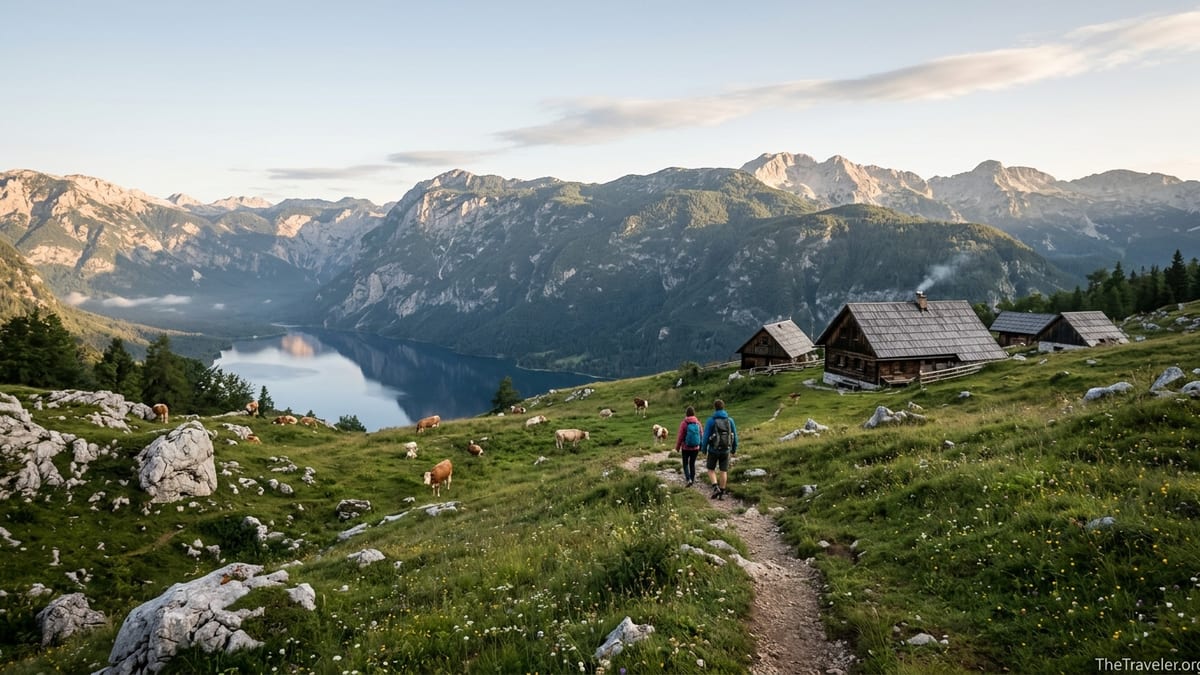
Understanding the Julian Alps: Where to Base Yourself
Most visitors experience the Julian Alps in Slovenia, where Triglav National Park protects much of the high country and valleys. Mount Triglav, the country’s highest peak at just under 2,900 meters, dominates the skyline and is a national symbol. Travel times are short: from Ljubljana to Lake Bled takes roughly 45 minutes by car, and another 30 to 40 minutes brings you to Bohinj or Kranjska Gora. This means you can stay in one base and still sample very different corners of the range.
For first-time visitors, Lake Bled is the most convenient base. It has frequent bus links from Ljubljana and the airport, a wide choice of hotels from simple pensions to five-star spa properties, plus tour operators who arrange everything from gentle walks to full Triglav ascents. If you want a slightly quieter atmosphere without sacrificing services, Ribčev Laz and Stara Fužina at Lake Bohinj are good alternatives, with several small hotels and guesthouses within a short walk of the lakefront.
Further north, Kranjska Gora and the surrounding Upper Sava Valley work well for active travelers. Here you are closer to the Vršič Pass, the Tamar and Krnica valleys and the Italian and Austrian borders. Accommodation ranges from mid-range hotels with wellness areas to self-catering apartments that suit hiking groups and families. On the western side of the range, Bovec and Kobarid in the Soča Valley are popular with rafters, kayakers and cyclists and can be combined with a mountain stay for a multi-base trip.
If you prefer a quieter experience still, consider villages like Mojstrana, Rateče or Ukanc near Bohinj. These spots have fewer hotel-style options but several family-run guesthouses and apartments, making them ideal for travelers with a rental car who value direct trail access more than nightlife or dining choice.
Best Tours for First-Time and Casual Visitors
If this is your first time in the Julian Alps and you are not an experienced hiker, focus on day tours based from Lake Bled, Lake Bohinj or Kranjska Gora. Many local outfitters run guided day hikes in Triglav National Park that require only basic fitness, such as walks through the Pokljuka Plateau forests, the Vintgar Gorge, or the Planica and Tamar valleys. Prices for small-group day hikes typically start around 80 to 120 euros per person, including transport from Bled or Ljubljana and a certified guide.
For visitors who prefer a mix of light activity and sightseeing, multi-activity tours are a good option. Some international adventure companies now offer week-long itineraries that combine hiking in Triglav National Park with rafting on the Soča River, cycling around Alpine villages, and visits to wine regions. These packages often cost from around 1,800 to 2,500 euros per person for seven to eight days excluding flights, and include hotels, most meals, guides and private transport between bases such as Bled, Kobarid and Istria on the coast.
Self-guided walking holidays are another appealing choice for independent travelers who want logistics taken care of but do not need a full-time guide. Several European walking specialists sell six to eight-day self-guided itineraries based around the Julian Alps, with luggage transfers between accommodations and pre-loaded GPS routes. A typical package might include three nights in Bled, two near Bohinj and two in Kranjska Gora, with walking days graded at moderate difficulty. Expect prices starting roughly from 900 to 1,400 euros per person for a week, depending on hotel standard and season.
Families with children or older travelers can look for “one-hotel” style guided weeks, where you stay in a single base, often near Bled or Bohinj, and choose from a menu of daily guided walks. These itineraries avoid the need to pack and move frequently, while still offering varied routes at different difficulty levels. They are usually available from late May through September, when snow has melted from most lower trails.
Hut-to-Hut Adventures for Serious Hikers
The Julian Alps are best known among hikers for their hut-to-hut trekking routes inside Triglav National Park. Here, a network of mountain huts allows for multi-day traverses at altitudes that often stay above 1,800 meters, with classic routes such as the Seven Lakes Valley and high traverses under peaks like Kanjavec or Škrlatica. Guided three-day Triglav ascents that combine a summit day with hut overnights typically start around 450 to 600 euros per person in a small group, not including hut half-board, which usually costs an additional 60 to 80 euros per person per night, paid in cash at the hut.
Guided hut-to-hut trips are ideal if you are unfamiliar with via ferrata techniques or Alpine weather. Operators based in Bled and Ljubljana offer three to four-day “Triglav National Park hut-to-hut” hikes without technical climbing, focusing instead on scenic valleys like the Seven Lakes or the meadows of Velo Polje. These itineraries are often graded at moderate difficulty and are suitable for fit hikers with some mountain experience. For more committed trekkers, six-day hut-to-hut routes cross multiple ridges and remote sections of the park, usually with daily hiking times of six to eight hours.
Self-guided hut-to-hut packages are becoming more common too. Companies specializing in Alpine trekking now arrange three to six-night circuits that include reservations in huts, route notes and emergency support, while leaving the day-to-day navigation to you. These trips typically cost from about 500 euros per person for a three-night loop to over 1,000 euros for longer routes, depending on how many nights are spent in staffed huts versus valley hotels. In high season, independent travelers who do not book through a company should reserve huts several weeks in advance, especially for popular spots in the Seven Lakes Valley or around Triglav.
Most hut-to-hut hiking in the Julian Alps is best between late June and mid-September, when huts are fully staffed and snow is usually limited to the highest north-facing slopes. Outside this window, some huts operate on a limited basis or are closed, and snow conditions can require equipment such as crampons. If you plan to summit Triglav itself, be realistic about exposure and fitness. The upper sections involve protected climbing on steel cables, and many hikers choose to hire a guide or join a small group rather than attempt it alone.
Where to Stay: From Lakeside Luxury to Simple Mountain Huts
Accommodation in the Julian Alps falls into three broad categories: lakeside and resort hotels, village guesthouses and apartments, and high-mountain huts managed by mountaineering clubs. Around Lake Bled, properties such as upscale spa hotels near the shore offer wellness centers, lake-view rooms and on-site restaurants. Room rates in high summer can range from about 250 euros per night for a lake-view double in a four or five-star hotel to under 120 euros for simpler three-star properties a short walk uphill from the water.
Lake Bohinj is more low-key but has a good mix of options. In Ribčev Laz and Ukanc you will find mid-range hotels with saunas and indoor pools that cater to hikers and skiers, as well as smaller pensions and apartment houses. Summer nightly rates often vary between 100 and 180 euros for a double room in mid-range accommodation, with basic rooms in older guesthouses sometimes available for less. Many hikers choose to stay in self-catering apartments here to prepare early breakfasts before hitting the trail and to keep costs down.
In Kranjska Gora, several four-star hotels cluster around the ski slopes and bike paths, making this town a solid choice for active travelers who want easy access to amenities. Wellness hotels with pools and saunas frequently run summer hiking packages that include half-board and guided walks. Bovec and Kobarid in the Soča Valley cater more to adventure sports; you will find a mix of hostels, simple hotels and glamping sites along the riverbanks, which can appeal if you are combining trekking with rafting or canyoning.
Mountain huts offer the most immersive Alpine experience. Facilities are basic compared with hotels, with dorm-style sleeping rooms, shared bathrooms and hearty canteen-style meals. A typical hut charges around 30 to 50 euros per person for a bed, with dinner and breakfast adding another 30 to 40 euros. Some huts accept card payments but many still prefer cash, and Wi-Fi is often unreliable or absent. In exchange, you get sunset and sunrise views over the Julian Alps that no valley hotel can match.
Getting Around: Trains, Buses, Scenic Roads and Transfers
Despite its rugged appearance, the Julian Alps are relatively easy to reach. Most international visitors fly into Ljubljana or Venice and then travel overland. From Ljubljana, frequent regional buses connect the capital with Bled, Bohinj and Kranjska Gora, usually taking one to one and a half hours depending on the route. Tickets are affordable and can often be purchased on board or at bus stations. There are also seasonal direct shuttles operated by tour companies between Ljubljana Airport and popular mountain towns.
Trains play a smaller role but are useful in certain cases. There is a scenic rail line from Ljubljana through Jesenice toward Villach in Austria, with stops that allow connections to Bled and the Upper Sava Valley by local bus or taxi. In summer, regional tourism boards sometimes support shuttle systems within valleys, for example linking Bohinj villages with trailheads on the Pokljuka Plateau or the cable car up to Vogel. These seasonal services are particularly helpful for hikers who prefer not to drive mountain roads.
Driving remains the most flexible way to explore the Julian Alps, especially if you want to combine multiple valleys in a single trip or stay in small villages with limited public transport. Rental cars from Ljubljana or Venice typically cost from around 40 to 70 euros per day in summer for a compact model, plus highway tolls and fuel. Key driving highlights include the Vršič Pass, which winds over cobbled hairpins between Kranjska Gora and the Soča Valley, and the drive along Lake Bohinj to Ukanc, where the road ends in a dramatic cirque of cliffs.
For visitors uncomfortable with mountain driving or those short on time, private transfers and tour shuttles are a good compromise. Many local agencies offer fixed-price transfers such as Ljubljana to Bled or Bled to Bohinj, often in the 60 to 120 euro range per vehicle depending on distance and size. If you join a guided trek, transport between Ljubljana or Bled and the trailheads is usually included in the package price, which simplifies logistics considerably.
Choosing the Right Julian Alps Trip for Your Travel Style
The Julian Alps can feel overwhelming at the planning stage because there are many excellent options within a small geographic area. A useful approach is to start with your preferred intensity level and then match it to a base. If you want mostly gentle walks, lakeside strolls and viewpoints, then two or three nights in Bled and another two in Bohinj, without hut nights, will fit well. You can add low-level hikes like the Vintgar Gorge, the Mostnica Gorge and the shores of Bohinj, all accessible via local buses or short transfers.
If your priority is a classic Alpine trekking experience, focus on hut-to-hut routes and book huts well ahead for July and August. A practical structure is to spend one night in Bled to adjust, then join a three to six-day hut-to-hut trip in Triglav National Park, finishing with a restorative hotel stay in Bohinj or the Soča Valley. This sequence gives you both the social atmosphere of the huts and a more comfortable finale with lake swims or river-side cafes.
Travelers who enjoy variety might combine the Julian Alps with other parts of Slovenia or neighboring regions. It is realistic to spend four nights in the mountains and then two or three nights on the coast, in wine country or across the border in Italy’s Friuli region. Several tour operators already build this combination into their itineraries, pairing hikes under Triglav with sea kayaking in the Adriatic or cycling between vineyards. Independent travelers can replicate the same pattern by using rental cars or long-distance buses.
Budget should also guide your decisions. Hut-to-hut trekking can be surprisingly cost effective compared with staying only in resort hotels, especially if you choose self-guided options and limit restaurant meals in tourist centers. On the other hand, if you value private bathrooms, spa facilities and à la carte dining, expect to pay more in high season and consider traveling in late May, June or September, when room rates are slightly lower and trails are less crowded.
The Takeaway
From short lakeside strolls near Bled to multi-day traverses across limestone ridges, the Julian Alps offer experiences for almost every type of visitor. Your ideal trip might be a comfortable hotel stay with a handful of guided day hikes, a demanding hut-to-hut route linking remote corners of Triglav National Park, or an adventurous mix that adds rafting or cycling in the Soča Valley. With travel distances short and infrastructure improving every year, it is possible to sample several different landscapes in a single week.
Choosing the right combination of tours, hotels and transport will largely determine how relaxed or adventurous your journey feels. Take stock of your fitness, comfort needs and budget, then decide whether you want the social atmosphere of mountain huts, the convenience of lakeside hotels, or the flexibility of self-guided walking with luggage transfers. Booking earlier for peak summer, especially for huts and popular hotels around Bled and Bohinj, will secure better options.
Whichever format you choose, allow at least a few days to slow down. Early-morning mist over Lake Bohinj, the echo of cowbells on the Pokljuka pastures, the intense turquoise of the Soča River and the pale limestone spires around Vršič are best appreciated without rushing between photo stops. With thoughtful planning and realistic expectations, the Julian Alps can deliver one of Europe’s most rewarding mountain holidays, whether you are a first-time visitor or returning for a deeper exploration.
FAQ
Q1. When is the best time of year to visit the Julian Alps?
The main hiking season runs roughly from late June to mid-September, when most mountain huts and seasonal shuttles operate and higher trails are largely snow free. May, early June and late September can be excellent for lower-level walks and quieter lakeside stays, but some high routes may still have snow or closed huts.
Q2. Do I need a guide to hike in Triglav National Park?
A guide is not mandatory for many marked trails, and experienced hikers often go self-guided on moderate routes. However, if you plan to summit Triglav, attempt exposed via ferrata sections, or hike early or late in the season when snow and weather are more complex, hiring a local guide or joining a small group tour is strongly recommended.
Q3. How far in advance should I book mountain huts?
For popular routes in July and August, it is wise to book huts several weeks, and ideally two to three months, in advance. Weekends and huts near Triglav or in the Seven Lakes Valley fill first. Outside peak season or for less frequented huts, you may find space with shorter notice, but it is still safer to reserve before arriving.
Q4. Is it possible to visit the Julian Alps without renting a car?
Yes, many travelers rely on buses and organized transfers. Regular buses connect Ljubljana with Bled, Bohinj and Kranjska Gora, and tour operators often include trailhead transport in guided packages. For remote valleys and early starts, a car is more convenient, but you can still enjoy a substantial amount of hiking using public transport, taxis and seasonal shuttles.
Q5. What kind of fitness level do I need for hut-to-hut trekking?
Most classic hut-to-hut routes in the Julian Alps require you to be comfortable walking six to eight hours per day on uneven, sometimes steep terrain. You do not need to be a technical climber for non-via ferrata routes, but you should be able to manage sustained ascents and descents with a backpack and feel steady on rocky paths.
Q6. Are the Julian Alps suitable for families with children?
Yes, with the right itinerary. Lakeside bases like Bled and Bohinj offer easy walks, boat trips and cable car rides, along with shorter family-friendly hikes. Families with older children who have some hiking experience can consider gentler hut-to-hut routes or one-night stays in mountain huts, keeping daily distances manageable and avoiding exposed sections.
Q7. How expensive are hotels and huts compared with other Alpine regions?
In general, Slovenia’s Julian Alps are somewhat more affordable than many well-known areas in Switzerland or Austria, though prices have risen as the region has become more popular. Mid-range hotels around Bled and Bohinj commonly cost between 120 and 200 euros per night in summer, while mountain huts often come to roughly 60 to 90 euros per person per night including dinner and breakfast.
Q8. What should I pack for a summer hiking trip in the Julian Alps?
Even in summer you should bring waterproof layers, a warm mid-layer, sturdy hiking boots, a hat, gloves, sun protection and a small first-aid kit. Weather can change quickly in the high mountains, so a lightweight down or synthetic jacket is useful. For hut-to-hut trips, pack a thin sleeping bag liner, earplugs, a headlamp and some cash for hut payments.
Q9. Can I combine the Julian Alps with other destinations on the same trip?
Yes, this is one of the region’s strengths. Many travelers spend four to five nights in the Julian Alps and then add a few days on Slovenia’s short Adriatic coast, in Ljubljana, or across the border in Italy or Croatia. The compact size of the country makes transfers of two to three hours by car or bus common between mountains, coast and cities.
Q10. Are there options for non-hikers in the Julian Alps?
Absolutely. Non-hikers can enjoy boat trips on Lakes Bled and Bohinj, scenic drives over the Vršič Pass, spa days in lakeside hotels, visits to gorges and waterfalls with short access walks, and cultural stops in historic towns and villages. Many guided tours also offer alternative activities such as cycling, rafting or tasting local food and wine for travelers who prefer variety over long hikes.