


More news on this day
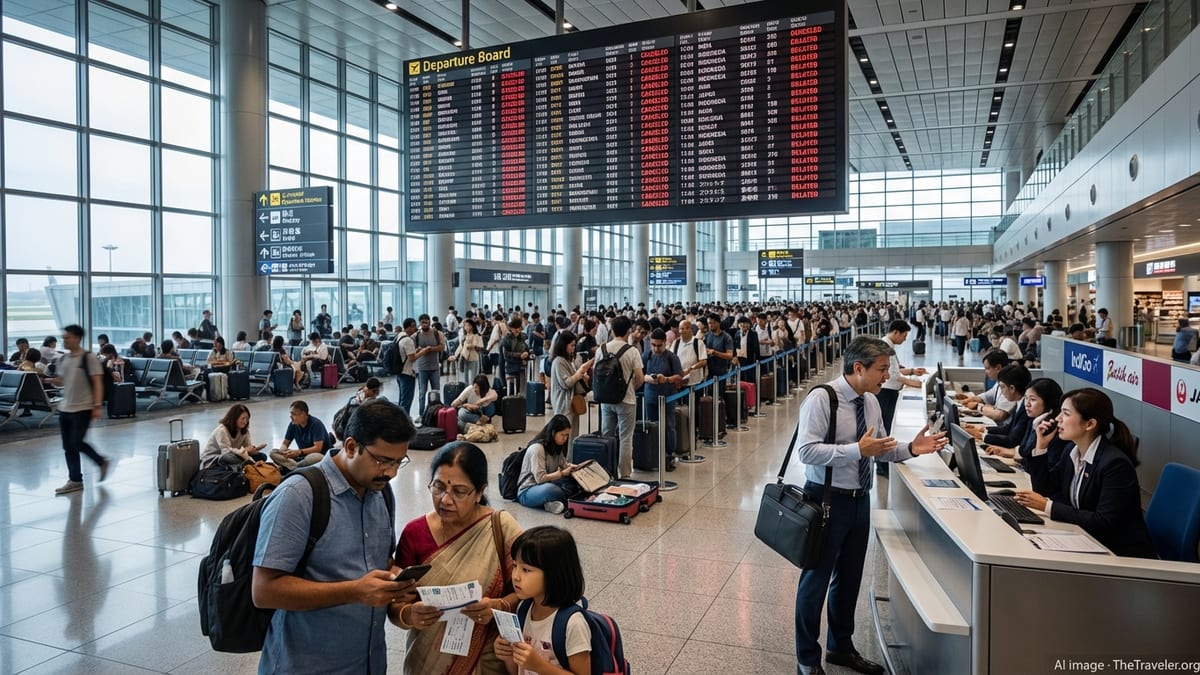
Asia’s air travel network is wrestling with another crushing wave of disruption, as volatile monsoon storms and geopolitical airspace constraints combine to disrupt or cancel an estimated 6,600 flights across the region in recent weeks.
Get the latest news straight to your inbox!
Monsoon Patterns Turn Routine Storms Into Systemic Disruption
Peak southwest monsoon season has arrived from the Indian subcontinent through Southeast Asia, and publicly available airport boards and regional weather bulletins show a sharp uptick in weather-related disruption. Heavy rain, low visibility and crosswinds have repeatedly triggered ground stops and runway flow restrictions at large hubs in India, Thailand and the Philippines, with knock-on effects across wider airline networks.
Recent coverage tracking departures and arrivals at Mumbai, Bengaluru, Delhi and Manila indicates several hundred cancellations and thousands of extended delays attributed to thunderstorms, reduced visibility and temporarily flooded airfields. In Laos and surrounding parts of mainland Southeast Asia, storm systems linked to the southwest monsoon and evolving tropical disturbances have driven aviation warnings and intermittent flight suspensions at regional airports, further eroding schedule reliability.
While individual weather events in the monsoon belt are not unusual for July, aviation analysts note that the combination of intense convective storms, saturated ground infrastructure and already tight crew rosters is amplifying the impact. Each prolonged ground stop forces aircraft and crews out of position for subsequent rotations, and once delays exceed crew duty limits, cancellations start to cascade through the evening and early-morning departure banks.
The result is that a few hours of intense monsoon weather at one or two major airports now routinely translate into dozens of cancellations and several hundred delays across multiple countries. Aggregated over several multi-day episodes since May, these weather-driven disruptions account for a significant share of the roughly 6,600 affected flights being reported across Asia’s main hubs.
Geopolitical Tensions Redraw Long-Haul Corridors
At the same time, airspace restrictions and conflict-related rerouting in the Middle East and surrounding regions continue to squeeze the corridors that connect Asia with Europe, Africa and North America. Trade and aviation publications have documented how conflict zone advisories and partial closures over parts of West Asia have forced airlines to shift long-haul routings north via Central Asia and Russia, or south over the Arabian Sea and Indian Ocean.
These longer routings add flight time, fuel burn and crew duty complexity, leaving airlines with less slack in already stretched schedules. Travel and industry outlets have reported hundreds of cancellations and several thousand delays during periods of peak airspace strain earlier in the year, with the worst days seeing major hubs in Doha, Dubai, Abu Dhabi, Singapore, Bangkok, Tokyo, Delhi and Shanghai all managing simultaneous disruption. Those structural pressures have not disappeared, even as day-to-day cancellation tallies fluctuate.
According to open schedule data cited in recent aviation analysis, carriers have increasingly resorted to proactive cancellations on marginally profitable or operationally complex routes in order to safeguard their core networks. When adverse monsoon weather then hits a hub already operating on thinner buffers, the combination of airspace-driven rerouting and local storms quickly overwhelms available spare aircraft and crews.
Industry observers point out that this dynamic turns what might once have been isolated bouts of bad weather or temporary conflict diversions into regionwide shocks. With the Middle East remaining a chokepoint for many Europe–Asia flows, each new airspace advisory or military flare-up tends to ripple directly into Asian departure banks a few days later, compounding seasonal weather challenges.
Airlines Trim Schedules and Suspend Routes Across Asia
In response, several Asia-based carriers are recalibrating their summer schedules, cutting frequencies and suspending some routes outright. Recent filings summarized by aviation data specialists and reported by business media show that India’s largest airline, IndiGo, is pausing services to multiple leisure destinations in Southeast Asia and China from July through the end of September, citing weak seasonal demand and rising operating costs.
Independent coverage of schedule data also highlights further route rationalisation by other regional carriers. Thai Lion Air has extended the suspension of its India services into July, while select Gulf and Southeast Asian airlines have trimmed flights on corridors most exposed to longer routings and higher fuel consumption. Travel outlets tracking these cuts suggest that airlines are choosing to concentrate scarce capacity and crews on the most resilient city pairs, while giving up at least temporarily on thinner routes that have become harder to operate reliably.
Alongside outright cancellations, many airlines are also reducing frequencies, downgrading aircraft types or shifting departure times in an attempt to create more robust buffers around busy connection banks. For passengers, though, these adjustments often show up as last-minute schedule changes, involuntary rebookings or the disappearance of previously available flights from booking systems, complicating summer travel planning.
Some carriers are flagging the July to September window as a testing period, with several suspensions currently scheduled to lift for the northern winter season starting in late October. However, industry commentary suggests that if geopolitical tensions and elevated fuel prices persist, some of these cuts may become semi-permanent, reshaping Asia’s international map in the process.
Ripple Effects for Fares, Tourism and Regional Hubs
The combination of monsoon disruption and geopolitically constrained airspace is also feeding through to fares and tourism flows. Reports tracking ticket prices on select Asia–Europe and Asia–Gulf routes show that longer routings and reduced capacity have pushed average economy fares sharply higher on some city pairs, particularly where flights once relied heavily on now-constrained Gulf hubs.
Travel industry analysis indicates that leisure destinations in Southeast Asia and coastal India are facing a patchy demand picture. On one hand, weather uncertainty and frequent cancellations are deterring some visitors during the core monsoon months. On the other, reduced seat supply on certain international routes is driving up prices for those who still choose to travel, potentially compressing the budget segment while leaving more resilient demand at the premium end.
Major Asian hubs are also reassessing their role in a fragmented global network. Airport operators and tourism boards from Singapore to Bangkok and Delhi are closely watching how sustained rerouting away from traditional Gulf corridors might channel more connecting traffic through South and Southeast Asia. Yet the same monsoon-linked reliability issues and infrastructure constraints risk limiting how much of this displaced traffic the region can absorb without further congestion.
For secondary airports and emerging tourism gateways, the near-term picture is even more volatile. As airlines pull back capacity, thinner routes to island and inland leisure markets are often the first to lose nonstop connectivity, forcing travelers onto more complex multi-stop itineraries that are more vulnerable to delays and missed connections when weather or airspace conditions deteriorate.
Travelers Face a New Normal of Uncertainty
For passengers, the practical impact of this confluence of monsoon volatility and geopolitical strain is a new baseline of uncertainty. Recent disruption tallies compiled by travel news outlets show single-day snapshots of several hundred cancellations and several thousand delays across Asia’s leading airports, and those figures recur with each fresh wave of storms or routing constraints.
Consumer advisories from airlines, airports and travel agencies increasingly emphasize the need to monitor flight status throughout the day of travel, arrive earlier at busy hubs and build longer layovers into self-constructed itineraries. Flexible tickets, travel insurance with robust disruption coverage and careful selection of routings that avoid known chokepoints are becoming key tools for managing risk during the current season.
Industry commentators caution that the pressures roiling Asia’s skies are unlikely to ease quickly. Climate scientists expect further variability in monsoon onset and intensity in coming years, while geopolitical tensions affecting key air corridors show few signs of rapid resolution. For Asia’s aviation sector, the present wave of roughly 6,600 disrupted flights may be less an anomaly than a preview of a more complex and fragmented operating environment.
In this context, airlines, regulators and airports across the region are under growing pressure to invest in more resilient scheduling, weather forecasting and contingency planning. How effectively they adapt over the next several seasons will determine whether Asia’s fast-growing air travel market can continue its expansion without recurring episodes of large-scale cancellations each time the monsoon or geopolitics turns against the network.