


More news on this day
Air travelers across Asia are facing widespread disruption as a wave of operational problems and congestion has led to at least 159 flight cancellations and more than 5,500 delays in a single day, snarling schedules at some of the region’s busiest international hubs.
Get the latest news straight to your inbox!
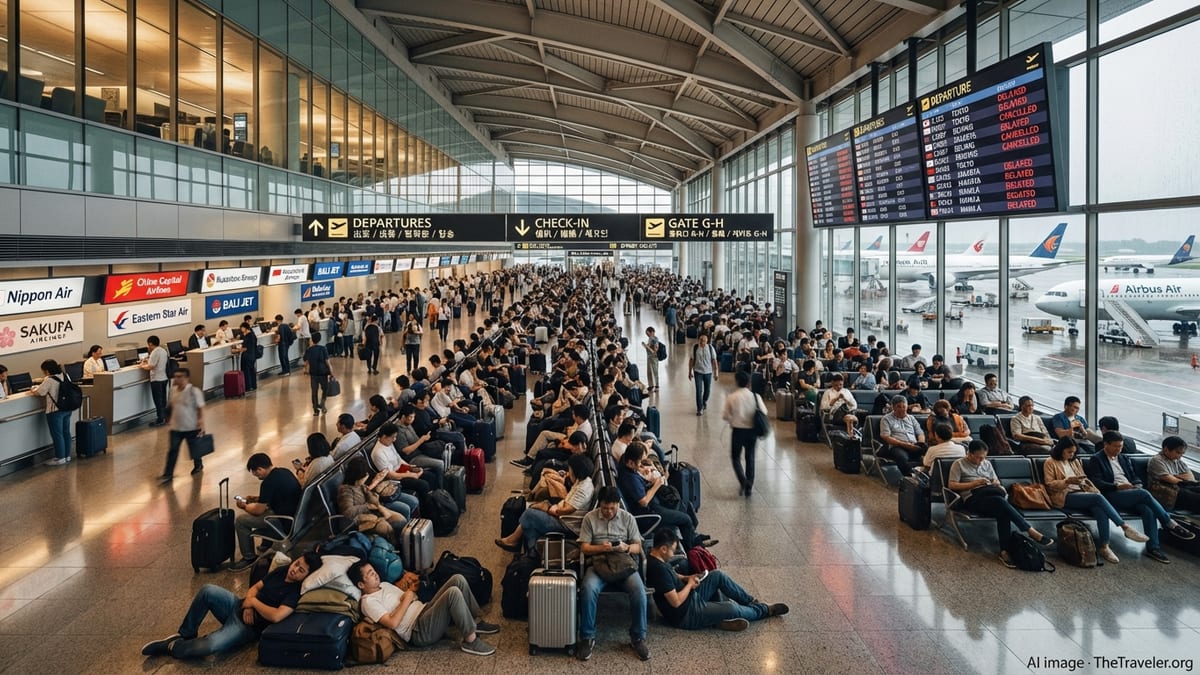
Major Hubs From Bangkok to Tokyo Under Strain
Published coverage indicates that airports in Thailand, Japan, Hong Kong, India, China, Indonesia, and the Philippines have all reported significant disruption, with delays far outnumbering cancellations. A combined total of 5,597 delayed flights and 159 cancellations has been recorded across the region, highlighting how even modest cancellation figures can translate into severe knock-on effects for passengers.
Bangkok, Tokyo, Delhi, Hong Kong, and other primary transit points have been particularly affected. Reports describe long queues at check in and security, congested departure halls, and aircraft held on the ground as schedules slipped throughout the day. While most flights have eventually departed, the cumulative effect of small delays across dozens of routes has created a cascading traffic jam in the skies over Asia.
The impact is being felt on both domestic and international networks. Short haul services within Southeast Asia and East Asia are experiencing rolling delays as aircraft and crew struggle to get back in position, while long haul flights connecting Asia with Europe, the Middle East, and North America are often departing late after inbound aircraft arrive behind schedule.
Airlines Grapple With Knock On Effects
Publicly available data show that multiple Asian carriers have been caught up in the disruption. Reports highlight that Air China, in particular, has faced one of the highest interruption counts, with several hundred delays and a notable share of the 159 cancellations attributed to its network. Other carriers mentioned in coverage include Cathay Pacific, Thai Airways, and Indian low cost operators such as Akasa Air.
Operational challenges vary by airline but tend to share common themes. Congested hubs, tight turnaround times, and busy regional corridors mean that a delay of even 30 to 60 minutes early in the day can ripple through an airline’s schedule. When multiple carriers encounter similar issues at the same airports, the result is an amplified regional disruption that is difficult to unwind quickly.
Industry analyses of recent global disruption events suggest that staffing constraints, aircraft availability, and IT system dependencies can all worsen such situations once they begin. Even when there is no single triggering incident, dense schedules and limited slack in fleets and crew rosters can leave airlines with little margin to recover from a series of small operational setbacks.
Travelers Confront Long Waits and Missed Connections
For passengers, the statistics translate into missed connections, extended airport stays, and rebooked itineraries. With more than 5,500 flights delayed, many travelers are arriving hours later than planned, often after midnight or into the following day. Those with tight onward connections in hubs such as Bangkok, Hong Kong, or Tokyo are especially vulnerable to being stranded between flights when arrival delays push them beyond their original transfer windows.
Published travel guidance commonly recommends that passengers build extra time into itineraries when traveling through busy Asian hubs, particularly during peak periods. Longer layovers can reduce the risk of missed connections, though the current level of disruption across multiple airports means that even conservative buffers are sometimes proving insufficient.
Some consumer advocacy resources also note that travelers should keep documentation of delay notifications and any written explanation provided by airlines. While compensation rules differ widely between jurisdictions in Asia, records of the disruption can be important for pursuing refunds, travel insurance claims, or any goodwill gestures that airlines may extend in response to extended delays or cancellations.
Regional Patterns and Underlying Pressures
The current disruption comes against a backdrop of sustained air traffic growth across Asia, where many markets have rebounded strongly in the past two years. As schedules have been rebuilt and demand for both business and leisure travel has climbed, pressure on existing airport infrastructure and airline operations has intensified.
Analysts frequently point to bottlenecks such as limited runway capacity, constrained terminal space, and air traffic control workloads as structural factors that make the region susceptible to widespread delays. When weather, technical issues, or congestion at a single hub occur, a lack of spare capacity can quickly translate into regional knock on impacts, especially for carriers that rely on tightly timed connections.
Recent global disruption episodes have also highlighted the role of technology and interconnected systems. IT outages or glitches affecting check in, crew scheduling, or aircraft dispatch systems can rapidly cascade, particularly when airlines operate large, complex networks. While the current wave of delays and cancellations across Asia appears to stem primarily from operational congestion, the overall environment remains one in which even minor technology or infrastructure issues can magnify traveler disruption.
What Passengers Can Do If Their Flight Is Affected
Travel experts and passenger rights organizations routinely emphasize a few practical steps for those caught up in large scale disruption. Keeping airline apps installed and notifications enabled can help travelers learn about delays or cancellations as soon as they are logged in the system, sometimes before information reaches airport departure boards.
Many airlines in Asia allow same day changes or rebooking via digital channels, which can spare travelers from joining long queues at service desks. When flights are delayed for several hours or canceled entirely, publicly available guidance suggests that passengers check both the airline’s conditions of carriage and any applicable local regulations to understand their entitlements to meals, accommodation, or refunds.
Finally, specialists often recommend that travelers maintain flexible plans on the ground when connecting through disruption prone hubs. Reserving fully refundable hotels or ground transport, and avoiding nonchangeable reservations on arrival days, can reduce financial losses if a long delay or missed connection forces a change in schedule. With more than 5,500 delays and 159 cancellations recorded across Asia in this latest disruption, flexibility and preparation are once again proving essential tools for anyone passing through the region’s airports.