


More news on this day
Roughly 25 freight cars derailed near Warrensburg, temporarily disrupting rail traffic and prompting safety checks in the surrounding area before subsequent evaluations allowed an all clear to be issued.
Get the latest news straight to your inbox!
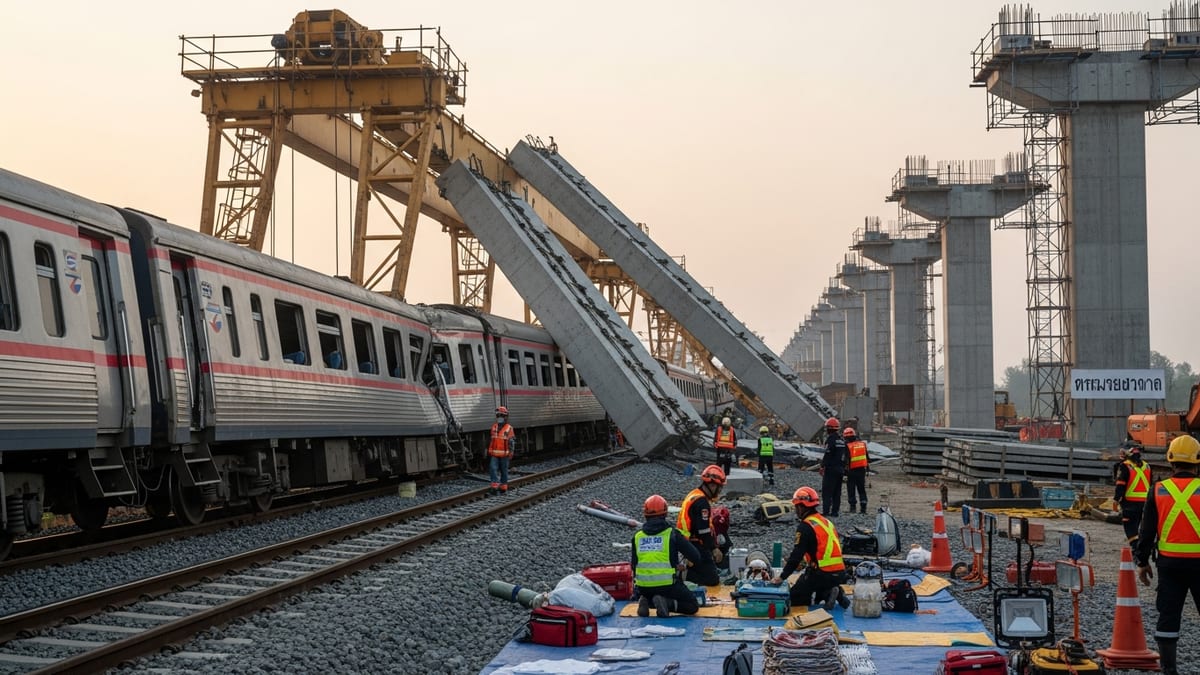
Derailment Near Warrensburg Prompts Swift Emergency Response
Initial reports indicate that approximately 25 cars of a freight train left the tracks near Warrensburg, leading to a rapid response from local emergency services and railroad crews. The incident occurred close to an active rail corridor that carries both freight and passenger traffic through the region, raising immediate concern about potential injuries, hazardous materials, and disruption to nearby communities.
Early information suggests that the derailed cars were part of a mixed-freight consist. Visual assessments from the scene described several cars tipped or leaning, with others still upright but off the rails. Rail operators activated established emergency protocols, temporarily halting additional train movements through the area while responders assessed damage to the line and surrounding property.
Publicly available information shows that first-arriving crews focused on securing the site and determining whether any of the cars contained hazardous cargo that might threaten residents or the environment. Road access around the derailment was limited to emergency traffic, and rail dispatchers held trains at controlled points in both directions while the condition of the track and rolling stock was evaluated.
At the same time, rail personnel began documenting the positions of the derailed cars, inspecting the integrity of couplers, wheels, and track components to understand how far the incident extended along the right-of-way. These initial observations will form part of the basis for subsequent mechanical and engineering reviews.
No Injuries or Hazardous Leaks Reported After Checks
According to published coverage and incident summaries, follow-up inspections at the site did not identify any injuries among train crew or nearby residents. Rail employees were accounted for, and there were no reports of vehicles or pedestrians directly struck by derailed equipment in the vicinity of the tracks.
Information released through media updates indicates that none of the affected cars released hazardous materials. Where tank or covered hopper cars were involved, responders carried out external checks for visible breaches, vapor clouds, or odors. Air quality monitoring and visual surveys did not reveal conditions suggesting a chemical release, a key factor in the decision to lift any precautionary advisories.
As a result of these findings, local agencies moved from an active emergency posture to a recovery phase. The all clear signaled that residents near the derailment did not need to evacuate or shelter in place and that routine outdoor activity could resume, even as repair and cleanup work continued along the tracks.
Environmental follow-up is expected to include continued observation of drainage ditches, soil near the roadbed, and any nearby waterways. Such monitoring is typically used to detect slow or concealed leaks from damaged equipment that might not be immediately evident on the day of a derailment.
Rail Operations and Travel Disruptions Around the Corridor
The incident near Warrensburg forced a pause in rail traffic through the affected section while track safety was assessed. Freight movements were temporarily held or rerouted where possible, and passenger schedules in the broader corridor faced potential delays or substitutions while the line remained under restriction.
Railroads commonly implement slow orders or complete closures around derailment sites, and publicly available timetables often show ripple effects extending across a wider network. Travelers in the region were advised through carrier alerts and local news reports to anticipate longer journey times, possible bus bridges, or rebookings while crews worked to clear and repair the line.
Once the all clear for public safety was issued, technicians shifted focus to restoring rail infrastructure. This included inspecting rail, ties, ballast, and signaling equipment for damage from derailed wheels and car bodies. Only after track geometry and signaling systems are verified as compliant with safety standards can normal speeds and full schedules resume.
For residents and visitors who rely on rail to reach Warrensburg and surrounding communities, the derailment served as a reminder of how closely regional mobility is tied to uninterrupted rail operations. Even without injuries or hazardous releases, a single event involving a few dozen cars can temporarily reshape travel patterns across a much larger area.
Investigation to Examine Cause and Contributing Factors
Formal investigations typically follow freight derailments of this scale, with a focus on determining both the initiating cause and any contributing factors. Public records and past cases show that investigators often examine a combination of track condition, equipment performance, train handling, and external influences such as weather or obstructions on the line.
Mechanical inspections usually include wheelsets, bearings, brake components, and couplers from the derailed cars, while track specialists review rail wear, alignment, ballast support, and the performance of turnouts or crossings. Event recorder data from the locomotive and dispatch records can help reconstruct train speed, braking, and signal indications in the moments before the derailment.
Reports from previous incidents in the broader rail industry highlight how single-point failures, such as a damaged wheel bearing, a compromised section of track, or an improperly aligned switch, can lead to multiple cars leaving the rails in quick succession. Investigators typically look for any pattern that might indicate broader systemic issues, such as maintenance intervals, inspection procedures, or the handling of mixed freight consists.
Once completed, findings may lead to recommendations on inspection regimes, infrastructure upgrades, or operating practices intended to reduce the likelihood of similar derailments near Warrensburg or elsewhere on the same network. Such outcomes can shape future investment decisions and regulatory discussions around freight rail safety.
Community Concerns and Rail Safety Context
The derailment near Warrensburg fits into a wider national conversation about freight rail safety, particularly in communities located along busy corridors. Even when incidents result in no injuries and no hazardous release, images of derailed freight cars near homes, businesses, or roadways can heighten public concern.
Recent derailments in other parts of the country have drawn attention to issues including tank car design, hazardous materials routing, and the resilience of track and signaling infrastructure. Advocacy groups and transportation analysts often point to these events when calling for additional investment in inspection technology, such as trackside detectors, and for stricter standards on the movement of certain cargoes.
For Warrensburg and nearby towns, public meetings, online forums, and local news coverage are likely venues where residents will seek additional information about what happened, what was carried on the train, and how safety is being addressed going forward. Railroads in similar situations frequently provide summaries of the freight involved, the status of cleanup, and broad outlines of safety programs, while formal investigation results can take months to become publicly available.
In the meantime, the all clear following this derailment has allowed daily routines and travel to resume around the affected stretch of track. The longer process of determining cause, applying lessons learned, and maintaining community confidence in rail safety will continue well after the last damaged car is removed and the line is fully restored to service.