


More news on this day
Passengers travelling through Manchester Airport today are facing a mix of outright cancellations and rolling delays, with live tracking data showing disruption across selected domestic, European and long haul services rather than a shutdown of the schedule.
Get the latest news straight to your inbox!
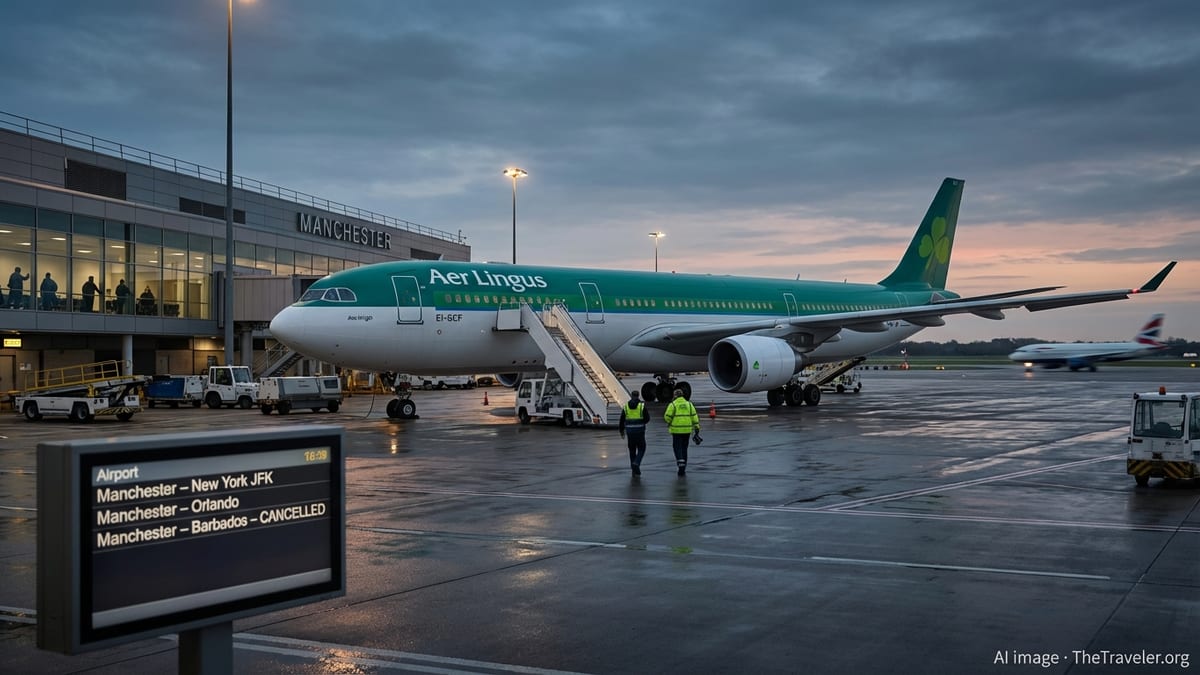
Snapshot of today’s cancellations and delays
Publicly available departure and arrival boards for Manchester Airport on 9 July 2026 indicate that a limited but noticeable number of flights have been cancelled outright, alongside a broader group operating with delays of between 30 minutes and more than an hour. The pattern points to targeted disruption on specific routes and airlines instead of a system wide failure.
Data compiled from live trackers shows that early morning and late afternoon departures are the most affected, reflecting how delays can build across the day as aircraft arrive late from earlier sectors. Several short haul European services have been cancelled, including flights to popular holiday destinations, while some domestic connections have been removed from the schedule or combined with later services.
Arrivals into Manchester are also showing knock on disruption. A number of inbound flights are holding arrival delays of around 30 minutes, which in turn affects the turnaround time for outbound services using the same aircraft. The result is a shifting list of departure times, with some flights pushed back repeatedly in short increments.
Despite the disruption, the majority of Manchester Airport’s daily programme continues to operate. With hundreds of flights scheduled across three terminals, the cancellations represent a minority of total movements, but they are concentrated enough on certain routes to cause queues at airline service desks and heavier demand for rebooking options.
Which terminals and airlines are most affected
Manchester Airport’s complex terminal layout means the impact of disruption is not spread evenly. Terminals 1 and 2, which handle a mix of full service carriers and major leisure airlines, are recording the highest number of delayed departures today, particularly on short haul routes into mainland Europe where aircraft are tightly rotated between multiple daily sectors.
Terminal 3, home to a number of domestic and regional flights as well as services from key low cost operators, is showing fewer outright cancellations but a series of rolling delays. These often stem from late inbound aircraft or crew scheduling constraints, which leave limited margin to recover time once the day’s programme has started to slip.
Leisure focused airlines serving Mediterranean destinations appear prominently in today’s list of affected services, reflecting both peak summer demand and the way weather or congestion elsewhere in Europe can quickly cascade into Manchester’s schedule. Some long haul departures are also operating behind schedule, particularly where they are fed by delayed inbound connections from other European hubs.
Not all carriers are experiencing the same level of disruption. Punctuality statistics compiled over recent days suggest that while some airlines have maintained relatively stable on time performance at Manchester, others have seen higher than usual rates of delay and a small cluster of cancellations, underlining how individual operational models and aircraft utilisation patterns shape resilience.
How to find the full, live list of affected flights
For travellers seeking a complete, up to the minute picture of cancellations and delays at Manchester Airport, the most reliable overview comes from a combination of the airport’s live flight information, airline channels and independent flight tracking platforms. These tools update throughout the day as schedules change, providing the latest status on specific flight numbers, boarding gates and estimated departure or arrival times.
Airport departure and arrival boards show the official status that check in and gate staff are working from, including any switch from on time to delayed or cancelled. Airline websites and mobile applications typically add detail on rebooking options and any automatic transfer to later services. Third party tracking sites aggregate data from multiple sources to map delay statistics by airport and airline, and some provide daily cancellation tallies that place Manchester’s performance in a wider national and European context.
Travellers are strongly advised to monitor these channels repeatedly in the hours before they are due to leave for the airport, as flight statuses can change quickly, particularly on days when there is a mix of cancellations and rolling delays. Checking in advance can help passengers avoid unnecessary time in the terminal if a flight has already been cancelled, or prompt them to arrive earlier if security queues are expected to lengthen during a busy departure wave.
Because airline and third party platforms may not refresh at the same interval, it is sensible to compare more than one source and verify any announcement of cancellation or major delay directly with the carrier’s official information before making alternative plans.
Why Manchester is seeing disruption today
The disruption at Manchester Airport today is occurring within a broader backdrop of strained aviation operations across the UK and continental Europe during the summer peak. Factors such as air traffic control restrictions, weather systems moving across key air corridors and high seasonal demand are all contributing to pressure on punctuality.
Manchester’s role as one of the country’s busiest airports outside London, with hundreds of daily movements across short haul and long haul networks, means even relatively minor upstream issues can translate into a visible list of delays and cancellations on the daily schedule. When aircraft arrive late from previous sectors, the tight turnaround times typical of modern airline operations leave little room to recover lost minutes without pushing subsequent flights behind schedule.
Recent history at the airport also illustrates how single point incidents can have outsized effects. Previous episodes involving power supply problems, severe weather and regional air traffic control constraints have resulted in spikes of cancellations and long delays, underscoring the sensitivity of the operation to both local and external shocks.
Today’s pattern appears less severe than those major events but still disruptive for affected passengers. With a mix of scattered cancellations and a larger pool of delayed services, the situation highlights how operational resilience and spare aircraft capacity remain critical issues as airlines attempt to manage full summer schedules.
Advice for passengers travelling through Manchester today
For those due to travel through Manchester Airport on a day marked by cancellations and delays, preparation and flexibility are key. Passengers are generally advised to follow their airline’s guidance on arrival times while allowing additional margin for potential queues at check in, bag drop and security, particularly during peak morning and evening waves.
Checking flight status multiple times before leaving home, and again on the way to the airport, can help travellers react quickly if a cancellation or significant delay appears. Where a flight is cancelled in advance, airlines may open online rebooking tools, reducing the need to queue at desks in the terminal. If disruption develops closer to departure, staff at gates and customer service points will normally manage boarding priorities, transfers and overnight arrangements based on each airline’s policies.
Passengers with tight onward connections, separate tickets or important time sensitive commitments at their destination may wish to explore earlier services or alternative routings if their original flight shows signs of persistent delay. Travel insurance policies and passenger rights regulations can offer additional protection in some circumstances, especially when long delays lead to missed connections or extra accommodation costs.
As Manchester moves through one of its busiest travel periods of the year, today’s cancellations and delays serve as a reminder for travellers to build contingency time into their plans, keep digital notifications switched on and stay closely informed about the evolving status of their specific flight rather than relying solely on the scheduled timetable printed on their booking confirmation.