


More news on this day
Dutch shipbuilder Concordia Damen has been selected to construct two next-generation river cruise ships for TUI River Cruises, marking a significant expansion of the UK-focused brand’s European fleet and its investment in lower-emission inland cruising.
Get the latest news straight to your inbox!
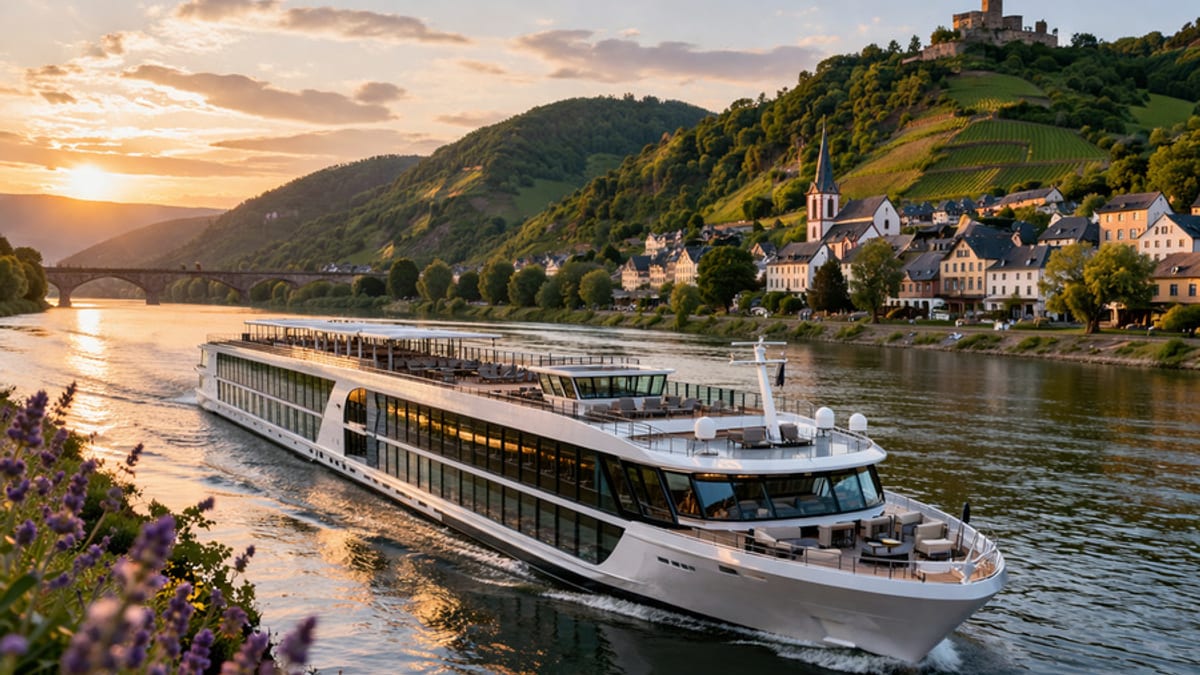
Newbuild Agreement Expands TUI River Cruises Fleet
According to recent announcements from TUI Group, the two new ships will enter service in 2028 and lift the TUI River Cruises fleet from six vessels operating in 2026 to a planned total of ten ships by the end of that year. The expansion supports the company’s strategy to grow its dedicated river cruise offering for the UK market on key European waterways.
TUI River Cruises currently sails on rivers including the Rhine, Main, Danube and Moselle, and has begun adding the Douro and Nile to its network. Publicly available information indicates that the additional ships will allow the brand to increase capacity on core routes while creating room for new itineraries and seasonal deployments.
The decision to proceed with two newbuilds underlines a wider trend of renewed investment in river cruising in Europe after several years of cautious fleet management. Industry coverage notes that multiple operators are commissioning purpose-built vessels with upgraded environmental performance and more contemporary onboard layouts, targeting both repeat cruisers and newcomers drawn from the wider ocean-cruise market.
Observers point out that the move also strengthens TUI’s river cruise positioning alongside its ocean brands, offering a broader portfolio of ship-based holidays to British customers who are increasingly looking for slower-paced, inland itineraries focused on culture, food and scenery.
Concordia Damen’s Role in Next-Generation River Design
Concordia Damen, based in the Netherlands, is known for its work on inland shipping and river cruise vessels, with a track record of more than 250 ship deliveries across barges, tankers, pushers and passenger ships. Company materials emphasize a focus on shallow-draft hulls, energy-efficient designs and adaptability for alternative propulsion and fuel systems.
The two new TUI River Cruises ships are described as next-generation vessels prepared from the outset for alternative fuels, particularly methanol. Available technical details indicate that each ship will feature 94 cabins and capacity for 188 guests, aligning with a broader industry shift toward energy-efficient mid-size tonnage that balances revenue potential with lower environmental impact along constrained rivers.
Concordia Damen has promoted its River Cruise 135 platform as a flexible design basis for modern river ships, highlighting optimized hull forms, hotel-style accommodations and a configuration that can be adapted for different brands and itineraries. While the exact platform for the TUI project has not been specified in public summaries, analysts suggest that using a proven baseline design can shorten construction timelines and reduce technical risk.
By choosing a specialized inland shipbuilder, TUI River Cruises is aligning itself with a growing group of operators that prefer European yards with established expertise in river vessel regulations, lock dimensions and shore-side infrastructure along major waterways.
Focus on Alternative Fuels and Lower Emissions
Recent TUI Group communications stress that the new vessels are being designed with the foundations in place for future operation on alternative fuels. Methanol-readiness is highlighted as a core feature, reflecting a broader maritime trend that sees methanol as a promising pathway to cut greenhouse gas emissions when produced from low-carbon sources.
Shipbuilding materials from Concordia Damen reference ongoing work on alternative propulsion concepts and efficient hulls tailored to increasingly variable river conditions, including low-water periods. These features are becoming more important for operators seeking to maintain reliable schedules and control fuel consumption while responding to evolving environmental expectations and regulation.
Across its European river fleet, TUI River Cruises has also pointed to compatibility with shore power where local infrastructure allows. This enables vessels to reduce engine use while alongside in port, a consideration that is gaining weight in discussions about noise and air quality in popular riverside cities and towns.
Analysts note that river cruising has generally achieved lower per-passenger emissions than comparable land-based touring that relies heavily on coaches and multiple hotels, but the sector is under similar pressure to demonstrate concrete steps toward decarbonization. Preparing new ships for alternative fuels and power connections is seen as a key part of that transition.
New Capacity for Douro, Nile and European Waterways
The two Concordia Damen newbuilds are planned to complement recent and upcoming additions to the TUI River Cruises fleet, including the brand’s first newbuild ship TUI Luzia, which is set to sail exclusively on Portugal’s Douro River, and further capacity on the Nile and Rhine. Company updates indicate that, by 2028, TUI will operate river cruises on a mix of classic Central European rivers alongside newer destinations such as the Douro and Egypt’s Nile.
Travel trade reports suggest that the extra tonnage will enable more varied itineraries, including themed voyages and extended-season sailings, and the possibility of dedicating individual ships to specific regions for longer stretches of the year. This in turn could support closer partnerships with local ports and tourism providers along the rivers.
The UK-focused nature of TUI River Cruises means that many itineraries are packaged with charter flights, transfers and pre- or post-cruise hotel stays, positioning river itineraries as inclusive holidays rather than standalone sailings. Increased fleet size offers greater flexibility in matching ship deployment to school holidays, festive markets and peak cultural events in riverfront cities.
For ports and destinations that depend heavily on visitor spending, additional river cruise calls are expected to deliver continued economic benefits. Industry analyses highlight smaller towns along routes on the Rhine and Moselle as examples of places where river tourism plays a decisive role in supporting hospitality and retail businesses.
Implications for Europe’s River Cruise Shipbuilding Sector
The order for two new ships at Concordia Damen contributes to a steady pipeline of river cruise construction in European yards, following a period in which many operators focused on refurbishing existing vessels instead of commissioning new hulls. Shipbuilding analysts view such contracts as valuable for sustaining specialized skills and regional supply chains linked to inland passenger ship construction.
With river cruise operators placing greater emphasis on alternative fuels, efficient hotel operations and guest-facing innovations, designers and builders are being asked to deliver vessels that are both technically advanced and commercially flexible. Projects like the TUI River Cruises newbuilds provide shipyards with reference designs that can be further adapted for future clients.
Observers also note that supporting regional yards for river cruise projects aligns with policy discussions across Europe about encouraging green investment and maintaining maritime industrial capacity. Orders that incorporate low-emission technologies and compatibility with future fuel options are frequently cited as examples of how tourism and industrial policy objectives can intersect.
As work on the two ships progresses toward their planned 2028 debut, the partnership between TUI River Cruises and Concordia Damen is being watched as an example of how river cruise brands and specialist shipbuilders are responding to rising demand, changing traveler expectations and tightening environmental requirements along Europe’s inland waterways.