


More news on this day
A freight train moving through the Emerson Road rail crossing was briefly halted when one of its cars caught fire, prompting a coordinated response from multiple fire departments that brought the incident under control and allowed rail and road traffic to resume after safety checks.
Get the latest news straight to your inbox!
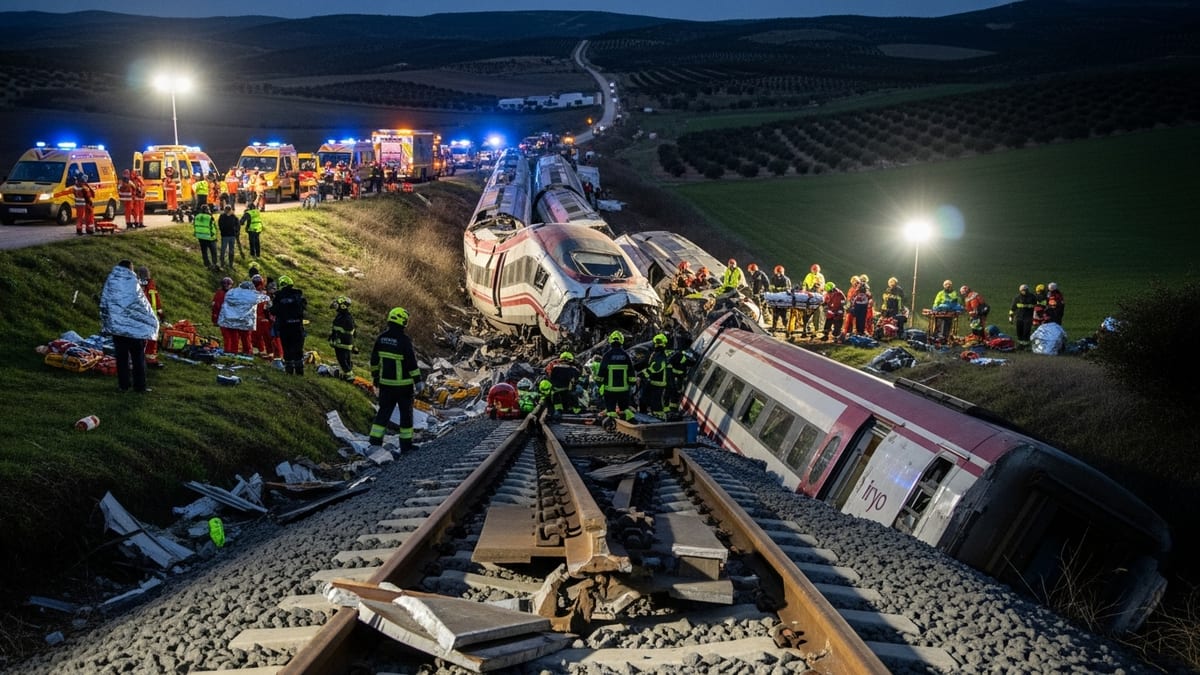
Multi-agency response brings rail car blaze under control
Reports from local emergency logs and regional media indicate that crews were dispatched to the Emerson Road rail crossing following calls about a train car on fire. Initial information suggests that the incident involved a freight consist that was already in motion through the crossing when smoke and flames were observed from one car.
Firefighters from several neighboring jurisdictions were requested to assist, reflecting standard mutual-aid practices for incidents involving rail equipment. Responders focused on quickly cooling the affected car, securing the rest of the train, and keeping the flames from spreading along the consist or into nearby vegetation and structures.
Within a relatively short period, crews had knocked down the visible flames and transitioned to extensive overhaul work, checking for hot spots inside the car and along the undercarriage. Publicly available information shows that incident commanders treated the scene as a technical rail emergency, using established protocols for fire near a highway-rail grade crossing.
No serious injuries were immediately reported in connection with the fire. Rail staff and emergency personnel remained on site for some time after the blaze was extinguished, ensuring that the car was safe to move and that surrounding infrastructure had not been compromised.
Emerson Road crossing closed while crews assess safety
During the height of the response, the Emerson Road rail crossing was fully closed to both vehicle and pedestrian traffic. Barriers and emergency vehicles kept the public at a distance while hose lines were stretched across the roadway and crews maneuvered between the train and the crossing approaches.
The closure led to temporary congestion on nearby routes as drivers diverted to parallel roads and alternate crossings. Local traffic updates emphasized that the shutdown was precautionary, designed to give firefighters unobstructed access to the rail line and to eliminate any risk to passing traffic while the burning car was being cooled.
Once the fire was fully out, inspectors examined the rails, crossing surface, and signaling equipment near the scene. According to published coverage of similar events, even relatively minor train car fires can transmit heat to ties, ballast, and wiring, making these follow-up checks an essential step before reopening a busy crossing.
Only after these evaluations were complete did operators and emergency managers clear the location for limited movements. Road traffic resumed in stages as hoses were packed up, rail workers completed their inspections, and the train was prepared either to move on or be reconfigured away from the damaged car.
Hazard assessment and rail cargo considerations
Early information available to the public does not indicate that the burning car was carrying highly hazardous materials, but responders approached the incident with the same caution used in major freight fires. Standard rail emergency guidelines call for rapid identification of a car’s cargo through placards, train documentation, and coordination with the operating railroad.
In this case, crews established a buffer zone around the train while they confirmed what was inside the affected car. Firefighters remained alert for signs such as unusual smoke, pressure build-up, or audible venting that might suggest a more complex chemical or pressurized load. None of those warning signs were widely reported, and the incident remained limited to a single car.
Rail safety data and previous incident reports highlight how cargo composition can dramatically influence response tactics, from simple exterior cooling to extended evacuation and hazardous materials operations. The Emerson Road event, as described by available summaries, followed the less severe pattern, with on-site mitigation and localized impacts.
Even so, the episode offered a fresh test of how quickly rail operators and emergency services can share load information, confirm that no special handling is required, and communicate that assessment to the public.
Impact on rail operations and nearby communities
The train car fire temporarily disrupted freight movements on the line serving Emerson Road, as dispatchers held other rail traffic away from the crossing while the response was underway. Depending on scheduling, incidents of this type can cause ripple effects along a corridor, delaying later trains and requiring dispatchers to re-sequence freight and any nearby passenger services.
For nearby residents and businesses, the most immediate effect was the noise and visual presence of apparatus, as well as the loss of a key road connection while the crossing remained blocked. Some local travelers encountered longer commutes as they turned around at the closure and navigated unfamiliar back roads to reach work, schools, or appointments.
Residents living close to the tracks reported smoke visible from the crossing area during the initial stages of the fire. As the incident progressed, the plume diminished, replaced by the sound of ventilation fans and cleanup equipment. Once the train was cleared to move and the car was secured, the scene quieted and regular ambient rail noise returned.
According to coverage of comparable rail car fires in other regions, communities often view such events as a reminder of how heavily used freight lines intersect with local streets, and how quickly normal routines can be altered when an incident unfolds at a single grade crossing.
Renewed focus on grade-crossing preparedness
While the Emerson Road incident remained relatively contained, it adds to a wider pattern of rail-related emergencies that have prompted transportation agencies and local governments to revisit their planning for grade crossings. Public reports on national safety data and previous fire events underscore the importance of clear access routes, accurate mapping of hydrants and water sources, and joint exercises between railroads and fire departments.
For communities situated along freight corridors, a train car fire at a crossing reinforces familiar questions about response times when tracks are blocked, the availability of alternate routes for ambulances and fire engines, and the ability to quickly communicate detours to drivers. In areas where crossings already experience frequent closures from long or slow trains, any incident that fully shuts a road can be especially disruptive.
Transportation planners often point to these episodes when advocating for upgrades such as grade separations, improved signaling, or enhanced traffic management systems. Even when such projects are years away, smaller steps, including updated emergency response plans and public education on what to do when trains stall or incidents occur, can improve overall resilience.
For now, publicly available information indicates that the Emerson Road crossing is back in service, the affected train car has been secured, and local responders are turning their attention to after-action reviews that may shape how future rail emergencies at crossings are handled.