


More news on this day
Canada’s busiest airports faced another day of significant disruption as fifty-six flight cancellations and three hundred ninety-one delays rippled across the country, unsettling peak summer travel plans and putting renewed pressure on major domestic carriers and their regional partners.
Get the latest news straight to your inbox!
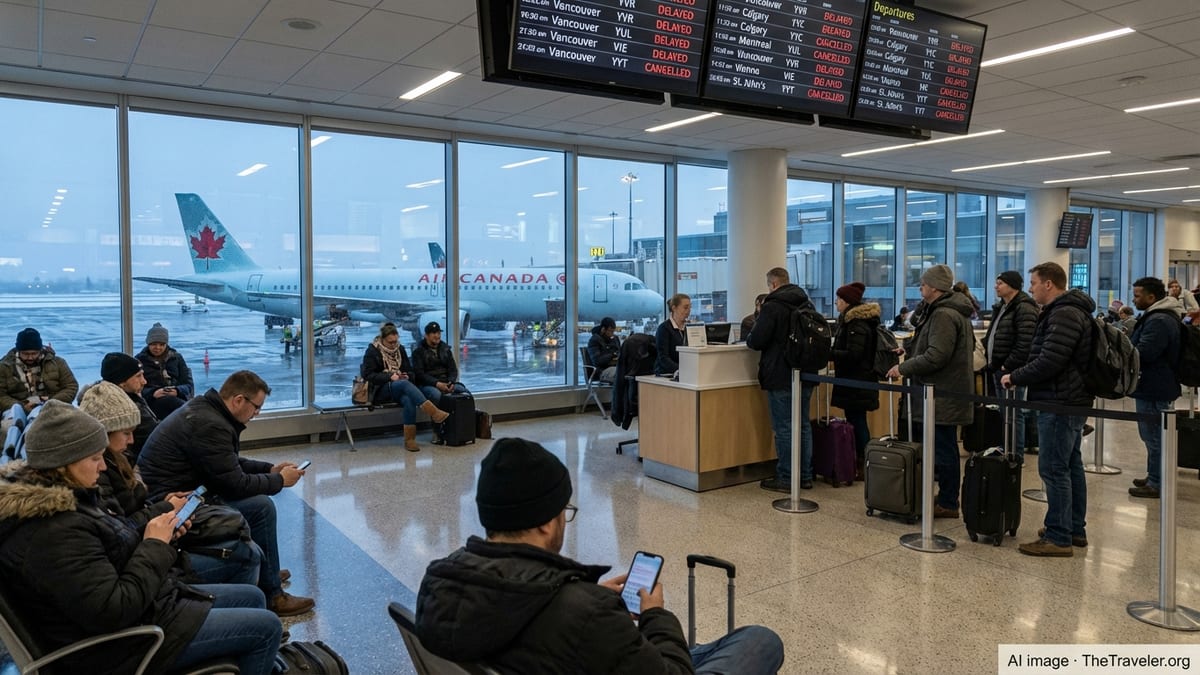
Nationwide Disruptions Across Key Canadian Hubs
Publicly available flight-tracking data for July 9, 2026 indicates that cancellations and delays were concentrated at major Canadian hubs, including Toronto Pearson, Montreal-Trudeau, Calgary, Toronto City Centre, Halifax, Edmonton, Montreal Metropolitan and London International Airport. The combined tally of fifty-six cancelled departures and arrivals alongside three hundred ninety-one delayed flights reflects a broad operational strain rather than an isolated problem at a single airport.
Reports indicate that the disruptions began building in the early morning as late-arriving aircraft and weather-related constraints triggered schedule adjustments. By mid-day, network effects had become clear, with knock-on delays affecting both short-haul domestic services and transborder connections into the United States. Longer-haul routes, including some leisure-focused flights, also experienced schedule changes as aircraft and crews were reassigned to stabilize core domestic operations.
While the overall number of flights handled by Canadian airports on a busy summer day remains high, the share affected by delays shows how vulnerable the system is to even modest operational shocks. The pattern mirrors previous episodes earlier in July in which a single day of disruption at one hub quickly cascaded across multiple cities, stretching airline resources and limiting rebooking options for passengers.
Major Domestic Carriers and Regional Partners Most Affected
According to published coverage analyzing today’s data, the disruptions have fallen most heavily on the country’s largest airlines and their regional affiliates. Air Canada, WestJet and Air Transat all reported schedule changes on routes touching the impacted airports, with regional operator Jazz emerging as one of the hardest-hit carriers in terms of both cancellations and delays.
Jazz, which flies many feeder services marketed by Air Canada, recorded several dozen delays and more than twenty cancellations, particularly at Toronto Pearson and Montreal-Trudeau. Publicly available information shows that when regional feeders run late or are cancelled, the impact can spread quickly to mainline departures, especially those timed to connect with east-west transcontinental or transborder flights.
WestJet and Air Transat also faced operational challenges, particularly on domestic and leisure routes that depend on tight aircraft rotation. Although many flights still departed, extended delays added complexity for crews approaching duty-time limits and for passengers holding onward connections within Canada or to sun destinations abroad.
Operational Pressures Behind the Numbers
Industry data and recent analytical pieces on Canadian airline performance suggest that several overlapping factors are contributing to the current wave of disruptions. Elevated jet fuel prices have already pushed some airlines, notably Air Canada and WestJet, to trim capacity and reconsider marginal routes, which can reduce the flexibility available when irregular operations occur.
At the same time, the peak summer travel period is compressing more demand into already crowded schedules. When aircraft and crews are flying near full utilization, even short ground holds for weather, air traffic flow management or minor technical inspections can reverberate throughout the day. Publicly available operational summaries describe a network in which more than ninety-seven percent of scheduled services are typically completed, yet one disruptive morning can still lead to dozens of cancellations by evening.
Recent patterns at Toronto Pearson and Montreal-Trudeau support this view. Earlier in July, those hubs experienced concentrated bursts of disruption tied to storms and air traffic constraints, with regional carriers again showing the highest proportion of late or cancelled flights. Today’s figures, spanning multiple airports, underline how closely Canada’s domestic network is intertwined: a delay at one hub can quickly affect airports many time zones away.
Impact on Travelers and Passenger Rights Context
For travelers, the practical impact of fifty-six cancellations and three hundred ninety-one delays is felt not only in missed departures but also in missed connections, overnight stays and disrupted holidays. Reports from previous disruption days in early July describe long queues at customer service counters, limited availability of alternative flights and families attempting to rebook on already full peak-season services.
Canada’s air passenger protection framework has become an important reference point during such episodes. Public guidance notes that compensation and care obligations vary depending on whether a disruption is considered within an airline’s control, within its control but required for safety, or outside its control, such as severe weather or air traffic restrictions. In practice, that distinction can influence whether affected passengers receive meal vouchers, hotel accommodation or cash compensation.
Consumer advocates advise passengers to document their experience carefully on disruption days, keeping boarding passes, written notices and receipts for out-of-pocket expenses. While today’s events span multiple carriers and airports, the underlying rules for assistance and potential reimbursement continue to depend on the specific cause recorded for each delay or cancellation, and on whether the traveler is departing from, arriving in, or connecting through a Canadian airport.
What Today’s Disruptions Signal for the Summer Travel Season
Today’s statistics add to a growing data set suggesting that Canada’s aviation network is under sustained pressure this summer. In just over a week, several major hubs have recorded elevated levels of delays and cancellations, with recurring themes: regional carriers bearing a disproportionate share of schedule changes, congested connection banks at Toronto and Montreal, and rolling effects across domestic and transborder routes.
Analysts following the sector note that airlines have already taken steps to bolster resilience, including targeted schedule reductions on select routes and seasonal adjustments designed to match capacity with available crews and infrastructure. Nonetheless, publicly accessible disruption trackers show that day-of operations remain vulnerable when weather, staffing and air traffic conditions align unfavorably.
For now, the combined tally of fifty-six cancellations and three hundred ninety-one delays stands as a snapshot of how quickly a single day’s challenges can spread nationwide. With the busiest weeks of the summer still underway, travelers across Canada may continue to face an unpredictable operating environment, even as airlines work to restore punctuality and protect key routes through the remainder of the season.