


More news on this day
UAE-based airlines are gradually rebuilding their networks across the Gulf and wider Middle East after months of regional airspace closures and conflict-linked disruption, but passengers flying with Emirates, Etihad and other carriers still face reduced schedules, reroutings and occasional last minute changes.
Get the latest news straight to your inbox!
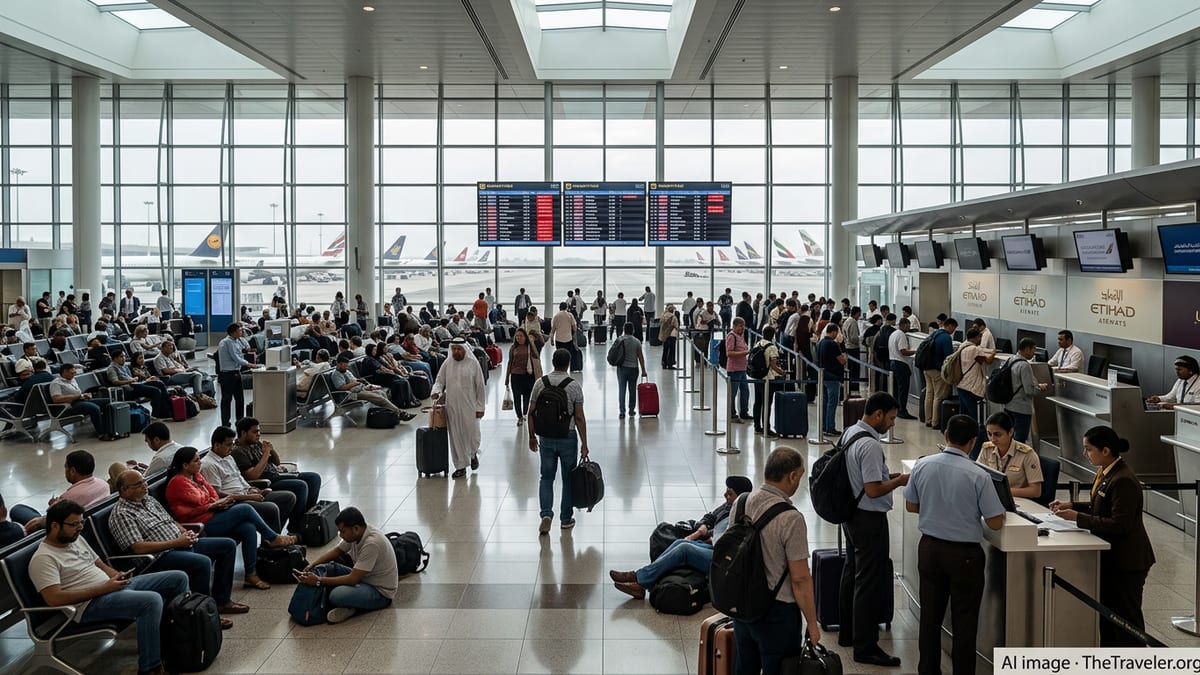
Regional conflict continues to reshape Gulf air corridors
Air travel across the Gulf has been significantly affected in 2026 by the conflict involving Iran and its neighbors, which led to temporary closures of key airspace and intermittent shutdowns at major hubs, including Dubai International and Abu Dhabi International. Publicly available flight and aviation data show that at the height of the crisis in late February and early March, thousands of daily services across the wider Middle East were cancelled or diverted as airlines avoided affected airspace and regulators imposed restrictions.
Industry analysis indicates that carriers based in the UAE, including Emirates and Etihad Airways, initially responded with sweeping suspensions of scheduled passenger operations, focusing instead on limited repatriation, cargo and positioning flights. Schedules were rebuilt only in phases as security assessments evolved and alternative routings were put in place, often adding time and fuel costs to long haul journeys between Europe, Asia and the Americas.
Recent economic assessments of the conflict’s impact on aviation point to a sharp rise in operating costs for airlines that rely on Gulf hubs, along with a measurable shift in global traffic flows. Flight tracking platforms continue to show dense traffic skirting the most sensitive airspace over parts of Iran and neighboring states, with longer north or south diversions that have become routine on some trunk routes.
For travelers, this has translated into longer block times, compressed connection windows at peak periods and a higher risk of missed onward flights when knock-on delays build through the day. Advisories from travel management companies consistently urge passengers to allow extra time for connections through the region and to monitor itineraries closely in the days before departure.
Emirates: reduced frequencies, longer routings but strong demand
Dubai based Emirates, the largest of the UAE carriers, has restored the bulk of its global network but continues to operate with some capacity constraints and tactical schedule adjustments on certain routes. Coverage from regional travel media indicates that at several points in recent months the airline cut a double digit percentage of its services compared to planned summer schedules, citing ongoing Gulf disruptions and airspace constraints.
On specific routes, particularly to parts of the Levant and selected Gulf capitals, Emirates has maintained temporary suspensions or reduced frequencies while monitoring demand and operational conditions. Trade bulletins summarizing airline advisories note that flights to Beirut, for example, were taken off the schedule for defined periods, while some other regional routes have been consolidated to a single daily service or routed via longer flight paths.
Despite these cuts, reports from both aviation analysts and passengers highlight that many Emirates long haul flights are operating with high load factors. Social media posts and traveler accounts from recent weeks describe full or near full cabins on services linking Dubai with major US, European and Asia Pacific destinations, suggesting that demand is quickly filling whatever capacity the airline is able to deploy.
Operational updates circulated to travel agents also emphasize a continued focus on schedule resilience. Departure times on some routes have been shifted to accommodate longer flight times around constrained airspace, and airport teams at Dubai International have been prioritizing tight connections when disruption does occur, in an attempt to limit onward knock on effects across the network.
Etihad Airways rebuilds Abu Dhabi hub after earlier shutdowns
Abu Dhabi based Etihad Airways experienced some of the sharpest impacts during the early phase of the regional airspace crisis, when most scheduled passenger flights to and from Abu Dhabi were temporarily suspended. Statements published by the airline and local media at the time outlined a gradual resumption of services once safety assessments allowed, starting with a limited number of destinations before scaling back toward a broader network.
By late spring, Etihad’s leadership was publicly signaling a return to growth, with reports indicating that summer capacity was running ahead of the previous year and average load factors approaching 90 percent on many routes. The airline has kept its focus on core markets in Europe, Asia and North America while adjusting routings and schedules to reflect the latest overflight permissions and operational requirements.
Travel advisories continue to stress that Etihad passengers should check the latest flight status before heading to the airport, particularly for departures involving overflights of the most affected parts of the region. While the bulk of the airline’s schedule is now operating, individual flights can still be rescheduled, delayed or re routed at relatively short notice as circumstances evolve.
Industry observers note that Abu Dhabi’s position as a connecting hub between Asia, Europe and Africa remains strategically important despite the recent turbulence. The carrier’s current strategy appears to balance cautious capacity restoration with an effort to protect reliability metrics and maintain confidence among corporate travel buyers and tour operators.
Other UAE carriers adjust networks as disruption lingers
The wider UAE aviation sector has also been reshaped by the Gulf disruption, with flydubai and Air Arabia among the carriers that have trimmed or reconfigured routes in response to changing conditions. Reports from UAE based outlets describe how these airlines cut back frequencies to certain regional cities during periods of heightened tension, while sustaining limited operations on key corridors linking the Emirates with major markets in South Asia, North Africa and the wider Gulf.
Some services from neighboring countries into the UAE have been temporarily shifted to alternative airports or supported by ground transport when airspace or airport restrictions limited direct flights. Coverage of these arrangements, including busing passengers between affected cities and operating special services, underlines the complexity of keeping passengers moving while working within evolving safety parameters.
International airlines serving Dubai and Abu Dhabi have also made tactical changes. Several European and Asian carriers have publicly detailed temporary reductions in services to Gulf hubs, or delayed planned resumptions, while they reassess demand and fine tune routings around conflict zones. Others have resumed flights but on shortened schedules compared to pre disruption timetables, sometimes combining routes or relying on smaller aircraft.
Overall, airline schedules into and out of the UAE remain more volatile than they were before the crisis, even if airports themselves are once again busy and handling large passenger volumes. Analysts suggest that a full return to previously planned capacity will depend on a sustained period of regional stability and a clearer picture of long term airspace arrangements.
What passengers flying via the UAE should do now
Current guidance from airlines, airports and travel management firms converges on a few key recommendations for passengers planning to travel via Dubai, Abu Dhabi or other UAE airports in the coming weeks. Travelers are advised to check their flight status repeatedly in the days leading up to departure and on the day of travel itself, using airline apps or booking management tools, since schedules can be adjusted after tickets are issued.
Experts also recommend building extra time into itineraries that require connections through the region. Given that many flights are operating on extended routings to avoid restricted airspace, a connection that once felt generous may now be tighter in practice if the inbound flight encounters minor delays en route.
For those with flexible plans, travel desks suggest monitoring fare conditions and rebooking options, as many carriers introduced temporary waivers or more flexible policies to cope with earlier waves of disruption. While some of these measures have expired or been scaled back, a number of airlines are still allowing fee free date changes on selected routes or within defined travel windows linked to the conflict period.
Ultimately, publicly available data and recent travel experiences indicate that the UAE’s major carriers have restored extensive global connectivity despite the challenges, but the system is less predictable than before. Passengers flying with Emirates, Etihad and their regional peers are likely to reach their destinations, yet they should remain prepared for schedule tweaks, longer journeys and occasional last minute adjustments as Gulf skies continue to adjust to a new operating reality.