


More news on this day
The European Union is pushing forward with its new biometric border regime despite mounting pressure from airports, airlines and passenger groups to pause the system after weeks of long queues, missed flights and ad hoc suspensions at some of Europe’s busiest gateways.
Get the latest news straight to your inbox!
Brussels holds line on Entry/Exit System rollout
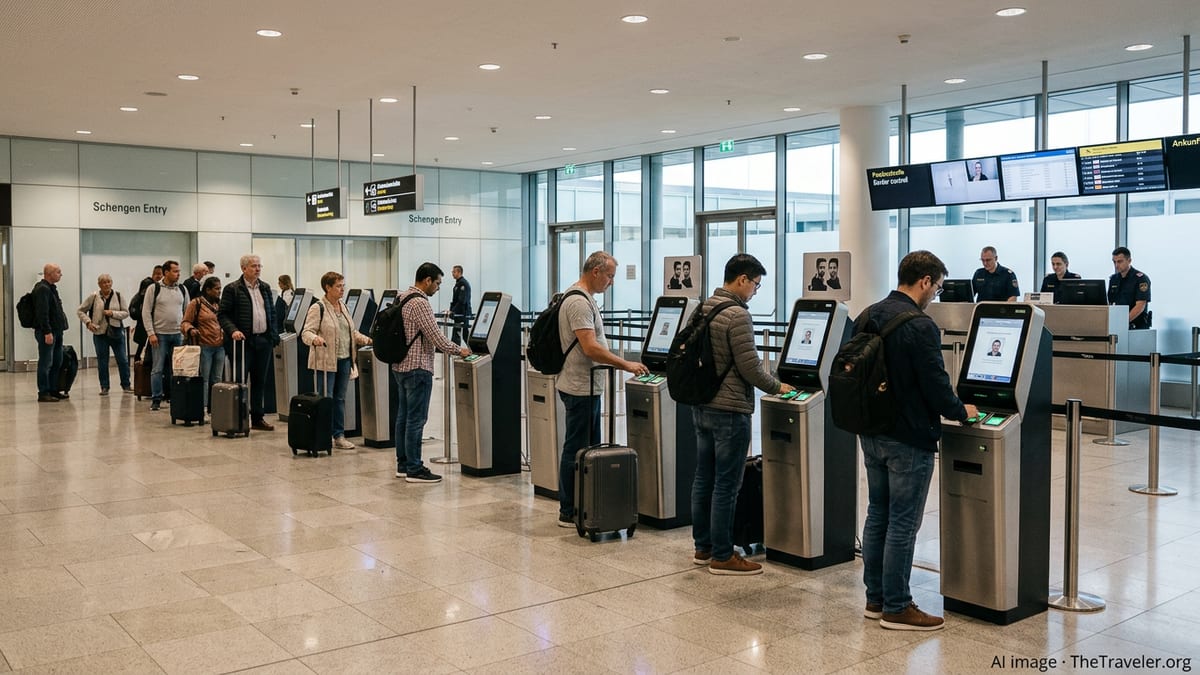
Publicly available information from EU institutions indicates that officials remain committed to the Schengen Entry/Exit System, known as EES, which digitally records the movements of non-EU nationals at external borders. The system, which became operational in October 2025 and entered a six‑month phased rollout, replaces manual passport stamping with biometric checks, including fingerprints and facial images.
Under legislation agreed by the Council and European Parliament, the rollout allows member states to scale up over several months but does not envisage a blanket suspension. Recent statements and press materials from Brussels continue to frame the scheme as a cornerstone of efforts to modernise border control, tackle overstays and improve security across the Schengen area.
The determination to continue comes despite intense scrutiny of the system’s performance at airports and land crossings. Industry representatives and passenger advocates have argued that the pace of implementation is out of step with the capacity of border police, airport infrastructure and supporting IT systems, particularly during peak holiday periods.
EU documentation stresses that the phased approach already gives national authorities some latitude to manage congestion, for example by temporarily reducing biometric enrolment in specific circumstances. However, airline and airport groups contend that these tools are not sufficient and have urged the bloc to authorise broader, time‑limited suspensions when queues become unmanageable.
Airports warn of ‘risky’ summer as queues lengthen
Reports from across the continent describe a patchwork of delays since biometric checks began to be enforced at scale this spring. Accounts compiled by European travel media and passenger groups point to waits of up to three hours at border control in popular tourist gateways, including Italian, Spanish and Portuguese airports that handle large volumes of non‑EU leisure traffic.
Airports Council International Europe has repeatedly warned that EES has increased border processing times, with some assessments citing rises of up to 70 percent during peak periods. Airlines for Europe, which represents many of the region’s largest carriers, has similarly highlighted mounting evidence of “persistent excessive waiting times” and urged the European Commission to permit full, temporary suspensions of the biometric component where necessary.
In France, published coverage shows that Paris airport operator Groupe ADP has argued that intensifying checks in the run‑up to the busy summer season would be “extremely risky,” calling instead for a slower build‑up of registrations. In Italy, the head of the company running Rome’s Fiumicino and Ciampino airports has publicly warned that the only way to avoid a “disaster” over the summer would be to allow many passengers to bypass EES entirely during the busiest weeks.
Despite these alarms, the European framework currently relies on targeted flexibility rather than a formal Europe‑wide halt. Some border authorities have used this leeway to prioritise certain flows, reduce biometric capture during disruption or fall back on manual checks, but airport managers argue that such measures still leave them exposed to unpredictable spikes in waiting times.
Patchwork exemptions and ad hoc suspensions emerge
As pressure builds, a fragmented response has emerged at national and local level. Media reports indicate that border forces in some countries have quietly relaxed the use of biometric kiosks during surges, reverting to visual passport inspection to clear growing lines. In Greece, travel coverage notes that biometric checks on British citizens have been largely abandoned in practice at several airports, even as the country maintains that it has successfully begun full EES operations.
Elsewhere, Italian and Portuguese airports have publicly discussed the possibility of temporarily suspending biometric capture for certain flights or time windows. Airlines have responded by advising passengers to arrive significantly earlier than before, with some carriers suggesting check‑in times of three and a half hours for short‑haul departures from affected hubs.
These local workarounds echo concerns raised long before the system went live. Analyses commissioned by ports, tunnel operators and cross‑Channel services had warned that embedding biometric capture into already constrained border facilities would be particularly challenging where controls are conducted in a third country, such as British ports hosting French checks.
For now, the emerging pattern is one of varied enforcement rather than uniform suspension. Travellers may find that they are fully enrolled on one trip, partially processed on another, or waved through with a manual stamp if queues threaten to overwhelm limited border booths and kiosks.
Airlines fear reputational damage and stranded passengers
The aviation sector has grown increasingly vocal as queues translate into missed flights and disrupted operations. Coverage in European and UK media details incidents in which groups of passengers have been stranded after failing to clear border control in time, particularly at Milan and other high‑traffic hubs where biometric checks coincide with tight turnaround schedules.
Airline industry associations argue that carriers are being left to manage the customer‑facing fallout of a government‑run system. Letters from airport and airline groups to EU decision‑makers, made public in recent months, call for explicit authority to switch off biometric registration during crunch periods and for clearer communication to passengers about what to expect at different points in the rollout.
Executives warn that repeated episodes of “holiday chaos” risk damaging Europe’s reputation as a convenient, friction‑light destination for long‑haul visitors and post‑Brexit UK travellers, who are among the main cohorts subject to the new checks. Some analysts note that lengthy waits on arrival or departure could nudge price‑sensitive holidaymakers towards non‑Schengen destinations, particularly in the Mediterranean.
In response, airlines have been adjusting schedules, building in longer ground times and revising boarding cut‑offs to account for slower border throughput. These measures add cost and complexity, with operators cautioning that they may ultimately feed through into higher fares if EES‑related disruption persists into future holiday seasons.
Security, data and political stakes keep system on track
Despite the operational turbulence, European institutions show little appetite for shelving the Entry/Exit System. Official communications emphasise that the database underpins broader efforts to manage migration, enforce short‑stay rules and share real‑time information among Schengen states about who is entering and leaving the bloc.
Supporters of the system argue that the move to digital records will eventually reduce fraud, speed up repeat crossings and provide clearer evidence when travellers overstay their permitted 90 days in any 180‑day period. They also highlight the long gestation of the project, which has already absorbed significant political and financial capital after multiple delays from its original launch timetable.
Civil liberties groups and some data‑protection advocates have raised questions about the storage and governance of biometric information, including how long fingerprints and facial images will be retained and under what conditions law enforcement can access them. However, the most acute short‑term pressure currently stems from practical bottlenecks at passport control rather than legal challenges.
For holidaymakers planning trips to Europe over the coming months, travel experts broadly advise building extra time into journeys, checking airline guidance before departure and being prepared for inconsistent experiences at different airports. Unless political momentum shifts sharply, the EU’s biometric border experiment looks set to continue unfolding in real time, even as the queues it generates keep the system in the headlines.