


More news on this day
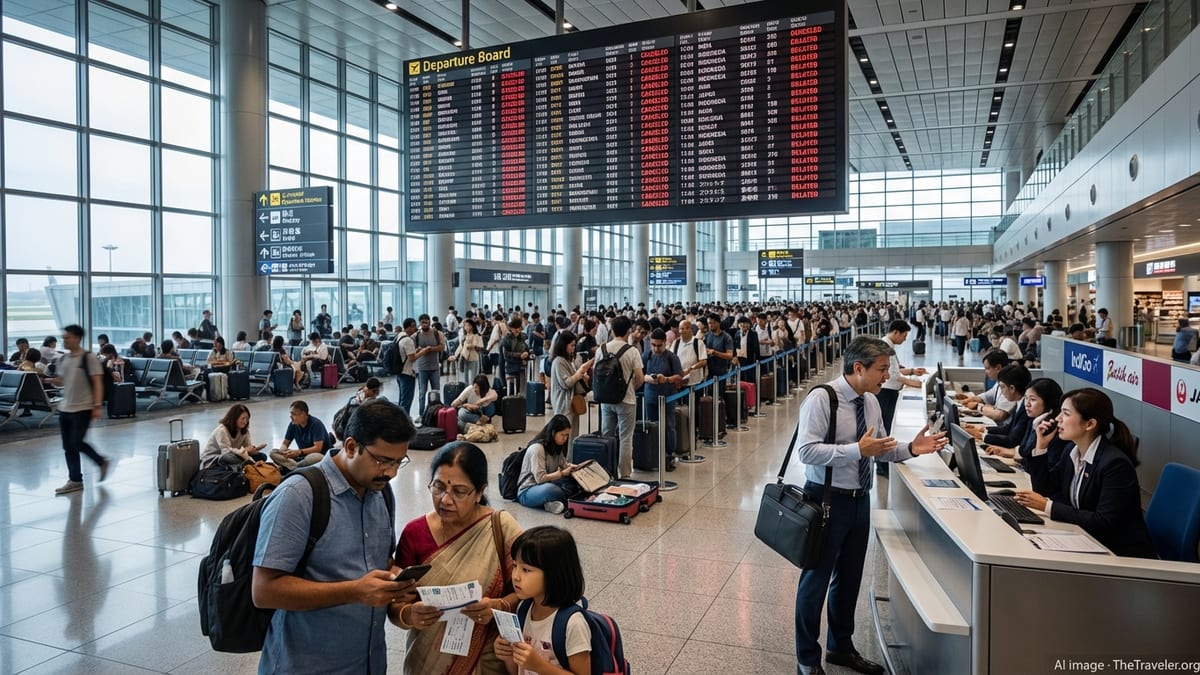
Air travel across Asia faced another difficult day as tracking services recorded 3,555 delayed flights and 293 cancellations across the region, disrupting tens of thousands of passengers from early morning departures through late-night arrivals.
Get the latest news straight to your inbox!
Disruptions Concentrated at Major Regional Hubs
Publicly available tracking data shows that the latest wave of disruption has been heavily concentrated at the region’s largest international hubs, where high traffic volumes make networks more vulnerable when problems arise. Major airports in East, Southeast and South Asia all reported elevated delay indicators, with a particular build-up during peak morning and evening bank periods.
Operational dashboards that aggregate performance across Asian airports indicate that the imbalances are not limited to a single country. Instead, congestion has been spreading through multiple hubs as late-arriving aircraft and crews ripple through tightly timed schedules. Even airports that started the day with relatively normal conditions saw delay metrics increase as the day progressed.
While some smaller regional airports maintained more resilient operations, their connectivity to larger hubs still exposed travelers to missed connections and extended layovers. The pattern underlines how quickly a localized issue at a major node can echo across the continent’s complex web of point to point and hub and spoke routes.
Industry data providers note that Asia Pacific has been carrying a larger share of global disruption during several recent months, reflecting a combination of rapid traffic growth and infrastructure constraints at some of the busiest airports.
Weather Systems, Airspace Constraints and Knock on Effects
Weather remains one of the most visible triggers behind the latest disruption numbers. Seasonal storms, heavy rainfall and low visibility conditions have intermittently reduced airport capacity across parts of East and Southeast Asia, requiring increased spacing between arrivals and departures and causing rolling delays throughout the day.
In addition to localized weather, airspace restrictions linked to military activity, geopolitical tensions or major technical incidents can force airlines to adopt longer routings between Asia and other regions. Recent experience shows that when large scale outages or airspace closures occur, airlines often need to redesign flight paths or cancel services outright, with Asia Europe and transpacific flows particularly sensitive to such changes.
Once delays exceed a certain threshold, knock on effects can quickly become the dominant factor. Aircraft arriving late into hub airports may miss their next scheduled departure window, while flight and cabin crews sometimes reach regulated duty time limits, obliging airlines to cancel or substitute flights even after the original cause has eased. This dynamic helps explain why travelers can see cancellations reported hours after the worst of a storm or systems incident appears to have passed.
Analysts who track on time performance across Asia Pacific have noted that months with higher weather volatility and infrastructure pressure tend to see disproportionate increases in cancellations compared with modest changes in scheduled capacity. The current tally of 293 cancellations alongside 3,555 delays is consistent with this pattern of cascading operational stress.
Impact on Travelers Across Domestic and International Routes
Today’s figures translate into a challenging experience for travelers on both short haul and long haul services. Domestic networks in several large Asian markets encountered frequent schedule changes, with some flights departing significantly behind timetable while others were proactively canceled to stabilize operations later in the day.
International travelers transiting through regional hubs have also been affected. Missed connections, last minute gate changes and extended aircraft towing or holding patterns on the ground added to journey times, particularly for those connecting between long haul flights and dense regional feeder services. In some cases, passengers were rebooked onto alternative routings that added extra stops or overnight stays.
The uneven nature of the disruption means that some airlines and airports have maintained relatively normal conditions, while others have seen pockets of severe congestion. Passengers on early morning departures from less affected airports often completed their journeys close to schedule, whereas those departing during peak disruption periods from busy hubs experienced multi hour delays.
Consumer advocates continue to highlight the importance of understanding local passenger rights frameworks, which can differ significantly between jurisdictions. Compensation rules, care obligations such as meals and accommodation, and rebooking options vary depending on the airline’s home country, the origin and destination of the flight, and whether the disruption is considered within the carrier’s control.
Operational Response and Measures to Limit Future Chaos
According to published operational analyses, airlines across Asia have been adjusting schedules, reallocating aircraft and making greater use of predictive tools in an effort to limit the impact of recurrent disruption spikes. Some carriers have reduced fragile tight turnarounds at certain hubs, while others have added spare aircraft or reserve crews during months with historically higher weather and congestion risk.
Airport operators in several major cities are also focusing on ground efficiency, including faster turnaround of arriving aircraft, streamlined de-icing and improved gate allocation systems to handle irregular operations more effectively. These measures aim to prevent delays from spiraling into cancellations on days when conditions are marginal rather than extreme.
Data providers that track global aviation performance report that Asia Pacific’s share of worldwide cancellations has risen during some recent months compared with pre pandemic patterns, reflecting both the rapid recovery in demand and structural constraints at certain airports. However, they also note that targeted investments in infrastructure, air traffic management and digital tools have helped some hubs recover more quickly after disruption peaks.
Industry observers point out that while the latest total of 3,555 delays and 293 cancellations is significant, it remains below the most severe disruption episodes seen globally in recent years, when large scale technology outages or extreme weather events have forced the cancellation of several thousand flights in a single day for individual airlines or regions.
What Travelers Can Do on High Disruption Days
For travelers, the surge in delays and cancellations across Asia underscores the importance of preparation when flying during periods of elevated operational risk. Travel specialists generally recommend building in longer connection times, particularly when changing airlines or terminals at busy hubs, and avoiding the tightest possible connections offered by search engines when feasible.
Monitoring flight status through official airline channels and trusted tracking services remains critical, especially in the 24 hours before departure and on the day of travel. Experience from recent disruption events suggests that information may change quickly as airlines adjust schedules, redeploy aircraft and reassign crews in response to evolving conditions.
Travel insurers and consumer organizations also advise keeping documentation of expenses and communications when serious delays or cancellations occur. This can be useful when seeking reimbursement under travel insurance policies or when making use of statutory passenger rights in jurisdictions that provide for compensation or mandated care.
With the latest data showing thousands of delayed flights and hundreds of cancellations across Asia in a single day, regular flyers in the region are increasingly planning with the expectation that some level of disruption is likely, even on seemingly routine travel days.