


More news on this day
A sweeping wave of disruption is affecting air travel across Asia, with publicly available data indicating at least 353 flights cancelled and nearly 6,000 delayed across major hubs from Beijing and New Delhi to Kuala Lumpur, Istanbul and Islamabad, impacting carriers including China Eastern, IndiGo, Cathay Pacific, Air India, Korean Air and others.
Get the latest news straight to your inbox!
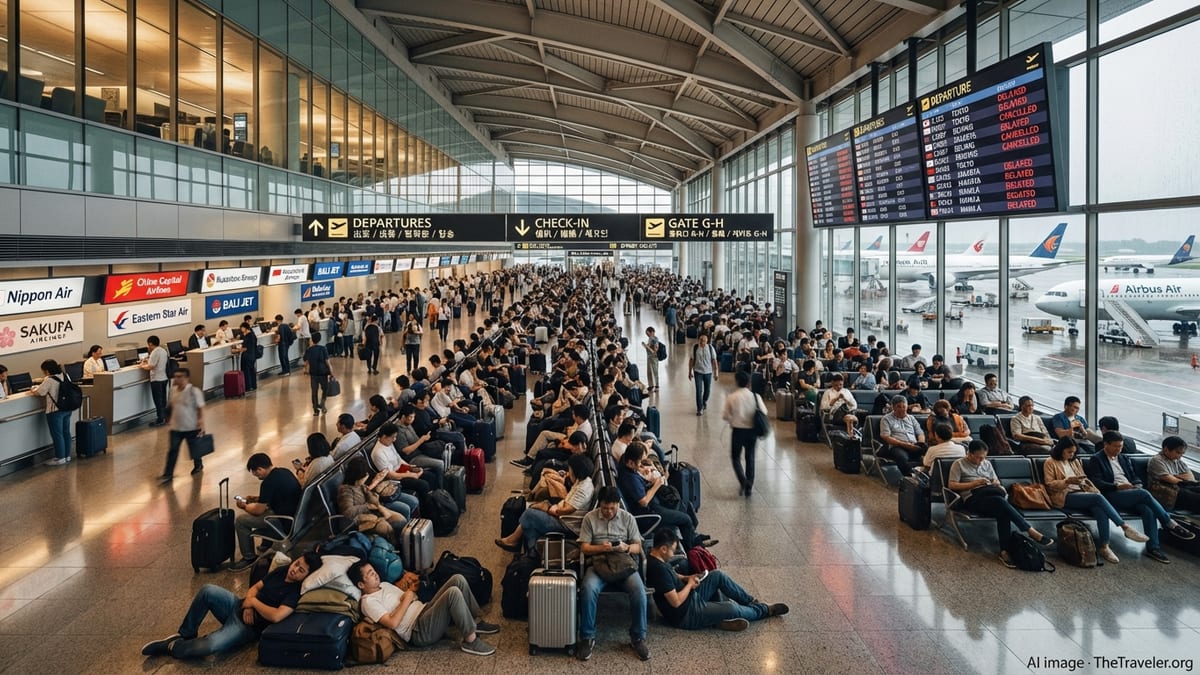
Major Asian Hubs Strain Under Cascading Disruptions
Air traffic monitoring dashboards and airport operations reports show that the disruption is concentrated at some of the region’s busiest gateways, where tight schedules leave little room to absorb shocks. Beijing’s main international airport has seen a spike in delayed departures on China-based carriers, with ripple effects across regional links to Southeast Asia and the Middle East. Services connecting Beijing with Kuala Lumpur and other Southeast Asian cities have recorded schedule changes and extended departure windows.
In New Delhi, one of India’s primary international hubs, delays on domestic and regional routes are feeding into long-haul disruptions. Publicly available flight data indicates repeated schedule changes affecting both full-service and low-cost operators, including IndiGo and Air India, which rely heavily on dense banked departures to feed international connections.
Kuala Lumpur, a key transit point for Southeast Asia, has also seen elevated levels of disruption, particularly among low-cost regional services. Monitoring sites show multiple AirAsia and other regional flights posting revised departure and arrival estimates, adding pressure on connecting traffic bound for China, India and onward to the Middle East and Europe.
Istanbul and Islamabad, important junctions between Asia, the Gulf and Europe, are similarly affected as delayed or re-routed aircraft struggle to maintain their planned rotations. Changes to Turkish and Pakistani flight patterns are contributing to missed connections and extended layovers for passengers traveling between Europe, South Asia and East Asia.
Airspace Restrictions and Regional Tensions Add to Pressure
Published notices from aviation authorities in Pakistan indicate ongoing airspace restrictions on Indian civil and military aircraft, currently extended into late July. These limitations force India-based and some foreign carriers to adopt longer routings or adjust schedules on services that would typically transit Pakistani airspace, reducing flexibility and tightening aircraft utilization on key corridors between India, the Middle East and Europe.
Reports from regional media highlight that wider geopolitical tensions in parts of the Middle East continue to affect route planning for airlines serving or overflying the region. Although some Gulf-based carriers have cautiously rebuilt capacity, many Asian and European airlines remain conservative on certain routings. The result is an already constrained network in which any additional operational shock in Asia quickly reverberates across multiple time zones.
For airlines in India, Pakistan, Turkey and the Gulf, these airspace and security considerations come on top of routine operational challenges such as weather, crew availability and aircraft maintenance. Publicly available commentary from passengers and industry observers points to a pattern of sudden schedule revisions and selected cancellations where carriers appear to be consolidating demand onto fewer flights to keep networks viable under constrained routing options.
As a consequence, flights linking South Asia with China and Northeast Asia are particularly exposed. When routings must avoid certain regions, block times increase, crew schedules tighten and on-time performance becomes harder to maintain, all of which contribute to the volume of delays now being recorded.
Operational Constraints Hit China Eastern, IndiGo, Air India and Others
The disruption is being felt across a broad mix of airlines with different business models. China Eastern and other Chinese carriers have been adjusting their international schedules, with publicly shared passenger accounts describing cancellations and significant re-timings on select routes in and out of Beijing and other major Chinese hubs. These adjustments appear to reflect a combination of demand management and operational constraints on long-haul and regional services.
In India, IndiGo, Air India and other domestic operators are facing pressure from both airspace constraints and strong seasonal demand. Earlier reports from Indian business and travel publications have described airlines trimming or reshaping some international schedules, particularly on routes where alternative routings significantly increase flying time. This compounds congestion on remaining services and amplifies the impact when a flight is delayed or cancelled.
Carriers based in or serving Turkey and Saudi Arabia are also navigating an unstable operating environment. Regional media coverage has documented waves of cancellations and frequency reductions on selected Middle Eastern and South Asian routes in recent months, affecting connectivity through Istanbul, Riyadh and Jeddah. When aircraft and crews are reassigned or rotations are lengthened, knock-on effects can surface days or weeks later on Asia-bound services.
Cathay Pacific, Korean Air and other Northeast Asian airlines are contending with a complex mix of weather-related disruptions, shifting demand patterns and the need to coordinate with partners and codeshare airlines across multiple jurisdictions. This environment makes day-to-day scheduling more fragile, contributing to the larger count of delayed services recorded across the region.
Passenger Impact: Missed Connections, Rising Costs and Limited Options
For travelers, the practical result of 353 cancellations and nearly 6,000 delays is a sharp increase in uncertainty. Publicly available passenger accounts describe missed connections at hubs such as Beijing, New Delhi and Istanbul, along with extended layovers when later flights run at or near capacity. In some cases, travelers report overnight stays and multi-stop re-routings where a previously direct journey has become two or three separate sectors.
Travel forums and consumer discussions indicate that sudden cancellations or significant schedule shifts often leave passengers with limited rebooking options, especially where alternative carriers are already heavily booked. Some travelers have reported needing to purchase last-minute tickets at substantially higher fares, particularly on popular routes connecting India, the Gulf and Europe during peak travel periods.
Additional costs are emerging in the form of accommodation, meals and ground transport when delays stretch into many hours or overnight. While compensation and care policies vary significantly between jurisdictions and airlines, travelers describe a patchwork of experiences, from prompt rebooking and assistance to minimal support beyond automatic refunds.
For those planning future trips, the current wave of disruptions is prompting more conservative itineraries, with longer connection times and a preference for routings that avoid multiple congestion and conflict-sensitive hubs. Some travelers are also closely monitoring airline track records on punctuality and cancellation rates before committing to tickets, particularly for complex itineraries involving China, India, Turkey, Pakistan and the Gulf region.
Outlook for Recovery in Asian and Middle Eastern Skies
Industry commentary carried in regional business and aviation press suggests that a swift return to stable operations across Asia is unlikely while airspace restrictions and regional tensions persist. Airlines are seeking to rebuild networks and meet robust demand, but the combination of longer routings, tight aircraft availability and periodic security flare-ups continues to limit flexibility.
At the same time, several major carriers in China, India and the Gulf have announced incremental capacity additions and new routes over recent months, signaling confidence in long-term demand. However, when new services are layered onto already stretched fleets and crews, any disruption at one end of a network can quickly translate into delays and cancellations at the other.
For now, observers expect that passengers flying through Beijing, New Delhi, Kuala Lumpur, Istanbul, Islamabad and other key Asian hubs will need to factor in a higher risk of disruption than in previous years. Travel experts and consumer advocates commonly advise checking flight status frequently before departure, building in generous connection times and having contingency plans in case of schedule changes.
How quickly airlines and regulators can stabilize operations will depend on developments well beyond the control of individual carriers, including the evolution of regional conflicts and the pace at which airspace restrictions are eased. Until those broader pressures subside, the elevated numbers of cancellations and delays across Asia’s skies are likely to remain a defining feature of the travel landscape.