


More news on this day
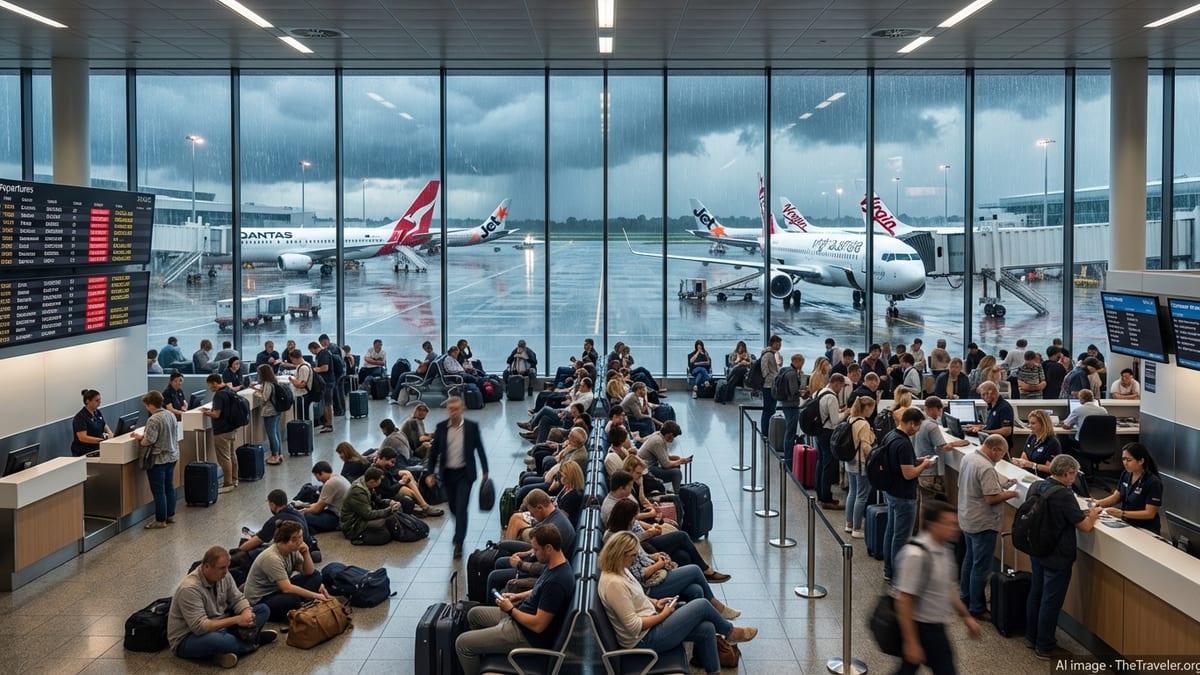
Travelers across Australia and New Zealand faced significant disruption on June 19 as adverse weather conditions and flow-on operational issues delayed more than 700 flights and led to at least 16 cancellations across major hubs including Sydney, Melbourne, Auckland and Rotorua, affecting services operated by Qantas, Virgin Australia, Jetstar, Air New Zealand and other carriers.
Get the latest news straight to your inbox!
Major Hubs Feel the Strain as Delays Mount
Operational data and airport tracking services for June 19 indicate that congestion built steadily through the morning peak at Sydney and Melbourne before spreading across the trans-Tasman network. High winds, low cloud and passing showers around parts of eastern Australia and New Zealand contributed to longer spacing between aircraft, creating knock-on delays through the day.
By mid-afternoon, more than 700 flights across the combined Australian and New Zealand domestic and short-haul international networks were reporting delays of varying length. The disruptions were most visible on heavily used routes such as Sydney to Melbourne and Sydney to Brisbane, as well as trans-Tasman sectors linking Sydney and Melbourne with Auckland and Wellington.
Rotorua, a smaller but growing leisure destination in New Zealand, also reported late-running services, reflecting how quickly congestion in major hubs can ripple out to regional airports. Flight status boards across the region showed a pattern familiar to frequent flyers: short initial delays that compounded as aircraft and crew rotated through multiple sectors.
The 16 confirmed cancellations were spread across both domestic and trans-Tasman routes, with some aircraft taken out of rotation due to weather-related safety margins and others scrapped when delays grew too extensive to recover schedules within crew duty limits.
Qantas, Virgin Australia, Jetstar and Air New Zealand All Affected
The impact was shared widely among the region’s largest carriers. Publicly available flight tracking and airline information show that Qantas and its low-cost unit Jetstar experienced disruption across key domestic corridors in Australia, while Air New Zealand reported delays on both trunk and regional services, including routes feeding Auckland and Rotorua.
Virgin Australia, which concentrates its operations on domestic and short-haul international routes, also saw its schedules affected, particularly where its flights relied on slots at already congested airports. When traffic flows are slowed by weather, even on-time departures can face in-flight holding or extended taxi times, eroding schedule resilience.
Airlines across the board activated standard disruption protocols, including rebooking affected passengers on later flights, placing a limited number of travelers on partner-carrier services and, where necessary, issuing travel credits or refunds consistent with their published conditions of carriage. For many customers, however, the most immediate consequence was spending extra hours in terminals waiting for updated departure times.
While each airline publishes its own guidance on compensation and care during irregular operations, weather-related disruption is generally treated as outside a carrier’s direct control. As a result, assistance is often focused on schedule changes rather than financial compensation, a point of recurring frustration for frequent travelers in the region.
Weather and Air Traffic Constraints Converge
Meteorological reports for June 19 showed unsettled conditions in parts of southeastern Australia and across sections of New Zealand, including intermittent showers and low cloud layers that can reduce runway capacity. Even modest changes in crosswinds or visibility can trigger more conservative arrival and departure spacing, forcing air traffic control to meter traffic more cautiously.
In New Zealand, forecasts around central North Island airports, including Rotorua, pointed to pockets of rain and low cloud that can disrupt regional turboprop operations. These smaller airports often have fewer navigational aids and shorter runways, meaning airlines must adhere to stricter performance margins compared with larger hubs.
Once schedules begin to slip at high-volume airports such as Sydney, Melbourne and Auckland, the interconnected nature of airline networks makes it difficult to recover quickly. Aircraft and crew scheduled to operate multiple legs in a day can end up out of position, prompting further delays or cancellations even after local weather has improved.
Operational data published by aviation authorities in both countries in recent months has highlighted how seasonal weather patterns, including winter storms on Australia’s east coast and strong frontal systems crossing New Zealand, routinely rank among the leading causes of delay, alongside congestion and mechanical issues.
Knock-on Effects for Passengers and the Wider Travel Economy
The latest wave of disruptions arrived at a time of still-elevated demand for domestic and regional travel, with school holidays approaching in parts of Australia and steady tourism flows into New Zealand. As a result, rebooking options were more limited, particularly for families or groups seeking to travel together on the same replacement service.
Travel industry observers note that when large numbers of flights are delayed or cancelled on the same day, airport infrastructure also comes under pressure. Security queues, check-in counters and baggage belts can all become pinch points as passengers arrive early in the hope of securing alternative options, or remain in terminals for extended periods while awaiting updated information.
For tourism operators in destinations such as Rotorua, Queenstown and regional centers on Australia’s east coast, weather-related disruptions can create short-term volatility in arrivals, with late-night check-ins, missed tour departures and higher volumes of last-minute cancellations. Accommodation providers and activity operators often have to adjust staffing at short notice to cope with unpredictable demand.
Even when the immediate disruption eases, there can be lingering effects on confidence. Travelers who experience multiple delays or cancellations in a short span may become more cautious about tight connections or same-day commitments, potentially shifting booking patterns and encouraging longer layovers or additional buffer days.
What Travelers Can Do When Schedules Unravel
Consumer advocacy groups in both Australia and New Zealand consistently recommend that travelers monitor their flights closely on days with active weather systems, using airline apps and airport information screens for real-time updates. Early awareness of emerging delays can make it easier to adjust ground transport, accommodation check-in times and onward connections.
Passengers booked on affected services are typically advised to accept automated rebooking options where available, then speak with airline staff or contact centers only if the new itinerary is unworkable. This approach can help reduce call center congestion and shorten wait times for those whose travel plans are most severely impacted.
For future trips, travel planners suggest allowing generous buffers between domestic arrivals and important events, especially during winter months when weather volatility is higher across the Tasman region. Booking earlier flights in the day, when aircraft and crew are closer to their starting positions, may also offer a modest resilience advantage compared with late-evening departures that rely on multiple earlier sectors operating on time.
While the June 19 disruptions underline how vulnerable modern aviation networks remain to weather and operational shocks, they also highlight the importance for travelers of building flexibility into itineraries and understanding each airline’s published policies on delays and cancellations before they fly.