


More news on this day
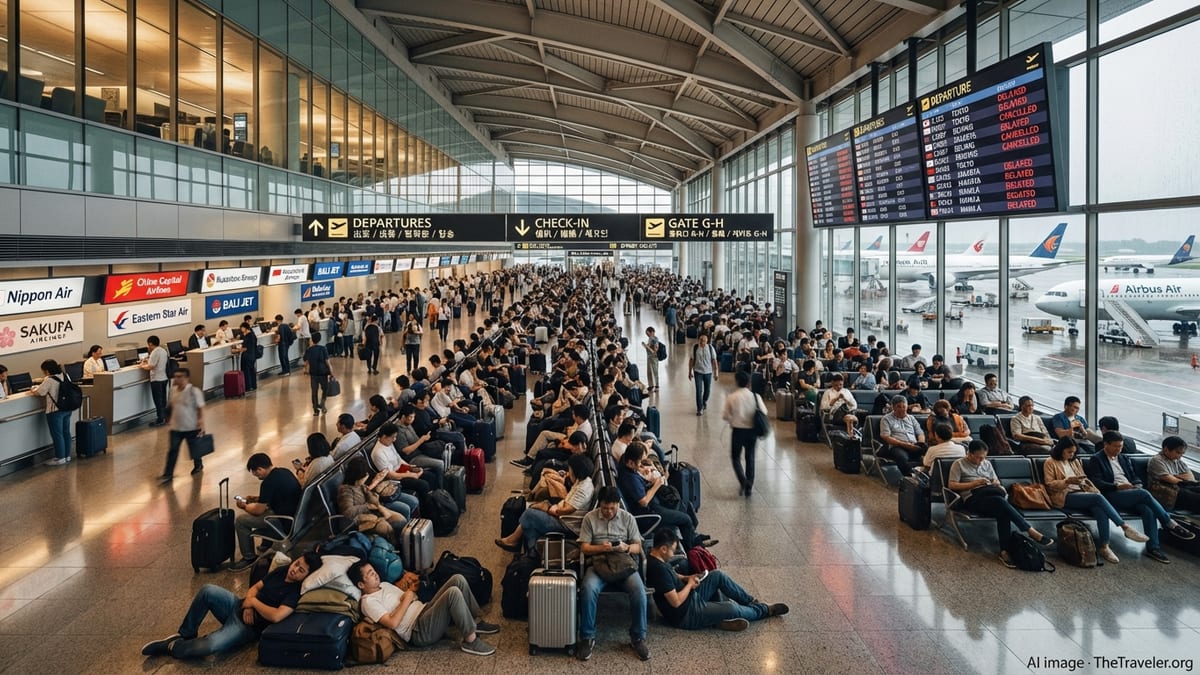
Air travel across Asia has been hit by a fresh wave of disruption as operational data shows 365 flights cancelled and 4,688 delayed in a single day across Thailand, Japan, Singapore, Hong Kong, mainland China and Indonesia, snarling schedules at major hubs from Bangkok and Beijing to Tokyo and Singapore and affecting passengers on Thai Airways, Cathay Pacific, Air China, All Nippon Airways (ANA) and numerous other carriers.
Get the latest news straight to your inbox!
Widespread Disruption Across Key Asian Hubs
The latest figures, compiled from real time tracking services and regional aviation reports, indicate that the disruption is heavily concentrated at Asia’s busiest international gateways. Bangkok’s Suvarnabhumi and Don Mueang airports, Tokyo’s Haneda and Narita, Beijing’s main airports, Singapore Changi, Hong Kong International and major Indonesian hubs such as Jakarta and Denpasar all reported clusters of cancellations and long departure queues.
While the absolute numbers vary by airport, the combined total for the region points to a difficult operating day for airlines and ground services alike. A broad mix of international and domestic flights has been affected, including long haul routes linking Asia with Europe, North America and the Middle East, as well as dense short haul sectors within Southeast and Northeast Asia.
Publicly available information shows that delays of more than one hour became common on trunk routes linking Hong Kong, Singapore, Tokyo, Bangkok, Beijing and Shanghai. Secondary routes into Indonesia, provincial Chinese cities and regional Japanese airports also saw knock on effects as aircraft and crews fell out of position.
Thai Airways, Cathay Pacific, Air China and ANA Among Hardest Hit
Flag carriers and major network airlines bore the brunt of the disruption, reflecting their dense schedules through the affected hubs. Operational data reviewed by TheTraveler.org shows Thai Airways and its regional competitors in Thailand dealing with a combination of cancellations and frequency reductions, following weeks of capacity adjustments linked to higher fuel costs and shifting demand.
In Hong Kong, Cathay Pacific and other local operators experienced a rise in delayed departures on routes to Japan, Southeast Asia and mainland China. Recent weeks have already seen Cathay and Hong Kong based rivals trim or retime selected Japan services during adverse weather events, and the new wave of schedule changes added further strain to already busy check in and transfer banks.
In mainland China, Air China and other major state owned carriers reported significant delay volumes on trunk routes connecting Beijing, Shanghai and key Southeast Asian destinations. Congestion in the Beijing and Shanghai airspace, combined with weather related restrictions at several airports, contributed to late departures and missed connections for passengers heading onward to Thailand, Singapore and Indonesia.
Japan’s All Nippon Airways (ANA) and other Japanese carriers also appeared prominently in day of operations data, with knock on delays on flights linking Tokyo’s two main airports with airports across the region. Even where cancellations were limited, extended turnaround times and air traffic control restrictions led to late arrivals that cascaded through afternoon and evening schedules.
Weather, Fuel Costs and Airspace Constraints Combine
Aviation analysts point to a combination of factors behind the latest disruption. Seasonal storms and heavy rainfall in parts of East and Southeast Asia have periodically reduced airport capacity, particularly at coastal hubs such as Hong Kong, Tokyo and Shanghai, where strong winds and low visibility force stricter spacing between arrivals and departures.
At the same time, carriers across Thailand and wider Southeast Asia have been adjusting schedules in response to a sharp rise in fuel prices and broader geopolitical tensions affecting long haul routings. Recent coverage from regional business outlets has documented several thousand flight reductions by Thai airlines alone over the first half of 2026, with services to Hong Kong, Northeast Asia and parts of the Middle East scaled back or consolidated.
Air traffic management constraints remain another pressure point. Congested airways over eastern China and around major metropolitan areas often lead to flow control measures that ripple outward across airline networks. When weather or technical issues coincide with already tight slot allocations, delays can quickly climb into the thousands, even if the number of outright cancellations remains below earlier crisis peaks.
Industry observers note that while overall capacity in Asia has recovered significantly from the pandemic years, staffing levels at some airlines, ground handling companies and air navigation providers remain stretched, leaving limited buffer for irregular operations days.
Passenger Impact in Bangkok, Beijing, Tokyo and Beyond
The disruption translated into crowded terminals, long check in and security queues and busy airline service counters in key hubs. Travellers in Bangkok reported extended waits for rebooking as Thai Airways and other carriers sought to consolidate lightly booked flights and recover schedules. In some cases, passengers bound for regional destinations such as Hong Kong, Singapore or Osaka were moved to later departures or rerouted via alternative hubs.
In Beijing, reports from flight tracking platforms showed clusters of late evening departures as airlines attempted to clear backlogs created earlier in the day. Tight curfew windows at some airports limited flexibility, forcing a small but significant share of services to be scrubbed entirely when turnaround times could not be met.
Tokyo’s dual hub system at Haneda and Narita also felt the strain, particularly on popular routes to Southeast Asia and within Japan. Delayed arrivals from Bangkok, Singapore and Hong Kong resulted in missed domestic connections for passengers heading on to regional cities, adding to the demand for hotel accommodation and rebooking assistance around the capital’s airports.
Singapore Changi and major Indonesian gateways such as Jakarta’s Soekarno Hatta, meanwhile, saw a mix of late departures and schedule reshuffles. With many services operated under codeshare agreements, delays to a single aircraft rotation often affected multiple airlines’ passengers across alliance and interline partners.
Airlines Shift to Recovery Mode as Peak Season Approaches
With the Northern Hemisphere summer holiday period approaching, the timing of the latest disruption is particularly sensitive for carriers that rely on strong July and August load factors. Publicly available statements from several airlines in recent weeks have emphasized efforts to preserve schedule integrity during the peak season, even if that requires preemptive trimming of marginal routes.
Network planners at Thai Airways, Cathay Pacific, Air China, ANA and other regional heavyweights are expected to continue fine tuning frequencies, aircraft assignments and block times to build more resilience into their operations. This can include adding schedule padding on weather prone routes, adjusting departure waves to ease pressure on constrained airspace, and deploying larger aircraft on select services to accommodate passengers from cancelled flights.
Travel industry reports advise passengers to monitor flight status closely, allow additional time at airports and remain flexible about routing when traveling through major Asian hubs in the coming weeks. While current indicators suggest that the wave of 365 cancellations and 4,688 delays represents a spike rather than a new daily norm, the episode underscores how quickly conditions across Asia’s interconnected air network can change.
For now, airlines and airports across Thailand, Japan, Singapore, Hong Kong, China and Indonesia remain focused on clearing backlogs and stabilizing operations, even as they prepare for the next round of weather systems, fuel price swings and airspace challenges that could again test the resilience of Asia’s resurgent aviation sector.