


More news on this day
Air travel across Asia experienced severe disruption today, with live aviation data indicating 6,561 delays and 452 cancellations across the region, as weather-related disruptions, airspace constraints and knock-on effects from earlier storms converged to slow operations at many of the continent’s busiest hubs.
Get the latest news straight to your inbox!
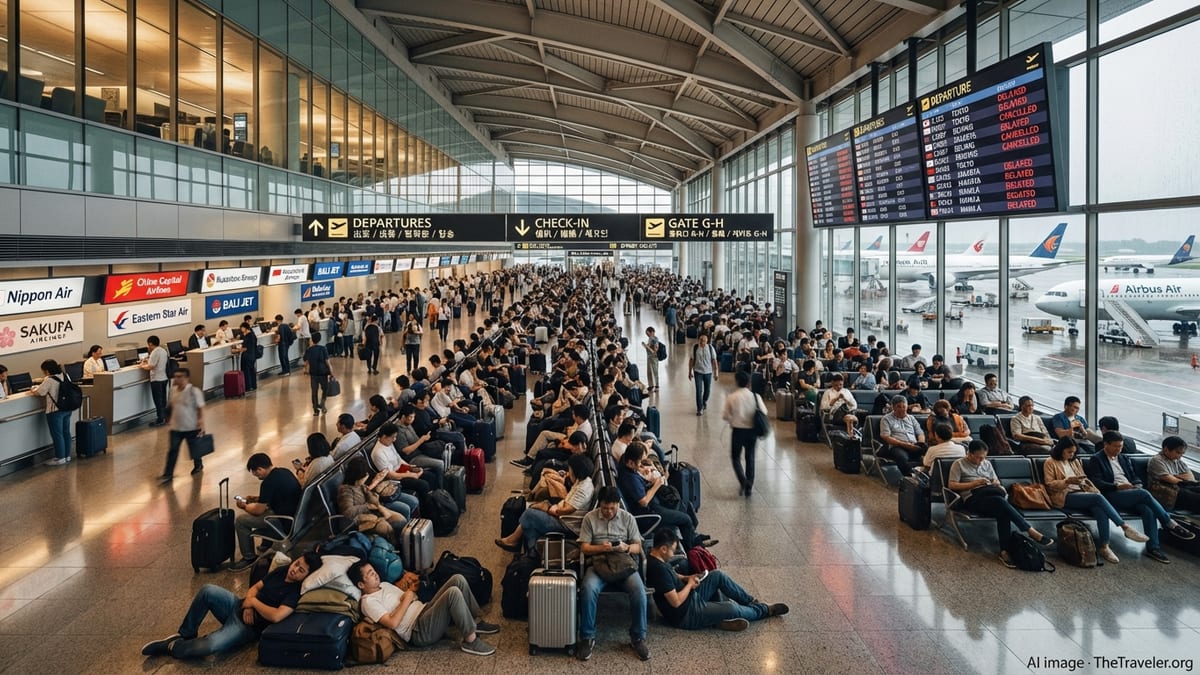
Major Asian Hubs Struggle With Heavy Congestion
Publicly available flight-tracking statistics show that airports across Asia have contributed a significant share of today’s global total of more than 25,000 delayed flights and over 800 cancellations, underscoring how vulnerable key hubs remain to regional weather and airspace shocks.
Major international gateways such as Delhi, Hong Kong, Shanghai and key Gulf transit airports handle tens of millions of passengers each year, funnelling long-haul traffic between Asia, Europe and North America on tightly timed connections. When one or more of these hubs slows, late arrivals cascade into missed connections, crew scheduling problems and aircraft repositioning challenges that can take days to unwind.
Analysts note that even when a relatively small number of flights are outright cancelled, a far larger pool of services may arrive late. That pattern is visible today in Asia, where the ratio of delays to cancellations is high, reflecting a broader effort by airlines and airports to keep aircraft and passengers moving, even if schedules slip by 30 minutes or longer.
Delhi Weather Triggers Wave of Disruptions
In India, Delhi’s Indira Gandhi International Airport, one of Asia’s busiest hubs, has emerged as a flashpoint for the current disruption. Heavy monsoon rain and thunderstorms over the National Capital Region on Monday led to at least 15 Delhi-bound flights being diverted to other cities, including Jaipur, Chandigarh and Lucknow, according to multiple news reports drawing on airport and flight-tracking data.
Business-focused coverage citing Flightradar24 data indicates that more than 280 services at Delhi were delayed and over 20 were cancelled as adverse weather reduced arrival and departure rates and forced ground operations to slow. Separate regional reporting notes that dozens of additional flights experienced knock-on delays as aircraft and crews were displaced across the domestic network.
The Delhi disruption illustrates how quickly conditions can deteriorate when intense rain and thunderstorms affect a high-traffic hub during peak hours. Even after the most severe cells pass, backlogs at security, boarding gates and taxiways can persist for several hours, feeding into the wider tally of delays observed across Asia today.
Typhoon Season and Monsoon Rains Add to Strain
The latest wave of delays also coincides with an active typhoon and monsoon season in East and Southeast Asia. Earlier in August, Typhoon Dolphin led to at least a dozen cancellations on routes linking Hong Kong with mainland China, Taiwan and Japan, as carriers scrapped or rescheduled flights to and from Okinawa, Ishigaki, Zhoushan, Ningbo and Shanghai, according to regional media coverage based on airport websites and airline statements.
While Dolphin has since moved on, its impact continues to be felt in the form of repositioning flights, altered crew rotations and equipment swaps, which can leave some routes more vulnerable when new weather systems emerge. Today’s disruptions are occurring against that backdrop, coupled with heavy seasonal rainfall in parts of South and Southeast Asia that periodically reduces visibility below safe operating minima.
Industry assessments of recent climate-related events in Asia highlight a rising frequency of weather patterns capable of affecting aviation, including stronger typhoons, more intense rain bands and bouts of dense fog that can temporarily halt operations. When these coincide with peak holiday periods or national events, the resulting pressure on airport capacity can be acute.
Airspace Restrictions and Regional Geopolitics Complicate Routing
Beyond immediate weather, airspace constraints linked to geopolitical tensions in the broader region continue to shape how airlines plan and operate Asia-related services. Documentation on the economic impact of the 2026 conflict involving Iran describes how the closure of several Middle Eastern airspaces, including key corridors used between Asia, Europe and Africa, forced carriers to adopt longer routings, adding time and fuel burn to many journeys.
Press analyses of those airspace closures note that major West Asian hubs, including Dubai and Abu Dhabi, collectively handle a significant proportion of global traffic. When operations are reduced or flight paths are lengthened, schedules on connecting routes into South and East Asia become less resilient to further shocks from storms or local weather, contributing indirectly to the elevated delay counts recorded across the region today.
Even when airports remain open, additional route length and congestion in alternative corridors can narrow the margin for recovery after localized disruptions, making it harder for airlines to absorb unexpected holding patterns, diversions or ground stops without spilling into broader network delays.
Travelers Urged to Check Flight Status and Plan for Disruption
Airlines and travel platforms across Asia continue to steer passengers toward real-time digital tools as the most effective way to navigate today’s disruption. Advisory notices in markets such as Malaysia, issued ahead of peak National Day travel and temporary airspace closures for ceremonial flypasts, have emphasized the importance of arriving early at airports and monitoring flight status closely via carrier apps.
Global tracking services including FlightAware and consumer platforms such as KAYAK provide live delay and cancellation boards, allowing travelers to see whether specific flights or airports are experiencing unusual disruption. These tools, combined with airline notifications, can help passengers rebook more quickly when cancellations occur and gauge whether connecting itineraries remain viable when departure times slip.
For those flying through Asia today, industry observers recommend building in additional time for connections, keeping essential items in carry-on bags in case of overnight delays, and checking visa or transit rules before accepting rerouting via alternative hubs. With 6,561 delays and 452 cancellations already logged across the region, further knock-on effects are likely to persist into the evening and potentially into subsequent travel days.
Live global delay and cancellation statistics – FlightAware
Delhi airport weather disruption and diversions – Business Standard
Delhi-bound flight diversions and delays – Mint
Typhoon Dolphin flight cancellations in Hong Kong and Japan – SCMP