


More news on this day
Australia’s long-envisioned high speed rail connection between Newcastle and Sydney is moving from concept to concrete planning, as new details emerge on the technology, tunnelling and station infrastructure proposed for the nation’s first true high speed corridor.
Get the latest news straight to your inbox!
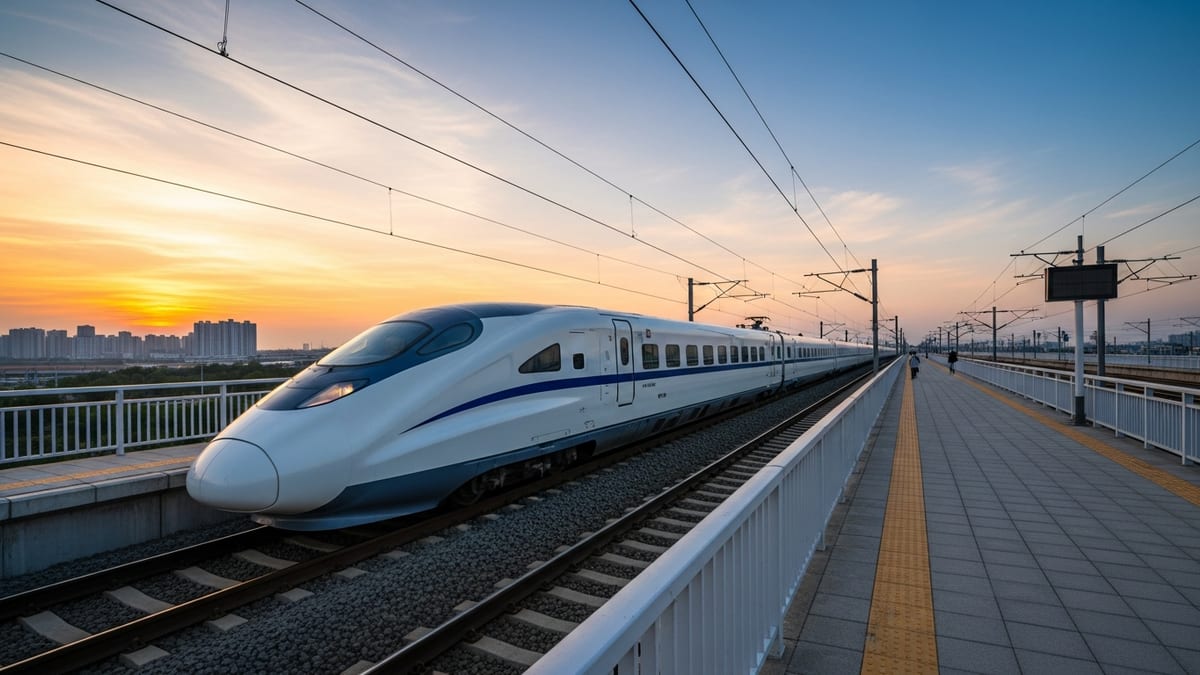
Project moves into advanced development phase
Publicly available information from the Australian High Speed Rail Authority (HSRA) shows that the Newcastle to Sydney line, known as Line 1, is now in an intensive development phase focused on getting the project to construction-ready status. The corridor would form Stage 1 of a broader east coast network and provide a dedicated high speed line separate from the existing Central Coast and Newcastle intercity route.
The Australian Government has progressively increased planning commitments, including an additional 230 million Australian dollars in early 2026 to complete the final planning stage for the corridor via the Central Coast. Earlier budget measures provided 500 million dollars for planning, early works and corridor acquisition, alongside 78.8 million dollars specifically for the detailed Newcastle–Sydney business case and product definition work.([pm.gov.au](https://www.pm.gov.au/media/why-were-building-high-speed-rail?utm_source=openai))
According to federal infrastructure publications, HSRA delivered the Newcastle–Sydney business case and a product definition report to government in December 2024. These documents underpin subsequent development work on alignment, staging and delivery strategy, and are informing an investment decision forecast for the second half of the decade.([infrastructure.gov.au](https://www.infrastructure.gov.au/sites/default/files/documents/doc_2_igb25_infrastructure_released.pdf?utm_source=openai))
Recent coverage by national broadcasters and universities indicates that the project has now moved into what is described as a final planning or development stage. This phase is intended to refine costs, scope and approvals sufficiently for major contracts to be signed, potentially from 2027, subject to federal investment decisions and intergovernmental agreements.([youtube.com](https://www.youtube.com/watch?v=5zmMAMMGMcM&utm_source=openai))
High tech train systems and digital control
Federal government statements outline a design vision built around new electric rolling stock operating at up to 320 kilometres per hour on a largely segregated 190‑plus kilometre alignment. Journey times between Newcastle and Sydney Central are forecast at around one hour, with Central Coast travellers expected to reach either metropolitan centre in roughly 30 minutes.([pm.gov.au](https://www.pm.gov.au/media/why-were-building-high-speed-rail?utm_source=openai))
Recent announcements on high tech trains for the corridor describe a major Trains, Systems and Systems Integration package that would supply the high speed fleet, build a new depot and operations control centre, and integrate all on board and trackside technologies. The scope includes advanced signalling, power systems and centralised control designed to support up to 12 trains per hour in each direction on the busiest sections.([hsra.gov.au](https://www.hsra.gov.au/industry-update?utm_source=openai))
Planning documents and related federal programs indicate that the line is expected to rely on modern digital train control and European Train Control System (ETCS) compliant signalling, in line with broader upgrades across the Sydney rail network. National infrastructure assessments describe a shift towards high capacity digital systems to boost throughput and allow tighter headways, which would be crucial for high frequency high speed rail operations into central Sydney.([infrastructureaustralia.gov.au](https://www.infrastructureaustralia.gov.au/ipl/high-capacity-signalling-sydney-digital-systems-program?utm_source=openai))
Officials have also highlighted potential synergies with existing metropolitan projects such as Sydney Metro and the Digital Systems Program, which are already deploying platform screen doors, moving block signalling and fully accessible station designs. These technologies are expected to inform station layouts and passenger handling strategies for high speed rail, particularly at interchange hubs like Central and Parramatta.([sydneymetro.info](https://www.sydneymetro.info/west/project-overview?utm_source=openai))
Tunnelling heavy alignment and complex station works
One of the most striking features of the emerging Newcastle–Sydney high speed design is the reliance on extensive tunnelling through northern Sydney and the Central Coast. Analyses of the business case and supporting material indicate that more than half of the approximately 195‑kilometre route could be in tunnel, with recent commentary citing around 110 kilometres of underground sections to navigate steep terrain and densely developed coastal suburbs.([reddit.com](https://www.reddit.com/r/highspeedrail/comments/1rdyx0n/australias_business_plan_for_hsr_sydney_western/?utm_source=openai))
Industry briefings by HSRA describe a major tunnelling and station civil works package, including around 35 kilometres of twin tunnel boring machine drives, cross passages and an underground station, bundled with full fitout and systems installation. The high tunnelling share is one of the key drivers of the project’s projected multibillion dollar price tag, but is seen as necessary to secure fast, straight alignments and minimise surface disruption in constrained urban corridors.([hsra.gov.au](https://www.hsra.gov.au/industry-update?utm_source=openai))
Publicly released material indicates that new high speed stations are envisaged at central Newcastle, Lake Macquarie, the Central Coast, Sydney Central, Parramatta and Western Sydney International Airport. Each will require complex interface design with existing heavy rail, metro and bus networks, as well as significant over‑station development potential to support housing and commercial growth around the hubs.([hsra.gov.au](https://www.hsra.gov.au/newcastle-to-sydney?utm_source=openai))
Earlier state level fast rail work examined options for new northern Sydney tunnels and realignments between Hornsby and the Central Coast to reduce curves and gradients. Those investigations have since been folded into the federally led high speed rail program, providing a body of geotechnical and corridor analysis that is now feeding into detailed tunnel and portal studies for the high speed route.([parliament.nsw.gov.au](https://www.parliament.nsw.gov.au/lcdocs/other/15316/Supp%20questions%20-%20PC%206%20-%20Regional%20Transport%20and%20Roads%20-%20Budget%20Estimates%202020-2021.pdf?utm_source=openai))
Economic, housing and regional transformation potential
Infrastructure Australia’s assessment of the Newcastle–Sydney proposal frames the line as a response to strong population growth, congestion and housing pressures along one of the country’s busiest regional corridors. Forecasts in federal documentation suggest that by 2061, more than 9 million people could be living in the broader Sydney–Newcastle catchment, intensifying demand for fast, reliable intercity connections and opening new opportunities for regional jobs and housing.([infrastructureaustralia.gov.au](https://www.infrastructureaustralia.gov.au/ipl/high-speed-rail-newcastle-sydney?utm_source=openai))
The national business case highlights estimates of around 250 billion dollars in economic activity generated by the first stages between Newcastle, Sydney Central and Western Sydney International Airport, based on productivity uplifts, travel time savings and wider economic benefits. Improved connectivity is expected to support clean energy, advanced manufacturing and defence industries that are already emerging along the Hunter, Central Coast and western Sydney corridors.([pm.gov.au](https://www.pm.gov.au/media/why-were-building-high-speed-rail?utm_source=openai))
Federal planning publications argue that high speed rail can also redistribute growth by making it more attractive for residents and businesses to locate outside inner Sydney. Faster journeys and high frequency services could enable daily commuting from regional centres, while integrated station precinct developments are intended to deliver new housing supply close to rapid transit, reducing car dependence and emissions.([pm.gov.au](https://www.pm.gov.au/media/why-were-building-high-speed-rail?utm_source=openai))
At the same time, commentary from transport academics and analysts notes that the large upfront cost, long delivery timeframe and high tunnelling proportion create significant delivery risk. Proponents argue that securing a clear funding pathway and strong governance for HSRA will be critical if the project is to progress from planning to visible construction within the next parliamentary terms.([sydney.edu.au](https://www.sydney.edu.au/news-opinion/news/2026/02/25/high-speed-rail-engineering-and-transport-experts-react.html?utm_source=openai))
Next steps toward construction readiness
Recent federal announcements outline a structured pathway of early contractor involvement and competitive procurement to refine the design and delivery strategy. HSRA documentation describes multiple work packages, including project controls, network operations planning, technical and sustainability advisory services, and separate packages for tunnelling, stations and train systems, all aimed at de‑risking the transition into full construction.([hsra.gov.au](https://www.hsra.gov.au/industry-update?utm_source=openai))
In May 2026, HSRA’s major industry briefing identified two headline delivery contracts, one for large scale tunnelling and underground station civil works, and another for trains, systems and system integration. The authority has indicated that these packages will move through an early contractor involvement process before final contract signing, allowing designers, builders and technology suppliers to resolve technical issues collaboratively.([hsra.gov.au](https://www.hsra.gov.au/industry-update?utm_source=openai))
According to project timelines in federal budget and planning papers, the goal is to reach a construction ready position in the latter half of the 2020s, enabling an investment decision by the Australian Government once detailed costs, benefits and delivery risks are confirmed. Resourcing for HSRA beyond mid 2026 has been flagged as a key consideration to maintain momentum through this critical phase.([infrastructure.gov.au](https://www.infrastructure.gov.au/sites/default/files/documents/doc_2_igb25_infrastructure_released.pdf?utm_source=openai))
While final funding commitments and intergovernmental agreements are yet to be locked in, the increasing specificity of the Newcastle–Sydney high speed rail plans, along with parallel investment in digital signalling and metro networks around Sydney, points to a step change in how fast intercity rail might be delivered and integrated in Australia in the coming decades.([infrastructureaustralia.gov.au](https://www.infrastructureaustralia.gov.au/ipl/high-capacity-signalling-sydney-digital-systems-program?utm_source=openai))
High Speed Rail Authority: Newcastle to Sydney corridor
Infrastructure Australia: High Speed Rail – Newcastle to Sydney
Prime Minister of Australia: Why we are building high speed rail
Australian Government: High tech trains ahead for high speed rail