


More news on this day
Air travelers across the United States are facing another turbulent stretch of summer, as a mix of severe weather, staffing constraints and technology problems drives widespread delays and cancellations at major airports during one of the busiest travel periods of the year.
Get the latest news straight to your inbox!
Storm Systems Slow Traffic at Major Hubs
Daily air traffic reports from the Federal Aviation Administration (FAA) in August highlight recurring weather-related slowdowns at key hubs including Atlanta, Boston, Charlotte, Minneapolis–St. Paul and major Florida airports. Thunderstorms, heavy rain and low clouds have repeatedly triggered arrival and departure delays, compounding congestion during already high summer traffic volumes.
Weather has also been a persistent concern in the Northeast corridor. FAA operational advisories over recent weeks describe severe weather avoidance plans for the New York and Boston metro areas, along with ground delay programs when thunderstorms move through. These measures reduce the number of flights that can depart or land each hour, often forcing airlines to push back departure times, reroute aircraft, or cancel flights outright when schedules can no longer be recovered.
Travelers have reported knock-on effects well beyond the hardest-hit cities. Accounts posted from airports in Maine, New Jersey and other East Coast locations describe early-morning flights canceled and rebooked many hours later, as well as limited available seats on alternate routes when storms or reroutes ripple through the system. Even when local weather appears clear, restrictions at busy hubs upstream can create long waits and missed connections.
Government transportation data show that weather-related disruptions are a longstanding driver of delays in the national aviation system, alongside factors such as airport operations and heavy traffic volume. That pattern appears to be repeating in the 2026 summer season, with storm systems frequently intersecting peak leisure demand.
Staffing Constraints and Air Traffic Bottlenecks
While stormy skies are visible to passengers, less obvious pressures inside air traffic control facilities are also contributing to disruptions. Oversight reports on the FAA’s operations note that critical facilities, particularly in the New York region, have struggled in recent years to sustain adequate staffing levels during busy periods. When staffing falls below planning thresholds, traffic managers may be required to limit the number of flights in certain airspace sectors, reducing capacity and lengthening delay chains.
Federal watchdog analyses have documented multiple instances in which staffing constraints triggered formal traffic management actions designed to reduce flow through congested areas. These include route restrictions, metering programs and ground delays that keep aircraft at the gate until they can be accommodated en route or at destination airports. For passengers, these system-level decisions translate into later departures, missed connections and, in some cases, cancellations when crew duty time limits are reached.
The Department of Transportation has repeatedly flagged controller staffing as a top management challenge, emphasizing that shortages at the nation’s most critical facilities can amplify the impact of adverse weather or technical incidents. Recent advisory notices related to radar outages and equipment maintenance in the Midwest underscore how localized technical or staffing issues can reduce throughput and intensify schedule strain at multiple airports.
Industry observers note that the cumulative effect of these bottlenecks is felt most acutely during the summer, when schedules are dense and slack in the system is limited. Travelers encountering multiple delays in sequence often find that later flights are already full, particularly into and out of major hubs such as Chicago O’Hare or the New York airports, prolonging recovery when something goes wrong earlier in the day.
Technology Outages Add a New Layer of Risk
On top of weather and staffing, technology issues have emerged as another disruptive force. In late July, American Airlines temporarily grounded flights nationwide due to a technology problem that affected its operations. Coverage from local media in Miami described aircraft being held on the ground for nearly an hour, with departure boards showing a wave of delays at Miami International Airport and other locations even after flights resumed.
Government oversight reports point to recent history in which outages in flight planning or safety information systems produced nationwide ground stops and thousands of delays. A 2023 failure in the Notice to Air Missions system and a 2024 global technology incident tied to a cybersecurity software update both had cascading effects on airlines seeking to restore normal operations. In each case, airlines required many hours or days to reposition aircraft and crews, underscoring how sensitive schedules can be to short but widespread technology interruptions.
Within the airline and aviation technology community, discussion has focused on the complexity of modern reservation, dispatch and crew management systems. Commentaries from industry professionals describe how data mismatches or frozen interfaces can slow the ability to rebook passengers or reassign aircraft, particularly when disruptions coincide with peak seasonal demand. While many carriers have invested in new tools since earlier high-profile meltdowns, recent events show that outages remain a significant vulnerability.
Regulators are advancing modernization programs for the broader air traffic system aimed at improving resilience. Initiatives highlighted by the FAA include next-generation data sharing platforms and more sophisticated traffic flow management software designed to integrate real-time weather, capacity and operational information so that constraints can be anticipated earlier and managed more precisely.
Travelers Confront Crowded Airports and Limited Options
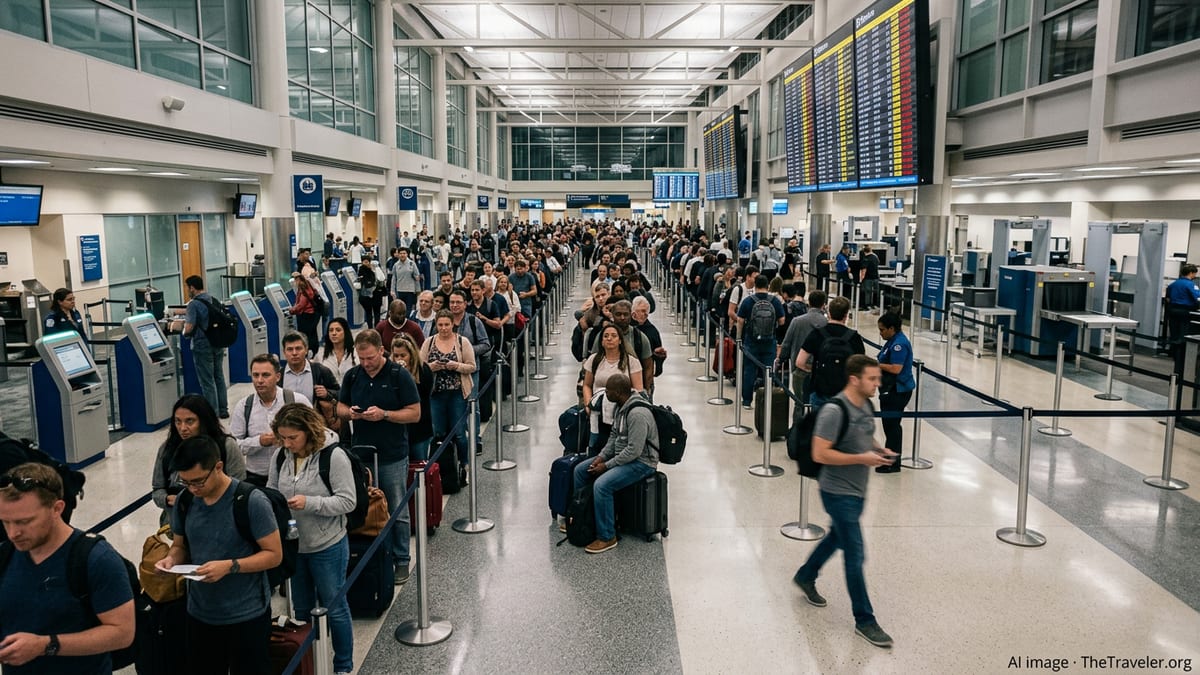
For passengers, the combined effect of storms, staffing pressures and occasional outages is translating into crowded terminals, long customer service lines and, in many cases, limited rebooking options. Firsthand accounts shared on travel forums in August describe travelers facing multiple cancellations in a row, extended tarmac waits followed by last-minute cancellations, and difficulty finding open seats on later flights when entire banks of departures are affected.
Reports from major hubs highlight situations where flights were delayed for weather or traffic management, only to be cancelled when crews reached federally mandated duty limits. In some instances, travelers described luggage being sent ahead on subsequent flights even when passengers themselves could not secure seats, creating additional complications once they eventually arrived at their destinations.
Experiences vary by carrier and route, but some frequent fliers tracking their 2026 trips report a notable share of their flights arriving late or being cancelled, with dozens of hours lost to delays. Travelers connecting through weather-prone hub cities in the Southeast and Mid-Atlantic appear to be especially exposed when successive thunderstorms move through on peak weekends.
Consumer advocates point out that federal rules require airlines to provide clear information about delays and cancellations and to honor their own customer service commitments, such as meal vouchers or hotel accommodations in certain circumstances. Publicly accessible tools from the Department of Transportation offer guidance on passenger rights and allow travelers to compare airline performance, helping set expectations during periods of heightened disruption.
Airlines and Regulators Look to Long-Term Fixes
In response to sustained pressure on the system, transportation officials and industry stakeholders are pursuing both near-term and long-term measures to improve reliability. At the airport level, the FAA has announced steps to manage schedules at particularly congested hubs, including Chicago O’Hare, where summer 2026 flight volumes are projected to be significantly higher than in 2025. Efforts to coordinate schedules with airlines are intended to better match operations to available runway and airspace capacity.
At the national level, modernization of air traffic control infrastructure is a central focus. The FAA’s NextGen initiative emphasizes technologies such as data communications for departure clearances and enhanced surface surveillance systems, which are intended to streamline taxi operations and reduce the need for last-minute rerouting that can lead to delays. New traffic flow management tools incorporating predictive analytics aim to anticipate constraints earlier and help avoid gridlock when storms develop.
Oversight reports from the Department of Transportation indicate continued emphasis on recruiting and training additional air traffic controllers, addressing the staffing gaps that have contributed to capacity limits in recent years. At the same time, federal analyses of delay and cancellation data are being used to inform policy decisions and consumer protection initiatives as officials assess how disruptions affect passengers across different airlines and regions.
Despite these efforts, available data and recent operational reports suggest that travelers should be prepared for continued volatility through the remainder of the peak season. Industry guidance commonly advises passengers to monitor flight status closely, build extra time into connections, and consider early-day departures, which are often less exposed to the cumulative effect of later delays.
FAA overview of new traffic management technology
DOT Inspector General report on FAA staffing and outages