


More news on this day
More than 1,300 flights were delayed and over 120 canceled across Asia in a single May travel day, as major hubs including Jakarta, Beijing, Shanghai, New Delhi, Mumbai, Kuala Lumpur, Osaka and Fukuoka struggled with simultaneous weather, congestion and operational pressures affecting carriers from Batik Air and Air China to AirAsia, SpiceJet and ANA Wings.
Get the latest news straight to your inbox!
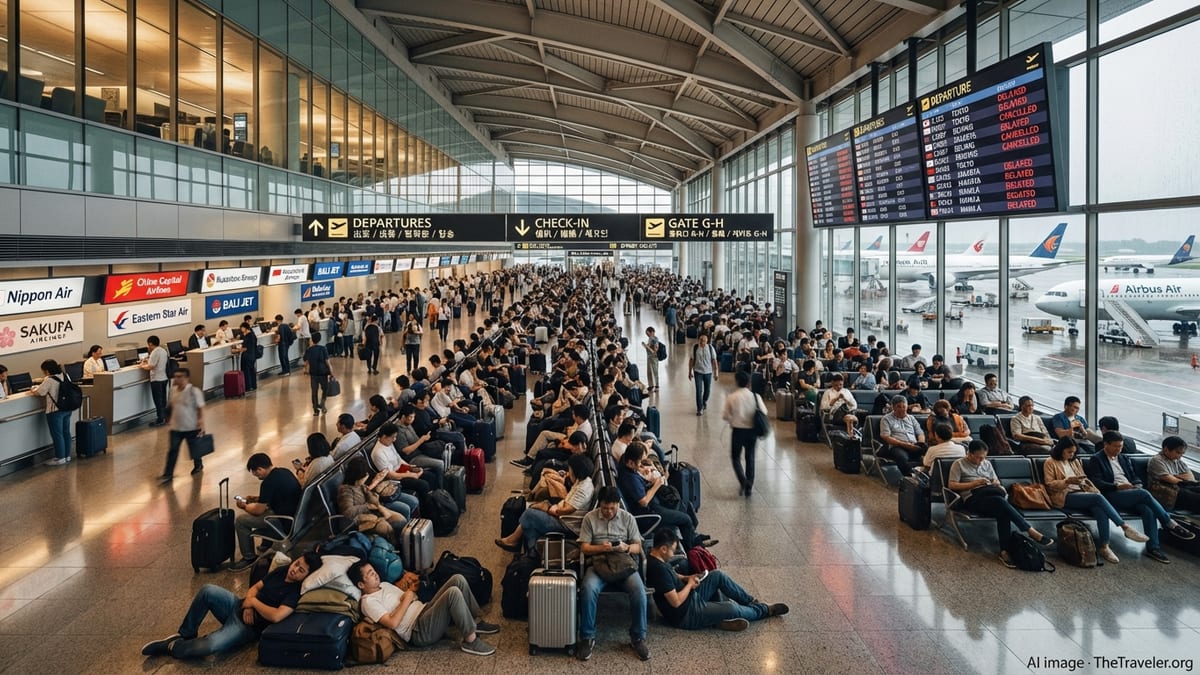
Major Asian Hubs Log One of May’s Toughest Travel Days
Aggregated data from flight tracking dashboards and airport status boards for a mid-May weekday indicate that 1,333 flights were delayed and 126 canceled across Asia’s main aviation corridors, pointing to one of the month’s most disruptive days for regional travelers. The figures cover a mix of domestic and international services and highlight how quickly schedules can unravel when multiple hubs experience stress at the same time.
Jakarta’s Soekarno-Hatta, Beijing’s primary airport system and Shanghai’s twin airports were among the hardest hit, with delays cascading through already dense timetables. In South and Southeast Asia, New Delhi, Mumbai and Kuala Lumpur recorded elevated disruption levels, joining Japan’s Osaka and Fukuoka, where tightly banked departure waves left little slack once early rotations began running late.
The disruption totals are broadly consistent with other recent May snapshots of Asia’s air travel system, where several thousand delays and hundreds of cancellations have periodically been registered in a single day across the wider region. While the latest event is smaller than some of those peaks, the concentration of problems at so many top-tier hubs on the same date amplified knock-on effects for passengers.
Publicly available information from prior weeks shows that the same airports have featured repeatedly in disruption tallies, suggesting that structural congestion, unpredictable weather patterns and ambitious post-pandemic schedules are combining to keep on-time performance under pressure as the summer travel season approaches.
Airlines From Batik Air to Air China Shoulder Heavy Operational Strain
The burden of the latest disruption wave was spread across dozens of carriers, with regional and flag airlines alike appearing in delay and cancellation counts. Indonesia-based Batik Air was again prominent at Jakarta, where previous reporting this season has tied the carrier to clusters of late and canceled departures during busy morning and evening banks.
In China, Air China featured in Beijing and Shanghai disruption tallies, mirroring earlier May patterns that have seen Chinese network airlines grapple with weather-related air traffic control restrictions and congested departure flows at major coastal hubs. These conditions have periodically forced carriers to hold aircraft on the ground, creating gaps in aircraft and crew availability later in the day.
Low-cost giant AirAsia and its regional affiliates were visible in Kuala Lumpur and other Southeast Asian hubs, according to route data and passenger reports. The group’s dense point-to-point network across Malaysia, Indonesia, Thailand and beyond leaves little margin when storms, runway congestion or operational challenges arise at one or two critical airports.
In India, budget operator SpiceJet appeared among the services affected by the mid-May turmoil. The airline has already been navigating a demanding operating environment marked by tight fleet resources and heavy reliance on key metro airports such as Delhi and Mumbai, where taxiway bottlenecks and slot pressures can quickly trigger rolling delays.
Weather, Air Traffic Flow Controls and Tight Schedules Create a Perfect Storm
Weather instability across parts of East and Southeast Asia during May has repeatedly intersected with air traffic flow controls to produce difficult operating conditions. Recent regional disruption summaries describe storms and low visibility around Chinese coastal hubs, pockets of heavy rain around the Indonesian archipelago and periodic convective weather along key India and Southeast Asia corridors.
When air traffic management units impose flow restrictions, arrivals and departures are spaced further apart, effectively reducing runway capacity. Even a modest reduction at a hub like Shanghai or Beijing can quickly push turnaround times beyond planned limits, especially during peak morning and evening waves when aircraft and crews are tightly scheduled.
Operational data and past case studies from April and early May show that once an early inbound flight arrives late, subsequent legs using the same aircraft are more likely to depart behind schedule, particularly for short-haul regional sectors with quick turnarounds. This pattern has been observed on routes touching Jakarta, Shanghai, Guangzhou, Kuala Lumpur and Tokyo, where average delay times can climb steadily over the day.
Analysts note that Asia’s rapid traffic recovery has outpaced some ground and airspace capacity upgrades, leaving major hubs more vulnerable when several small disruptions occur at once. The mid-May event that produced 1,333 delays and 126 cancellations appears to fit this broader pattern, with no single dominant cause but rather an accumulation of weather, traffic management and scheduling challenges.
Impact on Travelers: Missed Connections and Overnight Airport Stays
For travelers, the figures translate into long lines at check-in and security, congested boarding gates and, in many cases, missed connections at key transfer points. Historical disruption coverage from across the region highlights how even relatively short delays on regional feeders can cause passengers to miss long-haul departures to Europe, North America or the Middle East, especially when minimum connection times are tight.
Jakarta and Kuala Lumpur, which serve as important connecting hubs for Southeast Asia, have previously seen passengers forced into overnight stays when evening long-haul or final regional departures left with connecting customers still stuck in security queues or on delayed inbound flights. Similar patterns have been documented at Delhi and Mumbai, where intense evening departure banks can leave few viable later options once missed.
In Japan, Osaka and Fukuoka play a key role in linking domestic routes to international networks via larger gateways. Disruptions at these airports can strand travelers mid-journey, particularly those heading onward to transpacific or intra-Asia flights departing from Tokyo or other major hubs, as limited late-night frequencies reduce rebooking choices.
Publicly available guidance from passenger rights advocates stresses the importance of monitoring flight status in real time and allowing additional buffer time for connections within Asia during periods of elevated disruption. On days like the latest mid-May event, travelers with tight itineraries are disproportionately exposed to missed onward flights and extended time in transit halls.
What the Latest Disruptions Signal for the Rest of May
The 1,333 delays and 126 cancellations recorded across Asia in this latest incident reinforce a picture of a regional aviation system operating close to its limits during peak travel periods. With multiple earlier May episodes already featuring several thousand disrupted flights across major hubs, the trend points to a sustained period of volatility rather than isolated bad days.
Industry data for recent weeks suggests that delays and cancellations have clustered around a familiar group of airports, including Beijing, Shanghai, Jakarta, Guangzhou, Kuala Lumpur, Delhi, Mumbai, Tokyo area gateways and other large hubs. As airlines continue to rebuild capacity and pursue aggressive schedules, any combination of weather, airspace constraints or technical issues can quickly tip these hubs into widespread disruption.
Travel observers note that carriers such as Batik Air, Air China, AirAsia, SpiceJet and ANA Wings, while operating in different markets and business models, share exposure to these same congested airports and tight rotation patterns. This leaves them particularly vulnerable to knock-on delays when earlier flights in the chain run late.
With the northern summer peak approaching and demand remaining strong on both regional and long-haul routes, further disruption spikes are considered likely if infrastructure and airspace capacity remain constrained. For now, the mid-May figures stand as a warning sign for travelers planning complex itineraries through Asia’s busiest hubs in the weeks ahead.