


More news on this day
Travelers across New York and beyond faced cascading disruptions on Wednesday after a sinkhole discovered near a primary runway at LaGuardia Airport forced its closure and triggered extensive flight delays and cancellations.
Get the latest news straight to your inbox!
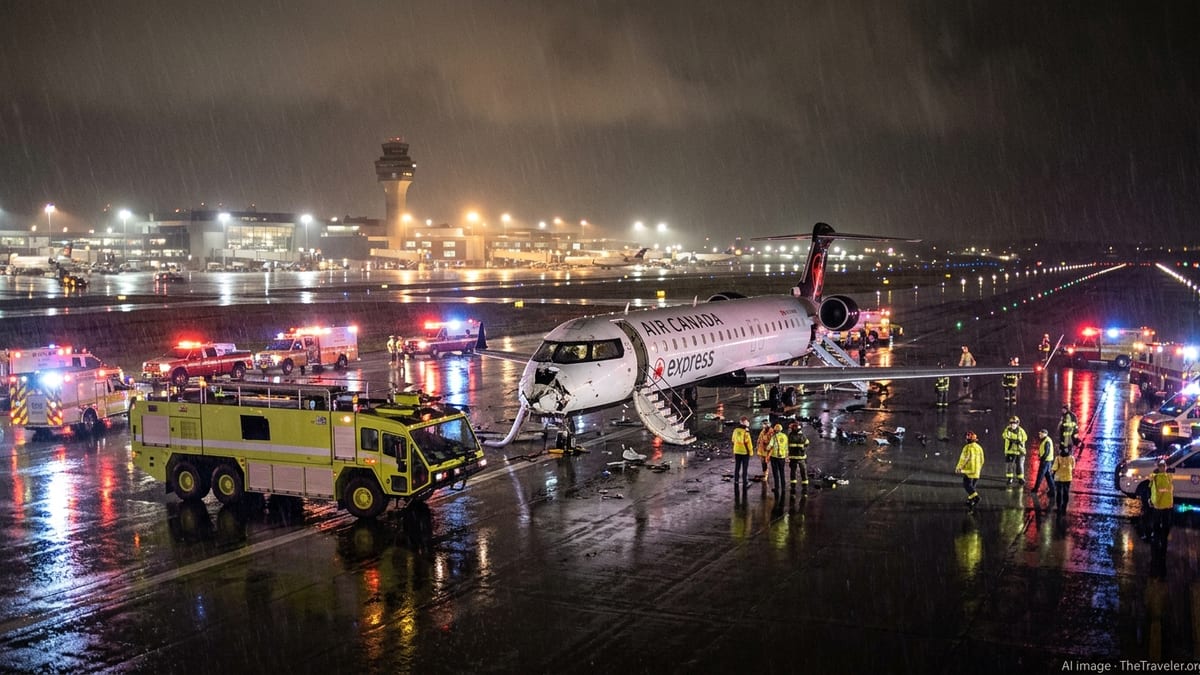
Runway 4/22 Taken Out of Service After Morning Inspection
Publicly available information shows that airfield crews at LaGuardia Airport in Queens identified the sinkhole late Wednesday morning during a routine inspection of the tarmac. The depression was located adjacent to Runway 4/22, one of only two runways at the busy urban airport, prompting an immediate shutdown of the affected strip while emergency construction teams moved in to stabilize the area.
Reports indicate the sinkhole was discovered around 11 a.m. on May 20 near the midpoint of Runway 4/22, a key arrival and departure corridor for domestic flights. Aviation coverage notes that the Federal Aviation Administration responded by slowing traffic into LaGuardia, citing a combination of the runway issue and unsettled weather moving through the region.
Airport operators described the response as an emergency repair effort focused on determining the cause of the ground failure and restoring the pavement to a condition suitable for jet traffic. With only one remaining runway available, the facility’s already tight operating margins were significantly reduced, placing strain on airlines and air traffic controllers managing peak-hour schedules.
According to multiple news outlets, the runway remained closed into the evening as engineers assessed the stability of surrounding pavement and subsurface material. There was no immediate indication of structural damage to aircraft, and no injuries were reported in connection with the incident.
Hundreds of Flights Delayed or Canceled as Disruptions Ripple Out
Data compiled from flight-tracking services shows that the loss of Runway 4/22 quickly translated into major schedule disruptions. By late afternoon Wednesday, tracking platforms were reporting close to 200 cancellations and well over 150 delays for flights arriving at and departing from LaGuardia.
Average departure and arrival delays stretched from around half an hour at the outset of the disruption to well over an hour as the day progressed, according to published coverage. Some flights bound for LaGuardia were held at origin airports under ground delay programs, while others were rerouted through alternate New York area hubs or canceled outright when slots could not be reassigned.
The timing amplified the impact. The sinkhole emerged on a weekday when LaGuardia typically handles dense business travel alongside leisure trips, and forecasters were already warning of thunderstorms capable of further slowing air traffic. With weather-related airspace constraints compounding the loss of runway capacity, carriers had limited flexibility to recover schedules in real time.
Passenger accounts shared through social media and local reporting described crowded terminal gates, repeated departure time revisions, and last minute cancellations that pushed some travelers to rebook for the following day. The disruption extended to connecting hubs as airlines repositioned aircraft and crews to cope with the reduced throughput in New York.
Infrastructure Vulnerabilities at a High-Density Urban Airport
The incident has drawn fresh attention to the infrastructure vulnerabilities at one of the nation’s most constrained major airports. LaGuardia is built on former shoreline and landfill on the western edge of Flushing Bay, an environment that civil engineers have long considered challenging for long term pavement stability and drainage.
Transportation analyses and historical planning documents have highlighted the airport’s limited physical footprint, short runways, and lack of extensive parallel taxiways as factors that magnify the effect of even minor airfield disruptions. With few options for rerouting aircraft around problem spots on the pavement, localized issues such as a sinkhole can quickly compromise the entire operation.
In recent years, LaGuardia has undergone a multibillion dollar redevelopment focused on terminal modernization, improved road access, and upgraded airside facilities. While much of that work has targeted passenger experience and gate congestion, engineering assessments have also emphasized the need to monitor aging runways and subsurface conditions in an era of heavier aircraft and more frequent extreme weather events.
Aviation experts commenting in public forums note that sinkholes or pavement collapses on active runways remain relatively rare compared with other types of operational disruptions, but can carry outsized risk if not identified quickly. In this case, the routine inspection regimen appears to have detected the issue before any reported aircraft damage occurred, though at the cost of significant networkwide delay.
What Travelers Can Expect in the Coming Days
As of Thursday morning, publicly available updates indicated that emergency crews were continuing round the clock work to stabilize and resurface the affected section of Runway 4/22, with the goal of restoring full operations once inspections deem the repairs safe. The exact timeline for reopening has not been widely detailed, reflecting the need for thorough testing of the subgrade and asphalt layers.
Airlines operating at LaGuardia have been adjusting schedules, consolidating some flights, and upgauging aircraft on remaining services where possible to accommodate disrupted passengers. Industry observers suggest that travelers with flexible plans may see better options by rebooking into nearby airports such as John F. Kennedy International or Newark Liberty until LaGuardia’s runway capacity returns to normal.
Travel advisories published by carriers and airport authorities consistently urge passengers to monitor flight status directly with their airline before leaving for the airport, rather than relying on day old itineraries. With weather still a factor in the New York region, even partial restoration of the runway may not immediately resolve the backlog of displaced flights and crews.
Beyond the immediate inconvenience, the sinkhole disruption underscores how a single point of failure at a high density airport can send shockwaves through national air travel. Analysts note that the episode is likely to feed into broader discussions about infrastructure resilience, proactive maintenance, and long term capacity planning at LaGuardia and other major urban hubs.