


More news on this day
Europe’s new biometric Entry/Exit System is now fully operational across the Schengen Area just as the peak summer travel season approaches, and early reports indicate that the change is already lengthening border queues for millions of non-EU travelers.
Get the latest news straight to your inbox!
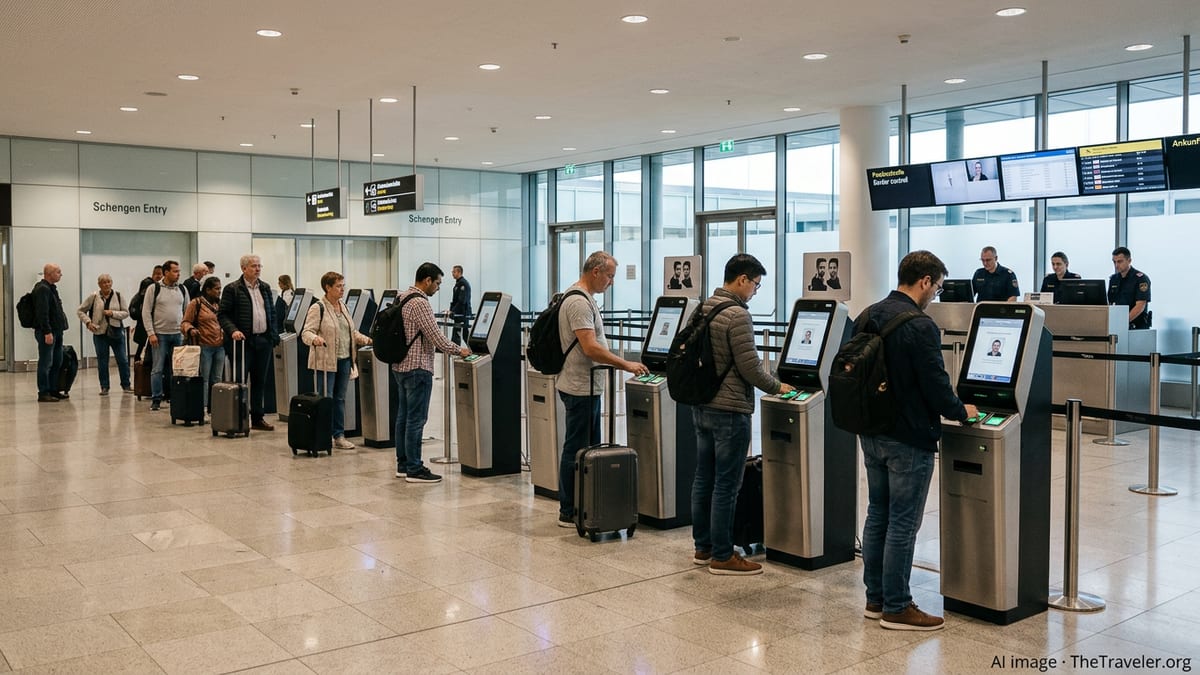
New Digital Border Rules Arrive Before Peak Season
The Entry/Exit System, known as EES, replaced traditional passport stamps for most non-EU nationals crossing the external borders of the Schengen Area from 10 April 2026. Instead of an ink stamp, travelers are now enrolled into a central database that records biometric data along with dates and places of entry and exit. According to publicly available EU material, the system is managed by the agency eu-LISA and is intended to tighten migration controls and improve security by tracking overstays more precisely.
European institutions describe EES as one of the bloc’s most complex IT projects, linking hundreds of land, sea and air border crossing points to a shared digital infrastructure. It has been phased in since late 2025, but full mandatory use at all external border posts coincides with the ramp-up to the 2026 holiday season. That timing is now under scrutiny as airports, airlines and passenger groups report a visible impact on waiting times.
EU communications present EES as a long-term efficiency upgrade that should eventually reduce manual checks once most frequent visitors are fully enrolled. In the short term, however, the need to capture fingerprints and facial images for first-time entries is creating an additional step at border control desks. The effect is most pronounced for travelers from visa-exempt countries such as the United Kingdom, the United States, Canada and Australia, who previously relied on a quick passport stamp.
Evidence of Growing Delays at Major Hubs
Reports from aviation industry associations and travel rights organizations point to longer queues and missed connections at several large hub airports since the system became fully operational. A joint communication from ACI Europe and airline groups in April highlighted waiting times of two to three hours at peak periods in some terminals, along with disrupted passenger flows and instances of flights leaving with booked passengers still stuck in border lines.
Coverage in European travel media and passenger surveys suggests that the impact is uneven across the continent. Some airports that invested early in additional e-gates and staffing appear to be processing travelers with modest increases in waiting times, while others are seeing sharp spikes during bank holidays and morning and evening arrival waves. A recent analysis by a border queue monitoring firm cited Paris and Madrid among hubs experiencing two to four hour queues for certain non-Schengen arrivals, with knock-on effects on baggage collection and onward connections.
Online accounts from travelers arriving from the UK and North America describe long bottlenecks where EES kiosks, biometric capture stations and passport booths converge, particularly at smaller or infrastructure-constrained airports. At some Mediterranean gateways, reports indicate that authorities have occasionally reverted to more limited biometric checks or partial suspensions at specific times to prevent queues from spilling into terminal corridors.
Why the New System Is Slower for First-Time Users
EES is designed around a one-time biometric enrollment for each traveler, followed by faster verification on subsequent trips. In practice, that means the first journey to the Schengen Area after 10 April 2026 can involve several extra steps: scanning the passport, capturing a live facial image, recording fingerprints and confirming travel details. Border control agents then need to verify that the new profile has been correctly created in the central database before clearing the passenger.
Industry briefings explain that each first-time registration can take several minutes, even when equipment is functioning smoothly. When multiplied across a wide-bodied aircraft of transatlantic passengers, or several simultaneous arrivals at a busy hub, the process can rapidly outstrip the capacity of staffed booths. Many border posts also continue to handle EU and Schengen nationals in parallel, further stretching limited space and personnel.
European Commission documentation highlights that the system is meant to automate parts of the process over time by enabling self-service kiosks and better data sharing between airlines and border agencies. However, reports from airlines and airports suggest that technical glitches, varying levels of staff training and connectivity issues have all contributed to slower-than-expected throughput in the early weeks of full operation. In some locations, equipment failures have forced a temporary return to manual stamping, adding to confusion for passengers.
Warnings From the Aviation Sector About Summer Crowds
Airports and airline groups have been flagging concerns about the interaction between EES and summer traffic growth since before the system went fully live. In February, transport organizations publicly warned that chronic understaffing at border control and unresolved technology issues risked creating what they described as severe disruptions during the peak months if no extra flexibility was granted in how the rules are applied.
Subsequent statements from aviation associations in April and May reiterated those concerns, pointing to persistent excessive waiting times at some border checkpoints even before the busiest weeks of July and August. Sector-wide traffic data from Eurocontrol for early May shows flight volumes continuing to trend above 2019 levels on many leisure routes, underscoring the likelihood that pressure on border facilities will intensify as schools break up across Europe.
Some national industry bodies and airport operators have pressed for the option to extend transitional arrangements, such as allowing partial suspension of biometric enrollment during peak hours or limiting full EES checks to a defined portion of non-EU arrivals. Publicly available position papers argue that such measures would help avoid multi-hour queues and prevent large numbers of passengers from missing flights while the system beds in.
What Non-EU Travelers Can Expect and How to Prepare
For visitors from outside the EU planning trips this summer, the new system will be a visible part of the arrival and, in many cases, departure process. Airlines and travel providers are advising passengers to build in additional time at both ends of their journey, especially at airports already known for congestion or complex terminal layouts. Some guidance suggests arriving at the airport at least three hours before departure for flights leaving the Schengen Area, with even longer buffers at peak holiday weekends.
EU institutions have released online tools and mobile applications intended to help travelers understand the rules and, where possible, pre-register certain details before reaching the border. Travel information sites recommend checking official portals for the latest guidance on which nationalities are covered, how long biometric data is stored and how long visitors may remain in the Schengen Area within a 180-day period. Awareness of these limits is increasingly important, as EES is specifically designed to detect overstays.
A further layer of change is expected later in 2026 when the separate European Travel Information and Authorisation System, or ETIAS, is scheduled to go live for many visa-exempt travelers. According to European Commission timelines, ETIAS will work in tandem with EES by requiring pre-travel authorization before boarding. Travel analysts note that the combination of advance screening and digital border records could eventually streamline checks, but stress that the immediate concern for summer 2026 is managing the learning curve and capacity crunch at the front line.