


More news on this day
Air travel across Asia has been hit by a fresh wave of disruption, with more than 100 flights reportedly cancelled on key regional routes and international services linking cities such as Melbourne, Kuala Lumpur, Jakarta, Bali, Taipei, Bangkok and Singapore, leaving passengers stranded and scrambling for alternatives.
Get the latest news straight to your inbox!
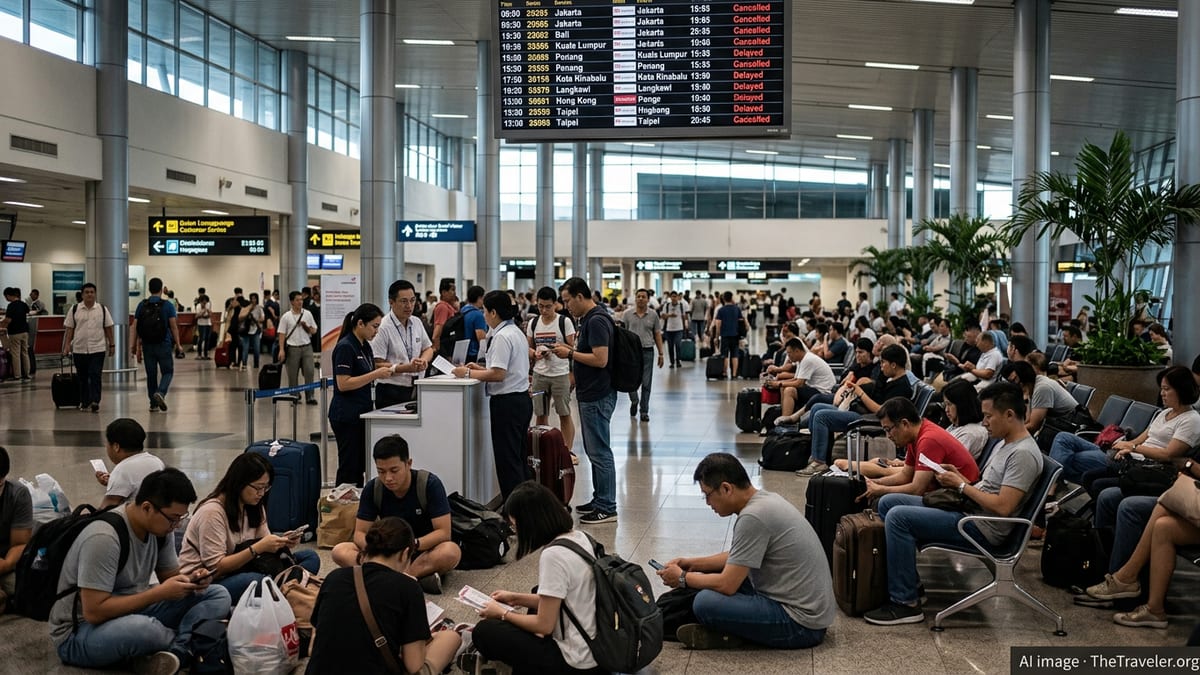
Wide Network Disruption Across Asian Hubs
Publicly available flight data and media coverage on 12 May 2026 indicate that carriers including AirAsia, Batik Air, Citilink, Garuda Indonesia and China Airlines have experienced a spike in cancellations across parts of Southeast and East Asia. The disruption is concentrated around major hubs in Malaysia, Indonesia, Taiwan and Hong Kong, with knock-on effects for connecting routes to Australia and other Asia Pacific destinations.
More than 105 flights are reported to have been cancelled or heavily disrupted within a short period, affecting a mix of domestic, regional and long haul operations. The pattern shows particular pressure on popular leisure and business corridors linking Jakarta and Bali with Kuala Lumpur and Singapore, as well as services connecting Taipei and Hong Kong with Southeast Asia.
The latest turbulence follows a period of rapid capacity growth across low cost and full service carriers in the region, particularly on trunk routes such as Singapore to Jakarta and Singapore to Kuala Lumpur, where airlines including AirAsia, Batik Air, Citilink and Garuda Indonesia collectively operate hundreds of weekly flights. In such dense markets, concentrated cancellations can leave limited spare seats for last minute rebooking.
Reports indicate that the current wave of disruption is being driven by a combination of operational challenges, aircraft availability constraints and adverse weather in some hubs. However, detailed causes vary by carrier and route, and not all affected airlines have publicly provided specific breakdowns of the reasons for each cancellation.
AirAsia, Batik Air, Citilink and Garuda Under Pressure
Low cost giant AirAsia appears to be at the center of much of the current frustration for travelers, particularly those connecting through Kuala Lumpur on multi leg itineraries to and from destinations such as Melbourne, Bali, Bangkok and various secondary cities. Recent traveller reports and online discussions have highlighted a pattern of late schedule changes and cancellations on selected AirAsia routes, sometimes notified only days or weeks before departure.
Batik Air and its Malaysian arm, which use Kuala Lumpur and Indonesian airports as key transit points, are also part of the disruption picture. With the airline marketing extensive connections from Bali, Jakarta and Kuala Lumpur to a range of regional cities, cancellations on even a handful of sectors can cascade across its network, leaving passengers stranded mid journey or forced to overnight unexpectedly while they await reaccommodation.
Citilink and Garuda Indonesia, which together cover a large share of Indonesia’s domestic and regional connectivity, have also recorded cancellations on routes touching major leisure hotspots. Flights between Jakarta, Bali and regional gateways including Singapore, Kuala Lumpur and Bangkok remain highly sought after in May as school breaks and early peak season demand build, amplifying the impact of any last minute schedule cuts.
In Taiwan, China Airlines has adjusted parts of its timetable between Taipei and Southeast Asia for the current summer season. When combined with disruption at partner or connecting carriers, these changes have contributed to longer journey times and increased misconnection risk for passengers using Taipei as a bridge between Northeast Asia, Southeast Asia and Australia.
Key Routes Hit: Melbourne, Bali, Kuala Lumpur and Singapore
The most heavily affected routes in the latest disruption wave include a web of city pairs tying together some of the region’s busiest tourism and business centers. Services linking Bali’s Denpasar airport with Kuala Lumpur, Bangkok and Singapore have experienced cancellations or significant timing changes, according to schedule aggregators and online booking platforms tracking real time operations.
Links between Singapore and key Indonesian and Malaysian cities have also come under strain. Singapore to Jakarta and Singapore to Kuala Lumpur are among Asia’s busiest international corridors by weekly flights, with multiple airlines operating dense schedules. When several departures in a single day are removed or consolidated, passengers may struggle to find same day alternatives at short notice.
The disruption has extended along longer haul corridors as well, including itineraries connecting Melbourne to Southeast Asia via Kuala Lumpur or Singapore. Travellers relying on low cost combinations or separate tickets on AirAsia and other regional carriers are particularly vulnerable when a single sector is cancelled, as onward flights may not be automatically protected or rebooked.
Bangkok, Taipei and Hong Kong are also experiencing ripple effects. Cancellations on feeder routes have reduced the availability of onward connections into these hubs, complicating travel plans for passengers heading to or transiting through Thailand, Taiwan and Hong Kong from secondary cities across Indonesia and Malaysia.
What Stranded Passengers Are Experiencing On The Ground
Passengers caught up in the disruption across Asia report a spectrum of issues, from relatively minor delays and schedule changes to being left without clear same day options to reach their destination. In some cases, travellers have found that entire days’ worth of flights along certain corridors are fully booked once cancellations are announced, leaving only premium fares or indirect routings available.
Online accounts describe long queues at airport service desks, difficulty reaching human support through call centers or chatbots, and limited clear information on compensation or entitlements. The situation can be especially challenging for those traveling on separate tickets, as each airline may treat onward segments as a separate responsibility, complicating rerouting efforts.
Families and holidaymakers on tightly timed itineraries are among the hardest hit, particularly those with fixed hotel bookings or cruises departing from Bali, Singapore, Bangkok or Hong Kong. Some travellers have turned to last minute alternative transport or purchased new one way tickets on different airlines at significantly higher prices to salvage their plans.
Business travellers have also been affected, with meeting schedules, conferences and regional events disrupted by missed connections and lost travel days. The clustering of cancellations across multiple carriers and hubs has reduced the ability of passengers to simply switch to a competitor on the same route, especially at peak hours.
Practical Advice For Travelers With Upcoming Asia Trips
With schedules still in flux across several Asian carriers, travellers holding tickets for the coming weeks are being advised by travel industry observers to monitor their bookings closely and to check flight status regularly in the days before departure. Many airlines continue to adjust timings and consolidate lightly booked services, which can lead to late changes even after original confirmations.
Passengers planning multi stop itineraries involving hubs such as Kuala Lumpur, Jakarta, Bali, Singapore, Taipei, Bangkok or Hong Kong may wish to allow longer connection windows than usual. Booking all sectors on a single ticket or with a single airline group, where possible, can reduce the risk of being stranded if one leg is cancelled, as onward flights are more likely to be reprotected.
Travel insurers and consumer advocates often highlight the importance of understanding policy terms around schedule changes and cancellations. Some policies may cover additional accommodation, meals or rebooking costs when flights are cancelled or significantly delayed, while others offer only limited protection.
While airlines in the region continue to add capacity and announce new aircraft orders, the latest spike in cancellations underscores the fragility that can remain in post pandemic aviation networks. Travellers heading to or within Asia in the near term may benefit from building flexibility into their plans, keeping essential items in carry on luggage, and being prepared with backup options should their original flight be among those affected.