


More news on this day
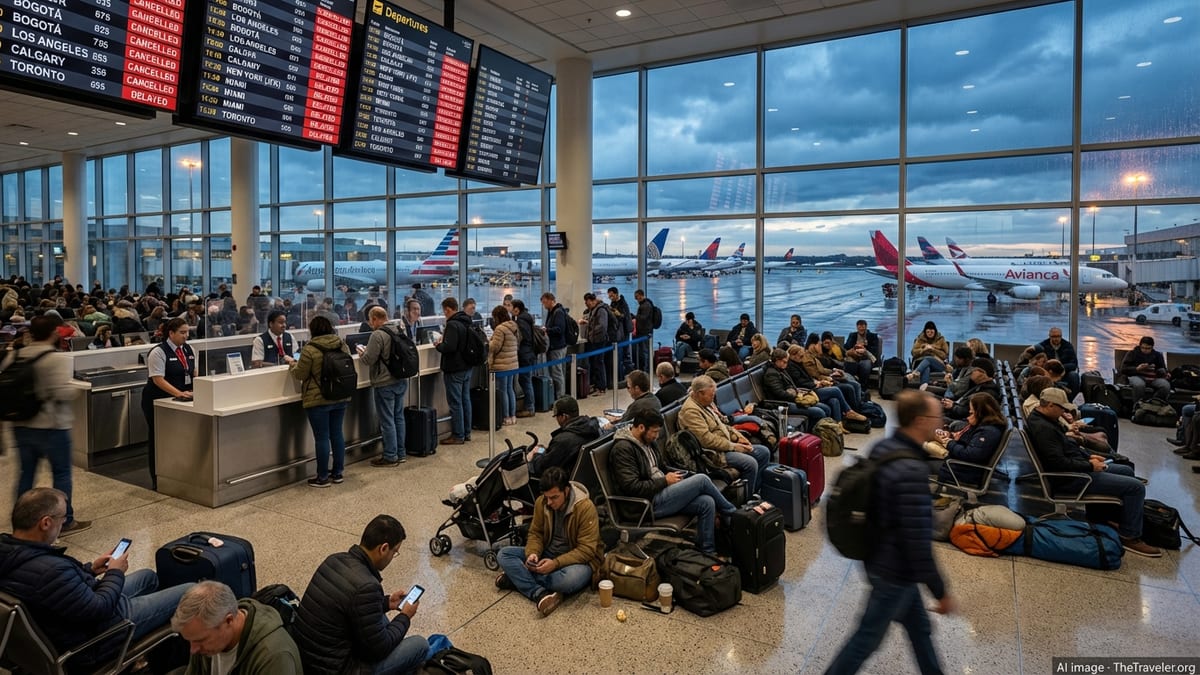
More than 200 flights in and out of Phoenix Sky Harbor International Airport were delayed or canceled after a second Federal Aviation Administration ground stop tied to thunderstorms, with ripple effects that extended into the next day’s schedules.
Get the latest news straight to your inbox!
What happened at Phoenix Sky Harbor
Published coverage indicates the FAA implemented multiple ground stops affecting Phoenix Sky Harbor on Wednesday, September 16, 2026, as thunderstorms moved through metro Phoenix. One widely reported window for the first ground stop ran from about noon to 1:15 p.m. local time, pausing certain inbound operations long enough to reset arrival flows during the weather.
Flight-tracking summaries from FlightAware shared in regional reporting showed delays climbing into the hundreds later that day, with cancellations also reported. Even after the ground stop window ends, airlines typically need hours to reposition aircraft and crews, which can compound disruptions into the evening and the following day.
The FAA’s public airport status tools for PHX and the broader National Airspace System status pages are commonly used by travelers and newsrooms to distinguish between local airport constraints and wider airspace management programs.
Why a second ground stop can magnify delays
When air traffic is paused more than once in a day, the impact often becomes non-linear. Aircraft that were held out of sequence may miss gate availability, crews may approach duty-time limits, and arriving flights can queue for ramp space if traffic resumes in surges rather than smoothly.
Thunderstorms present particular challenges for operations at busy hubs because lightning, wind shifts, and heavy rain can temporarily reduce arrival and departure rates, and can also slow down ramp activity such as fueling and baggage handling. That creates knock-on delays even for flights that were not directly subject to the initial stop.
Separately, recent national coverage has pointed to air traffic control staffing strains as an additional factor that can tighten the margin for recovery at major airports, especially during peak travel periods when irregular operations are already elevated.
How travelers can check status in real time
For passengers flying through Phoenix, the most reliable immediate step is to use the airline’s app or text alerts to track gate changes, aircraft swaps, and rebooking options as they appear. Airport-wide delay notices do not always match the situation for a specific flight, particularly if an aircraft or crew is arriving late from another city.
For a broader view, the FAA’s PHX airport status page and the National Airspace System status dashboard can help explain whether delays are being driven by air traffic management programs. FlightAware’s live airport view can also show whether the airport is experiencing departure or arrival delays at a given moment, along with general delay ranges and congestion notes.
Phoenix Sky Harbor also maintains a rolling public page listing delayed, canceled, and diverted flights for a defined time window, which can be useful for quickly checking whether disruptions are widespread across terminals or concentrated among specific routes.
Rebooking realities after weather-driven disruption
During and after a ground stop, same-day seats on later flights can disappear quickly, particularly on high-frequency routes served by multiple carriers. Travelers who are rebooked should double-check whether their new itinerary includes tight connections, since systemwide delays can make short connection times riskier than usual.
For travelers deciding whether to wait it out or rebook, it can help to monitor whether delays are stabilizing or increasing. If the airport is still showing rising departure delays and congestion, later departures can slide further, and cancellations can occur if aircraft and crews cannot be repositioned in time.
Because the disruption was tied to weather, compensation rules may differ from mechanical or airline-controlled cancellations. Many travelers focus instead on getting onto the next viable flight, confirming baggage routing, and keeping an eye on hotel availability if an overnight stay becomes necessary.
What to watch next at PHX
As the schedule normalizes, travelers can expect the most visible improvements once inbound aircraft are back in place and crews are reset across the network. Even then, scattered delays can persist the next morning as airlines work through aircraft rotations that were interrupted the prior day.
For anyone traveling to or from Phoenix in the near term, the key is to check the status of the inbound aircraft operating your flight, not only the weather at your departure airport. Delays from other major cities can still arrive in Phoenix hours later and affect return trips.
Real-time FAA status pages and live airport tracking tools can provide helpful context, but the most actionable information for passengers remains the airline’s flight status and rebooking options as inventory opens and closes throughout the day.