


More news on this day
Flight disruption has resurfaced across key Asian hubs in September 2026, with live tracking and airport status pages showing elevated delays in Shanghai, Tokyo and Mumbai that can ripple through long-haul connections and tightly timed regional itineraries.
Get the latest news straight to your inbox!
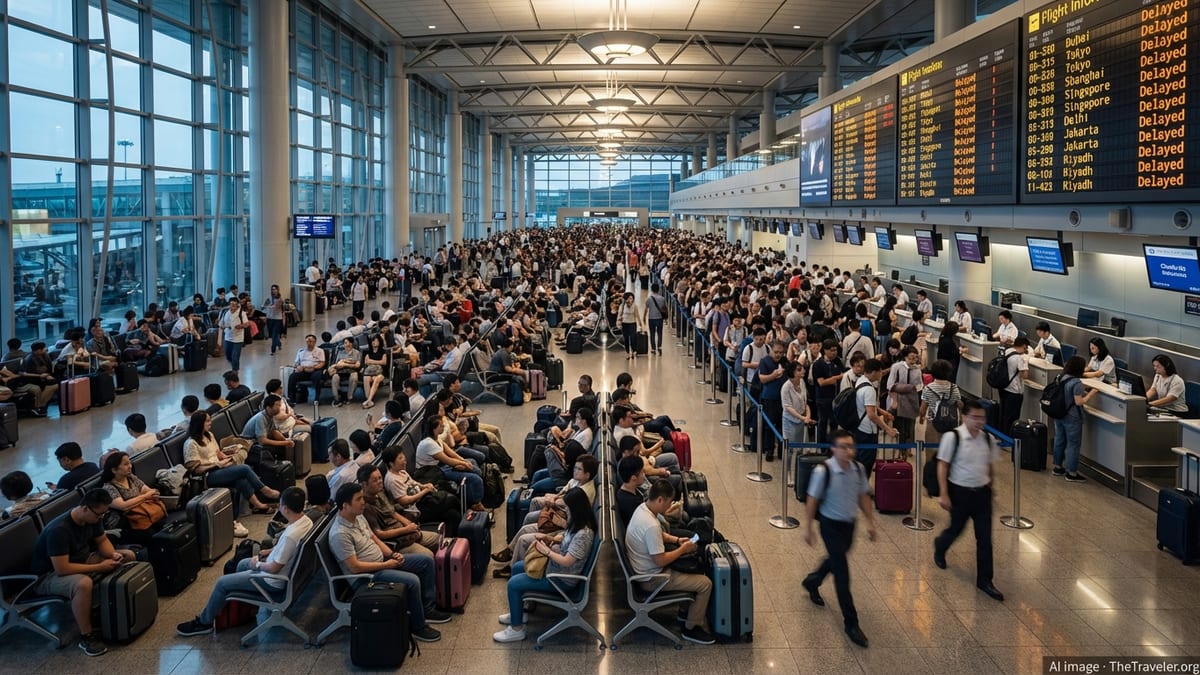
Shanghai Pudong: Delays stack up at one of China’s busiest gateways
On September 18, 2026, live delay and cancellation statistics for Shanghai Pudong International Airport showed hundreds of delayed flights for the day, alongside a smaller number of cancellations. Flight tracking dashboards also indicated a low but rising disruption index, underscoring how even moderate constraint can amplify into widespread schedule slippage at a high-volume hub.
For travelers, Pudong’s disruption matters well beyond Shanghai because the airport functions as a transfer point for services across East Asia and for Europe-bound and transpacific rotations. When departures push back, arrival banks later in the day can compress connection times and increase misconnect risk, especially for itineraries that rely on short transfers between terminals or between domestic and international segments.
Published coverage and airline advisories tied to earlier 2026 typhoon impacts in China highlight a familiar pattern: irregular operations can trigger fee-free changes, rebooking onto later departures, and last-minute gate or time revisions. That same playbook often appears during congestion periods even without a full airport closure, which is why passengers with Shanghai connections are increasingly building in extra transfer time and monitoring airline app updates rather than relying solely on original schedules.
Tokyo: Haneda sees heavy delay counts as networks run near capacity
Tokyo’s air system is particularly sensitive to disruption because demand is high and runway and slot availability are constrained at peak times. Live daily delay statistics for Tokyo International Airport (Haneda) on September 18, 2026 showed hundreds of delayed flights and no cancellations reported in that snapshot, an outcome consistent with situations where airlines keep the schedule intact but absorb disruption through late departures and arrivals.
Haneda’s airport website also maintains a dedicated delay and cancellation interface, reflecting how often travelers need real-time checks when weather, congestion, or air traffic flow restrictions affect Tokyo’s tightly choreographed operations. Even when cancellation totals remain low, long departure queues and late inbound aircraft can cascade across domestic and international banks, affecting same-day connections to onward points in Japan and across Asia.
Separately, publicly available network updates from major Japanese carriers show how Tokyo schedules are continuously adjusted across seasons, including changes on routes linking Tokyo and Shanghai and frequency shifts around major travel periods. Schedule changes do not necessarily cause day-of delays, but they can influence how resilient the system is when disruptions arise, particularly when aircraft and crew rotations are optimized for high utilization.
Mumbai: Weather sensitivity and airfield work add complexity
Mumbai’s Chhatrapati Shivaji Maharaj International Airport operates in a dense urban footprint with limited room for recovery when conditions deteriorate. The airport’s own flight status page provides a rolling view of arrivals and departures, and travelers often see status shifts accelerate during periods of adverse weather, including monsoon-season downpours that can slow arrival rates and trigger holding patterns.
For the broader operational backdrop, publicly available regulatory and stakeholder documents in India have outlined ongoing infrastructure work and redevelopment planning at Mumbai, including projects connected to Terminal 1 and airside capacity management. While these plans are typically phased to reduce disruption, any temporary stand closures, taxiway constraints, or capacity caps can make the airport more vulnerable to delay spikes when weather or traffic surges occur.
In addition, published industry coverage has pointed to periods where cargo and airfield works have been scheduled in ways that can tighten overall operating margins. Even when passenger schedules remain intact, constraints in ramp or runway availability can lengthen taxi times and compress turnaround windows, raising the odds that short-haul services depart late and carry delays forward through the day.
What travelers can do now: verify, buffer, and plan for spillover
With Shanghai, Tokyo, and Mumbai all prone to ripple effects, the most practical step for travelers is to verify flight status close to departure using primary airline channels and airport flight status tools, then cross-check against major flight tracking platforms when available. Tracking sites can provide a useful macro picture, but airline rebooking options, aircraft swaps, and gate updates typically post first in the carrier’s own systems.
For itineraries that connect through these hubs, adding time is often the most effective hedge. When booking new trips, longer connection windows can reduce the risk of misconnects during delay-heavy days, particularly in Tokyo where moving between Haneda and Narita is sometimes part of self-built itineraries and can become risky if the first leg slips.
Travelers should also prepare for operational changes that do not show as a traditional cancellation. A flight may operate late, reroute, or hold for a gate, and those scenarios can still disrupt ground transport plans, hotel check-ins, and onward rail. In the current environment, flexible tickets, travel insurance that covers delay-related costs where applicable, and a backup plan for same-day alternatives can be more valuable than trying to predict the exact cause of a given day’s disruption.