


More news on this day
Flight schedules across parts of Asia are facing fresh disruption in mid-September 2026, with typhoon impacts affecting Shanghai and the Tokyo area while heavy rain in Mumbai adds pressure at one of India’s busiest airports. The result is a volatile mix of delays, cancellations, and short-notice rebookings for travelers connecting through Shanghai Pudong, Tokyo Haneda and Narita, and Mumbai’s Chhatrapati Shivaji Maharaj International Airport.
Get the latest news straight to your inbox!
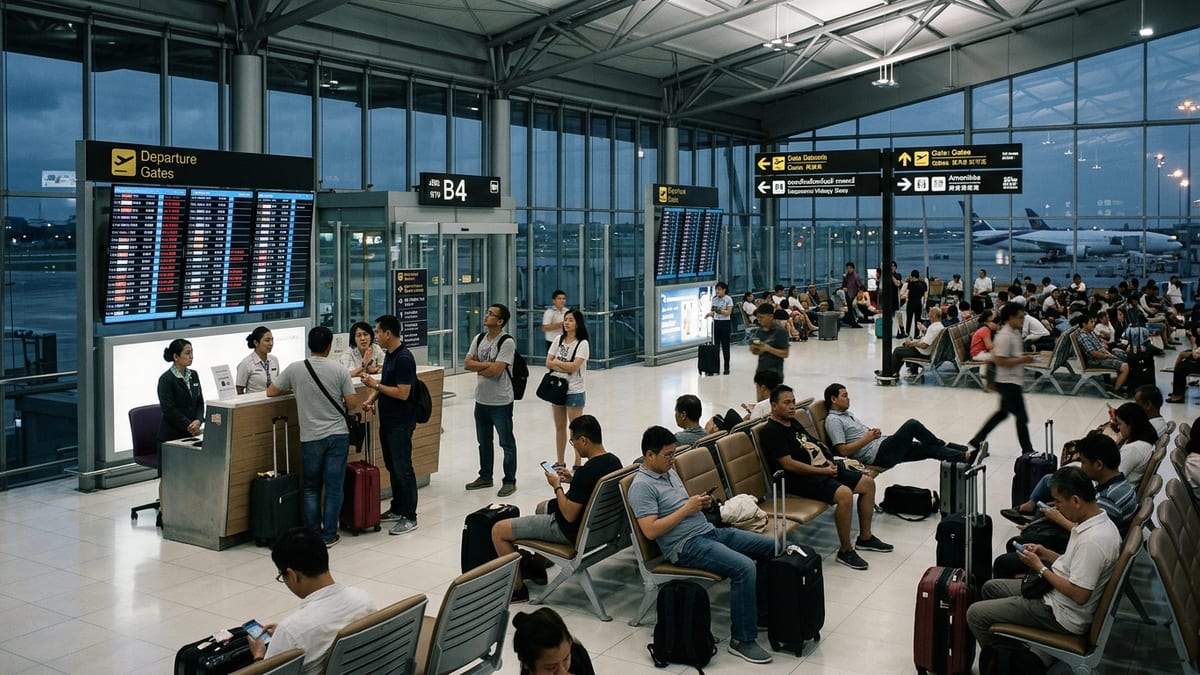
Shanghai: Typhoon impact cuts capacity at Pudong and Hongqiao
Published coverage from September 14, 2026 indicates a sharp drop in operating capacity in Shanghai as Typhoon No. 13, identified in reports as “White Dolphin,” moved through the Yangtze River Delta. The same coverage indicates nearly 60% of inbound and outbound flights at Shanghai’s two main airports were reduced or canceled that day, a level of disruption that typically ripples across domestic and international networks for at least several flight banks.
The reported cancellations were concentrated at Shanghai Pudong (PVG) and Shanghai Hongqiao (SHA), with published figures pointing to 1,384 canceled flights across both airports, including 871 at Pudong and 513 at Hongqiao. For travelers, the practical takeaway is that even after weather clears, aircraft and crew rotations can remain out of position, making delays more likely on routes that rely on Shanghai as a hub or turnaround point.
Shanghai-area transport knock-on effects matter for passengers trying to reach the airport during severe weather. The same published reporting described transit slowdowns and suspensions affecting parts of Shanghai’s metro network, along with ferry service suspensions and major bridge closures in the region, conditions that can turn a manageable flight delay into a missed departure if travelers cannot reach terminals on time.
Tokyo: Typhoon 25 prompts rebooking and refund waivers
In Japan, Typhoon No. 25, identified in weather coverage as Dujuan, is shaping airline planning around the Tokyo region. Forecast-focused reporting dated September 18, 2026 describes an elevated risk of heavy rain, strong winds, and thunderstorms around Narita (NRT) and Haneda (HND) as the system approaches the Kanto area, a pattern that often forces traffic management initiatives, runway configuration changes, and airborne holding.
Airline policy responses are already appearing. Publicly available airline notices dated September 18 show All Nippon Airways offering special ticket handling that allows eligible passengers to change, rebook, or seek refunds without fees for certain flights tied to the expected typhoon impact window. The notice specifies Tokyo Haneda coverage for September 21, 2026, alongside services connected to Hachijojima for September 20 to 21.
For international travelers, Tokyo’s disruption risk can be magnified by the city’s role as a long-haul gateway. When typhoon conditions constrain arrival rates, delays can stack quickly across both domestic feeders and international departures, complicating onward connections to the rest of Japan and to trans-Pacific and intra-Asia routes. Travelers with tight connections at Haneda or same-day rail transfers to Narita should be prepared for schedule changes extending beyond the peak weather hours.
Mumbai: Heavy rain and airfield-area flooding raise disruption risk
In India, Mumbai’s Chhatrapati Shivaji Maharaj International Airport (BOM) is contending with monsoon-season volatility. Published coverage dated September 13, 2026 described heavy rain and significant waterlogging in parts of the city, including near the airport, conditions that can slow ground operations, complicate access roads, and increase turnaround times even when runway operations continue.
Mumbai’s operational profile makes it particularly sensitive to weather-driven constraints. With two intersecting runways and dense peak-hour traffic, small reductions in arrival or departure rates can cascade into gate holds and extended taxi times, especially when aircraft are waiting for parking positions or when ramp operations slow for safety. For passengers, this often shows up as late boarding, delayed baggage delivery, and missed connections to domestic cities.
Travelers transiting Mumbai should also watch for compounding disruptions: inbound delays can cause outbound aircraft substitutions, and carrier recovery plans may prioritize long-haul or high-load flights, leaving some domestic frequencies more exposed to cancellations. Flight-status pages from airport and tracker services can help travelers confirm whether their specific flight is delayed, but the most useful step during active weather is to monitor for airline-issued rebooking options and schedule-change notifications.
What travelers can do now: timing, connections, and rebooking strategy
With weather-driven disruptions affecting multiple hubs at once, itinerary design becomes part of risk management. Travelers flying through Shanghai, Tokyo, or Mumbai in the next several days may benefit from longer connection times than usual, particularly where a single missed bank could push the next available seat to the following day. This is especially relevant for single-daily international routes or for flights that rely on the same aircraft continuing onward.
Rebooking waivers and flexible ticket handling are often time-bound and flight-specific. Passengers should check whether their carrier has posted special handling terms for their travel dates and airports, and, when eligible, prioritize voluntary changes early rather than waiting for day-of operations. In Tokyo’s case, publicly available notices already specify affected dates at Haneda tied to Typhoon 25, giving travelers a concrete window to evaluate alternate departure times or airports.
Finally, travelers should plan for ground-side disruption alongside flight delays. Severe weather can interrupt metro, road, and ferry services in coastal cities, and that can be as trip-ending as a cancellation. Arriving earlier than usual, pre-arranging flexible ground transport, and keeping documentation handy for same-day changes can reduce the chance that an airport-area disruption turns into a missed flight.