


More news on this day
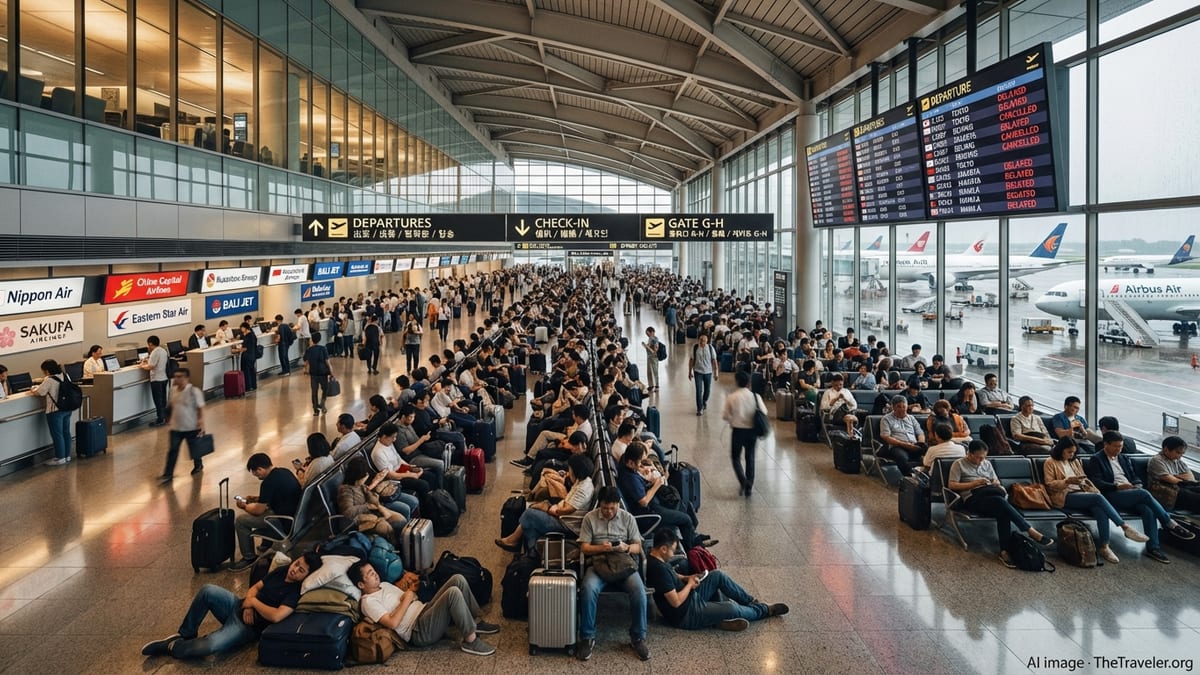
Hundreds of travelers across Asia faced missed connections and long airport waits after a fresh disruption spike that travel trackers and published coverage linked to 3,744 flight delays alongside a smaller but consequential number of cancellations across multiple major hubs.
Get the latest news straight to your inbox!
Where disruptions concentrated and why the number matters
Publicly available disruption dashboards and airline status pages showed delays stacking up across several of Asia’s highest-volume airports, where tightly timed banked departures can turn a short hold into hours of knock-on disruption. In practical terms, a multi-thousand delay day does not mean every flight is hours late, but it often signals the kind of systemwide congestion that strains airport gates, crew schedules, aircraft rotations, and connection windows.
Published coverage in recent months has repeatedly pointed to a familiar mix of triggers behind Asia-wide spikes: seasonal weather that slows arrivals and departures, air traffic flow restrictions, and network constraints that leave little slack when demand is high. When a large hub slows down, delays propagate quickly across regional and long-haul routes that rely on the same aircraft and crews for multiple legs.
Some disruption events have also been amplified by route adjustments and temporary airspace constraints connected to security conditions in parts of West Asia, prompting longer routings and schedule reshuffling for flights that would normally traverse Gulf corridors. Even when airports outside the affected area remain operational, reroutes can push aircraft out of position, tightening turnaround times elsewhere.
Airports most exposed: hubs, connection banks, and runway constraints
Large, connection-heavy gateways are particularly vulnerable during disruption spikes because many travelers are not simply starting or ending a trip there. They are transiting, often with short layovers that become unworkable when inbound flights arrive late and outbound departures do not wait. In Asia, hubs in Southeast Asia, East Asia, and South Asia can be especially sensitive during peak travel seasons and during weather-driven slowdowns.
Published reporting around recent disruption days has highlighted pressure points such as high-density departure waves, limited spare gate capacity, and runway constraints at some airports. When arrival rates are reduced, aircraft can queue for stands, which delays deplaning and pushes back the next departure, creating a feedback loop that is visible in regionwide delay totals.
Another factor is the concentration of low-cost and full-service carriers alike running tight utilization schedules. High aircraft usage is efficient on normal days, but it provides less buffer when a morning rotation is delayed and the same plane must operate multiple later flights.
What travelers are experiencing on the ground
For passengers, the most immediate impact is often not the first delay notice but the second and third revision as departure times slide. That uncertainty can lead to crowded gate areas, longer customer-service lines, and difficulty rebooking when multiple flights in the same corridor are delayed at once.
Missed connections are a common flashpoint, especially for itineraries that depend on a single hub transfer to reach final destinations across Asia, Australia, Europe, or the Middle East. When disruption affects several airports in the same network simultaneously, rerouting options can narrow quickly, and the fastest alternative may involve switching hubs, adding an overnight stay, or accepting a later departure the next day.
Travelers checking bags can face added stress during irregular operations. When flights are rebooked across different routings, baggage delivery times can extend, and passengers may need to verify where their bags will be delivered if an itinerary changes mid-journey.
How to reduce risk on travel days with widespread delays
On high-disruption days, the most useful step is to verify status through the operating airline’s official app or website before leaving for the airport, then keep monitoring. Airport departure boards can lag behind operational updates, and third-party trackers may not always reflect the latest gate-level decisions, especially during fast-moving schedule changes.
Connection planning becomes critical when the system is strained. Travelers still booking trips through Asia’s major hubs may want to avoid the shortest legal connections and choose itineraries that preserve more buffer between flights, particularly for international-to-domestic transfers that can require immigration, security re-screening, and terminal changes.
For travelers already en route, documentation can matter. When a delay triggers meal, hotel, or rerouting discussions, airlines commonly ask for booking details and may provide written confirmations in their apps or at service desks. Keeping screenshots of notifications and boarding passes can help travelers track changes and support any later claims with insurers or card providers, depending on the coverage terms.
What to watch next across Asia’s aviation network
The key question after a multi-thousand-delay day is whether disruption is isolated or persistent. When delays are driven primarily by short-lived weather, airports can often recover within a day as flight banks normalize. When constraints stem from broader routing changes, sustained congestion, or repeated slowdowns across multiple hubs, recovery can take longer and can affect travel for several days.
Travelers with upcoming itineraries through major Asia-Pacific gateways may want to pay attention to early indicators such as rolling delays on inbound flights, frequent gate changes, and repeated schedule adjustments on the same route. Those signals can suggest a stretched operation before cancellations appear.
Airlines typically restore stability by adding recovery flights where possible, consolidating schedules, and repositioning aircraft and crews. But when capacity is tight across the region, the practical result for passengers can be fewer seats available for same-day rebooking, making flexible travel plans and earlier check-ins more important during periods when delays surge.