


More news on this day
Escalating confrontation between the United States and Iran is rippling through the Gulf’s aviation network, as new UK Foreign, Commonwealth & Development Office guidance and recent strikes on Gulf states put key hubs in the United Arab Emirates, Oman, Qatar and Saudi Arabia under renewed scrutiny from nervous airlines and travellers.
Get the latest news straight to your inbox!
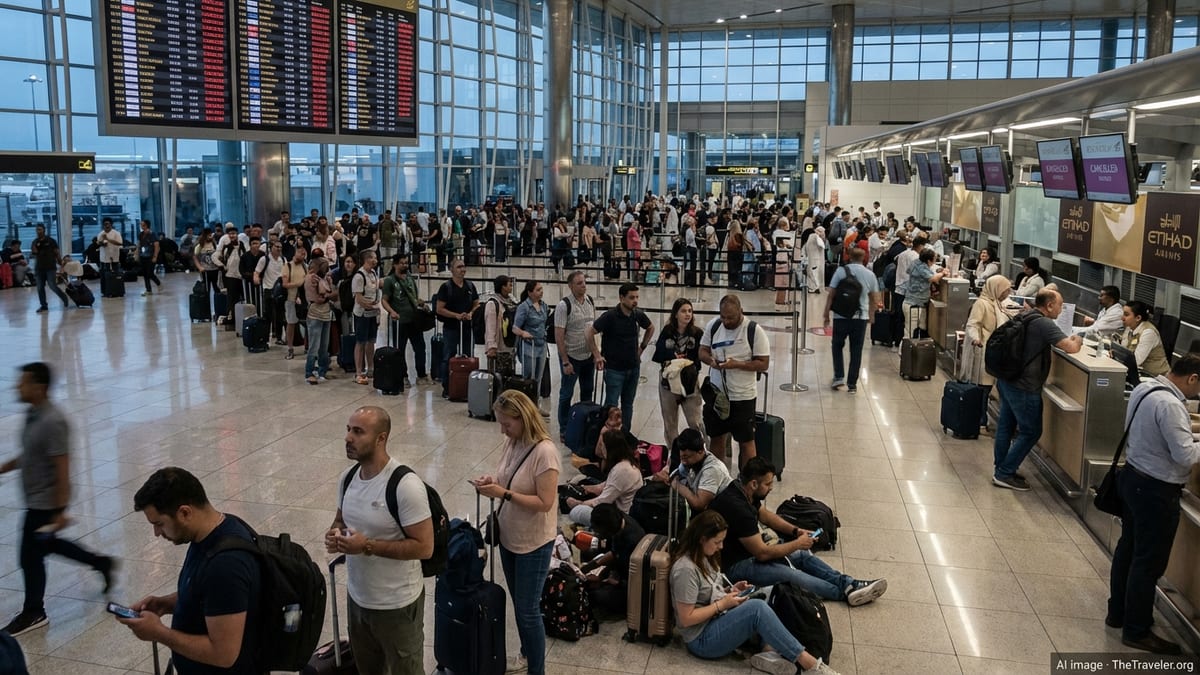
FCDO Warnings Bring Gulf Travel Into Sharper Focus
Updated UK FCDO travel advice in mid July has moved Gulf air corridors back into the spotlight, highlighting the risk of further Iranian action against locations perceived to be linked with the United States or Israel. Publicly available summaries emphasise that regional tensions remain volatile, with the potential for airports, commercial infrastructure and Western branded facilities to be viewed as symbolic targets. The revisions, while stopping short of advising against all travel, are prompting tour operators and corporate travel managers to reassess routings that depend on the big Gulf hubs.
The advisory changes follow months of conflict that have already seen Iran strike or threaten several Gulf states, including Qatar, the United Arab Emirates, Bahrain, Kuwait and Oman, in response to repeated US air operations and maritime incidents around the Strait of Hormuz. European governments have issued parallel statements condemning attacks on commercial shipping and coastal states, and voicing support for restoring safe navigation through the chokepoint. Together, these notices are reshaping the perceived risk profile of point to point and transit travel across the region.
Travel risk consultancies report that clients are increasingly requesting scenario based assessments that combine state travel advisories with live airspace and missile activity monitoring. The result is a more fragmented picture for passengers: while most Gulf airports remain technically open, the perception of risk has risen markedly, affecting corporate duty of care policies, travel insurance cover and individual willingness to transit through the area.
Dubai, Abu Dhabi and Doha Confront Operational Turbulence
Dubai International, Abu Dhabi International and Doha’s Hamad International have spent the past decade positioning themselves as indispensable global connectors between Europe, Asia, Africa and Australasia. The latest phase of the US–Iran confrontation has exposed the vulnerability that comes with this role. Industry analyses circulated in recent weeks show that periods of missile and drone activity have triggered temporary suspensions, diversions and extended rerouting around risk zones, adding hours to some long haul journeys.
Advisory notes from aviation and security firms describe spikes in mid route turnbacks, holding patterns and diversions to secondary airports when alerts rise over the Gulf. Carriers have been forced to weigh the commercial costs of avoiding large swathes of airspace against the operational and reputational consequences of pushing ahead. For hub dependent airlines based in the UAE and Qatar, the calculus is especially acute because every schedule disruption can cascade across global networks, from Sydney and Singapore to London and New York.
Regional media coverage in early July highlighted how successive rounds of US strikes and Iranian retaliation have already altered flight planning into the UAE and Qatar, even on days when national airspace technically remains open. Some airlines continue to overfly using higher altitude and adjusted routing, while others have opted to suspend selected frequencies or rely more heavily on alternative hubs in Turkey, Europe or the Indian Ocean. For travellers, the net effect is an environment of unpredictability, where last minute schedule changes and lengthened connections are becoming more common.
Strait of Hormuz Crisis Reshapes Routing and Insurance Calculus
Beyond the immediate risk to airports and urban centres, the evolving crisis around the Strait of Hormuz is exerting a more subtle but far reaching influence on air travel. The narrow waterway, already central to global energy supply, has become a focal point for Iranian efforts to project leverage, with attacks and attempted interference against merchant vessels widely reported by maritime observers. As navies, insurers and energy companies adjust to this reality, airlines have been reviewing the safety of traditional air corridors that track the shipping lanes.
Security and risk bulletins produced since the spring describe a patchwork of airspace restrictions and company level directives that at points have sharply reduced overflight of parts of the Gulf and Gulf of Oman. Even when no formal closure is in place, many operators now route long haul services further south over Omani territory or via Saudi Arabia’s Red Sea corridor, trading fuel efficiency for perceived safety. These adjustments complicate crew duty times, aircraft rotations and slot management at already busy hubs such as Dubai, Abu Dhabi and Doha.
Insurance is emerging as another pressure point. Industry digests note that some underwriters are reclassifying sections of the Gulf region as higher risk zones, which can trigger extra premiums or narrower cover for war and terrorism related disruption. For travellers, this can mean that standard travel policies exclude cancellations or diversions linked to missile threats or airspace closures, increasing the appeal of routings that avoid the conflict theatre altogether.
UAE, Oman, Qatar and Saudi Arabia Balance Security and Connectivity
Governments in the United Arab Emirates, Oman, Qatar and Saudi Arabia are attempting to strike a balance between maintaining their reputations as reliable transit hubs and responding to genuine security concerns. Statements from Gulf capitals in recent days have condemned Iranian strikes and stressed their desire to see an immediate halt to attacks that threaten regional stability. At the same time, these states continue to invest heavily in layered air defence systems, emergency response capabilities and coordination with international partners to protect critical aviation infrastructure.
Oman’s role as a diplomatic intermediary has taken on added complexity. Reporting in specialist security and policy outlets recounts Muscat led discussions over alternative shipping and flight corridors designed to preserve freedom of navigation while easing Iranian concerns. Proposals have included delineated southern routes through Omani territorial waters for maritime traffic and parallel rethinking of civil aviation corridors that minimise overflight of the most contested zones. While no comprehensive settlement has emerged, the talks underscore how air and sea connectivity have become central bargaining chips in the broader dispute.
Saudi Arabia, meanwhile, is increasingly reliant on its east west pipelines and Red Sea ports to keep energy exports flowing, a shift that has knock on effects for aviation as cargo and passenger traffic are redirected toward Jeddah and other western gateways. For Riyadh and Jeddah’s airports, this presents both risk and opportunity: a chance to capture traffic avoiding the Gulf, but also a need to prepare for any future widening of the conflict that could bring Red Sea routes under similar pressure.
Travellers Face Hard Choices as Uncertainty Persists
For individual travellers, the intensifying US–Iran confrontation and the resulting focus on Gulf hubs have generated an unusual set of trade offs. Travel advisories from Western governments continue to differentiate between routine caution and outright no travel warnings, but the drumbeat of missile incidents and airspace alerts is pushing many to reconsider tight connections through Dubai, Abu Dhabi or Doha in favour of routings via Europe, Central Asia or the Indian subcontinent. Frequent flyers and corporate travel managers are favouring itineraries with greater buffer time and flexible tickets that can absorb sudden schedule changes.
Published guidance from security firms recommends that passengers transiting or visiting the UAE, Oman, Qatar or Saudi Arabia register for their government’s alert services where available, monitor airline channels closely and be prepared for rapid changes to flight times and routings. Travellers are also being encouraged to scrutinise the fine print of travel insurance policies to understand whether conflict related disruption is covered, and to retain contingency funds in case overnight accommodation or rebooking at short notice becomes necessary.
With ceasefire talks and diplomatic efforts continuing alongside intermittent escalations, the outlook for Gulf aviation remains fluid. The region’s hubs have repeatedly demonstrated resilience during past crises, from pandemics to regional blockades. Yet the current confrontation, with its direct strikes on Gulf territory and explicit threats to transport infrastructure, is testing that resilience in new ways and underscoring how tightly global mobility is tied to stability along the shores of the Strait of Hormuz.