


More news on this day
Air travel to and from the United Arab Emirates is facing renewed turbulence as airlines adjust Gulf schedules and cancel selected services following missile attacks on Emirati tankers near the Strait of Hormuz, adding fresh uncertainty for passengers across the region.
Get the latest news straight to your inbox!
Targeted tankers heighten Strait of Hormuz tensions
Regional aviation adjustments follow a sharp escalation in maritime risk after two Emirati oil tankers transiting the Strait of Hormuz were struck by missiles in recent days. Publicly available statements from the United Arab Emirates and company updates indicate that the tankers Al Bahiyah and Mombasa B were hit while sailing through Omani waters close to the strategic chokepoint, resulting in at least one fatality among crew and several injuries.
Reports carried by international news agencies describe the strikes as part of a wider pattern of confrontation in the Gulf, with Iranian forces asserting they targeted what they described as offending vessels. The incidents have revived fears over the vulnerability of commercial shipping and energy flows in one of the world’s most important oil corridors, and have added a new layer of uncertainty for the interconnected aviation sector.
The latest attacks come on top of earlier missile and drone activity around the waterway, which had already pushed insurers, shipping companies and airlines to reassess exposure to the region. Analysts note that even when airports remain open, perceived risk along flight paths and at nearby hubs can quickly feed into airline route planning, affecting frequencies, timings and aircraft deployment.
Travel and risk advisories focused initially on maritime operators are now being closely scrutinised by airline planners and corporate travel managers, who are watching for any shift in overflight permissions, airspace guidance or insurance costs that could further disrupt regional connectivity.
Selective cancellations hit UAE, Saudi and wider Gulf routes
According to recent regional coverage, carriers serving the UAE and neighbouring Saudi Arabia have started cancelling or consolidating certain services as they respond to the evolving security picture. Flights linking UAE gateways with Saudi cities, particularly those close to conflict-affected zones, are among the most exposed, with passengers advised to expect last minute schedule changes.
Publicly available flight information and airline statements indicate that selected services operated by Gulf carriers have been removed from schedules or temporarily paused, especially on routes that pass near the most sensitive areas of the Strait of Hormuz. In some cases, flights are being rerouted to alternative airports within Saudi Arabia or rescheduled to different time slots in order to avoid potential congestion or operational bottlenecks.
Regional media reports also describe a knock-on effect across the wider Middle East network as airlines rebalance capacity. Aircraft and crew that would normally serve secondary Gulf destinations are being reassigned to support core trunk routes, limiting options for travellers heading to smaller cities or planning multi-stop itineraries.
Despite these pressures, mainline services into the UAE’s largest hubs remain broadly intact, with long haul connections from Europe and Asia still operating. However, aviation analysts caution that the situation can evolve quickly if security dynamics change, underlining the importance for passengers of monitoring flight status close to departure.
UAE hubs stay operational as airlines fine tune networks
Dubai International, Zayed International in Abu Dhabi and Sharjah International are all reported to be operating normally, with runways open and core airport functions maintained. Coverage by regional travel outlets notes that Emirates, Etihad Airways, flydubai and Air Arabia continue to run scheduled operations across most of their global networks, even as they adjust patterns on certain Gulf and Saudi links.
Industry observers highlight that the UAE’s major carriers have experience in managing earlier waves of disruption linked to regional tensions and are equipped to alter routings at short notice. In practical terms, this can involve flying longer tracks around the most sensitive airspace, modestly increasing flight times while preserving connectivity for key markets in Europe, Asia and Africa.
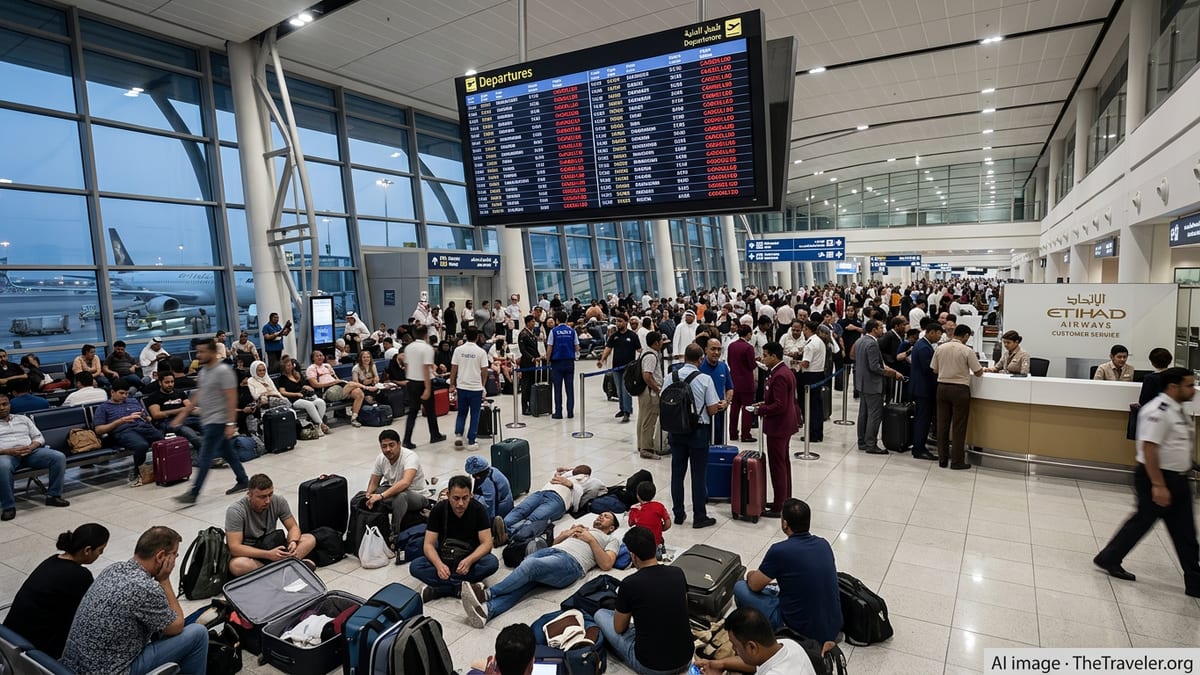
For travellers, the most visible impact to date is concentrated on point to point services deeper into the region rather than on intercontinental flights. Some passengers connecting through UAE hubs to Saudi Arabia or to other Gulf states are encountering cancellations, rebookings onto alternative services, or extended transit times as airlines consolidate frequencies.
Airport authorities are using their regular traffic updates and advisories to encourage passengers to arrive early, allow additional time for security and immigration, and remain flexible regarding potential gate or timing changes. Travel management companies are also flagging the importance of keeping contact details up to date with airlines so that any disruption alerts are received promptly.
What passengers should expect in the coming days
With tensions around the Strait of Hormuz still elevated, aviation specialists anticipate a period of ongoing caution from airlines operating in and out of the Gulf. While there are currently no indications of a wholesale shutdown of UAE airspace, the pattern of selective cancellations and route adjustments is likely to persist as carriers respond to evolving risk assessments and official advisories.
Travellers booked on flights between the UAE and nearby states such as Saudi Arabia, Bahrain, Kuwait and Qatar may face the greatest likelihood of schedule changes. Industry guidance suggests checking flight status repeatedly in the 24 hours before departure, with particular attention to early morning and late night departures that can be more susceptible to operational reshuffles.
Passengers connecting through Dubai, Abu Dhabi or Sharjah on longer journeys are generally expected to see services maintained, although some may experience slightly longer flight times on routes that have been rerouted to avoid sensitive airspace. Those on tightly timed itineraries or same day business trips are being encouraged by travel planners to consider wider buffers or potential overnight stays.
Insurance and corporate travel policies are also coming under review, as companies evaluate whether current coverage adequately reflects the heightened security environment. Some firms are reclassifying travel to certain Gulf destinations, triggering additional approval steps or contingency planning for staff movements.
Travel advice for UAE‑bound and transiting passengers
For individual travellers, the latest developments underline the value of preparation and flexibility. Aviation and travel experts recommend that passengers flying to, from or through the UAE ensure that airline apps and notification settings are activated, enabling rapid updates on any changes to boarding times, gates or routings.
Checking in online at the earliest opportunity and reconfirming flights on the morning of travel can reduce the risk of unexpected surprises at the airport. Those with critical connections, such as cruises, events or long haul onward flights, may wish to bring forward their arrival into UAE hubs by a day to build in a larger margin of safety.
Families and less frequent travellers are being advised to pay special attention to baggage rules and any temporary restrictions that airlines might introduce on specific routes, as operational conditions can lead to tighter weight limits or altered cabin baggage policies. Keeping essential items, medication and travel documents in hand luggage can provide additional reassurance in case of delay or misrouted checked bags.
While the security backdrop is serious, current reporting shows that the UAE’s aviation infrastructure remains resilient, with airports open and flagship carriers continuing to connect the country to the rest of the world. For now, the impact of the Hormuz attacks on most UAE flights is best described as targeted and manageable, though subject to change should the regional situation deteriorate further.