


More news on this day
The UK Foreign, Commonwealth & Development Office (FCDO) has issued updated travel advice for Dubai, Abu Dhabi and other parts of the United Arab Emirates, highlighting persistent regional tensions, recent aviation disruption and the potential for security conditions to change at short notice.
Get the latest news straight to your inbox!
Revised guidance follows volatile regional security climate
The latest update to the UK government’s travel advice for the United Arab Emirates comes against the backdrop of a volatile security environment across the Gulf. Publicly available information on the government’s travel pages indicates that officials continue to flag a risk of further missile or drone activity in the region and warn that incidents could occur with little or no warning.
The guidance notes that while day-to-day life in Dubai, Abu Dhabi and other emirates has largely resumed after earlier disruptions linked to regional conflict, the wider Middle East situation remains unpredictable. Travellers are advised to monitor news reports closely before and during their trips and to stay alert to any changes in the security picture.
Recent statements from European governments on Iranian activity in and around the Strait of Hormuz and neighbouring states underline the sensitivity of the regional backdrop. The UK advisory reflects these broader concerns, emphasising that events beyond the UAE’s borders can still have a rapid impact on air travel and local security measures.
According to published coverage, the FCDO continues to review its assessment of the UAE alongside those for other Gulf destinations, with the overall message that travellers should remain cautious and prepared for short-notice changes to plans.
Dubai and Abu Dhabi: aviation disruption remains a key concern
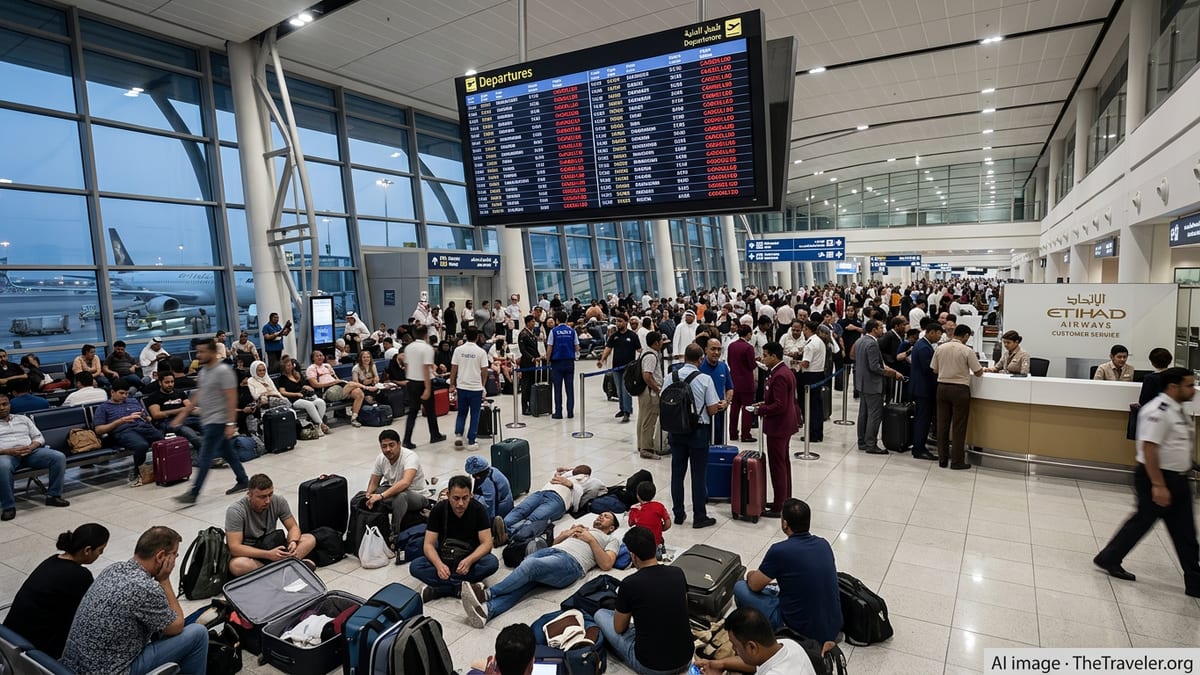
The update places particular focus on potential disruption at major international hubs in Dubai and Abu Dhabi. Earlier this year, flights were temporarily halted and schedules significantly reduced after regional missile and drone incidents, with Dubai International Airport and Abu Dhabi International Airport briefly closing airspace as a precaution.
While regular passenger services have largely been restored, travel industry assessments indicate that airlines and airports in the UAE remain on heightened alert. The FCDO advisory highlights the possibility that renewed tensions could lead to delayed, diverted or cancelled flights affecting both direct passengers and those transiting through the country.
British travellers are encouraged to check with their airlines and tour operators before departure and to allow extra time for security screening and potential last-minute gate changes. Publicly available information from other national travel advisories also points to the risk of knock-on disruption across wider regional air routes if hostilities flare again.
The update underscores that even short, same-day connections through Dubai or Abu Dhabi may be affected if airspace restrictions are reintroduced. Travellers with onward itineraries, including cruises or separate flight bookings, are advised to build in flexibility where possible.
Heightened terrorism and security awareness for popular visitor areas
In addition to aviation issues, the FCDO travel advice reiterates a long-standing warning that terrorists are considered likely to try to carry out attacks in the UAE. The updated wording places renewed emphasis on busy public places that are popular with expatriates and tourists, including shopping malls, hotels, entertainment districts and major transport hubs in Dubai and Abu Dhabi.
The advice encourages visitors to remain aware of their surroundings, follow any visible security instructions at hotels and attractions, and avoid large gatherings where possible. Security checks at malls, Metro stations and event venues in the major cities are already a routine part of daily life, and travellers are reminded that these measures may be intensified at short notice.
Travel analysis from several governments, including Australia, New Zealand and the United States, continues to cite terrorism and regional conflict as key risk factors across the Gulf. The UK advisory aligns with this broader picture, stressing that while many trips to the UAE are trouble-free, visitors should not be complacent about the underlying threat environment.
The guidance also notes that local laws around online behaviour and public comments are strict, and that social media posts relating to security incidents or political developments can attract official scrutiny. Travellers are urged to exercise caution when sharing content about events in the region.
Insurance, stopovers and obligations for UK travellers
The latest FCDO update has practical implications for British nationals arranging holidays, business trips or stopovers in Dubai, Abu Dhabi and other emirates. Insurance providers typically refer to official UK travel advice when assessing policy validity, and some products may limit cover if an advisory level is raised or if warnings against certain types of travel are in place.
Travel sector commentary in recent months has highlighted cases in which travellers sought refunds or rebooking options after earlier changes to the UAE advisory. The renewed guidance is expected to prompt many holidaymakers to double-check their policy wording, particularly around cancellation, curtailment and war or terrorism exclusions.
Industry reports suggest that some tour operators and airlines have offered flexible options where government warnings significantly affected customer confidence. However, decisions can vary by company and by product, so British travellers are being encouraged to seek written confirmation from insurers and agents if they are unsure how the latest advisory applies to their plans.
For those using Dubai or Abu Dhabi purely as transit points, the advice remains to confirm that both the airline and insurance provider recognise airside transfers as covered travel, especially if official guidance for the wider region continues to reference conflict-related risks.
Practical safety steps for visitors to the UAE
Alongside strategic warnings, the FCDO update reiterates a range of practical safety and regulatory points for UK visitors. These include reminders on strict rules around drugs, prescription medication, alcohol and public behaviour, all of which can carry serious penalties if breached.
Travellers are advised to check that any medicines they intend to carry into the UAE are permitted and to bring prescriptions or doctor’s letters where necessary. Publicly available information on the UK government’s guidance pages stresses that even small amounts of certain substances, including residues on clothing or luggage, can lead to prosecution.
The advisory also points to the importance of respecting local customs, particularly in more conservative areas away from central Dubai and Abu Dhabi. Dress codes, conduct in public spaces and behaviour during religious periods may all be subject to tighter expectations than many UK visitors are used to at home.
Finally, British nationals are encouraged, where applicable, to register for consular updates, keep copies of key documents and ensure that friends or family in the UK are aware of their travel plans. The core message of the latest FCDO communication is that travel to Dubai, Abu Dhabi and the wider UAE remains possible, but that visitors should stay informed, remain flexible and be prepared for the regional situation to evolve quickly.