


More news on this day
Fresh escalation in the US–Iran conflict is again rippling across the Gulf’s aviation network, with updated government warnings and intermittent airspace disruptions putting flagship hubs in Dubai, Abu Dhabi and Doha under renewed pressure.
Get the latest news straight to your inbox!
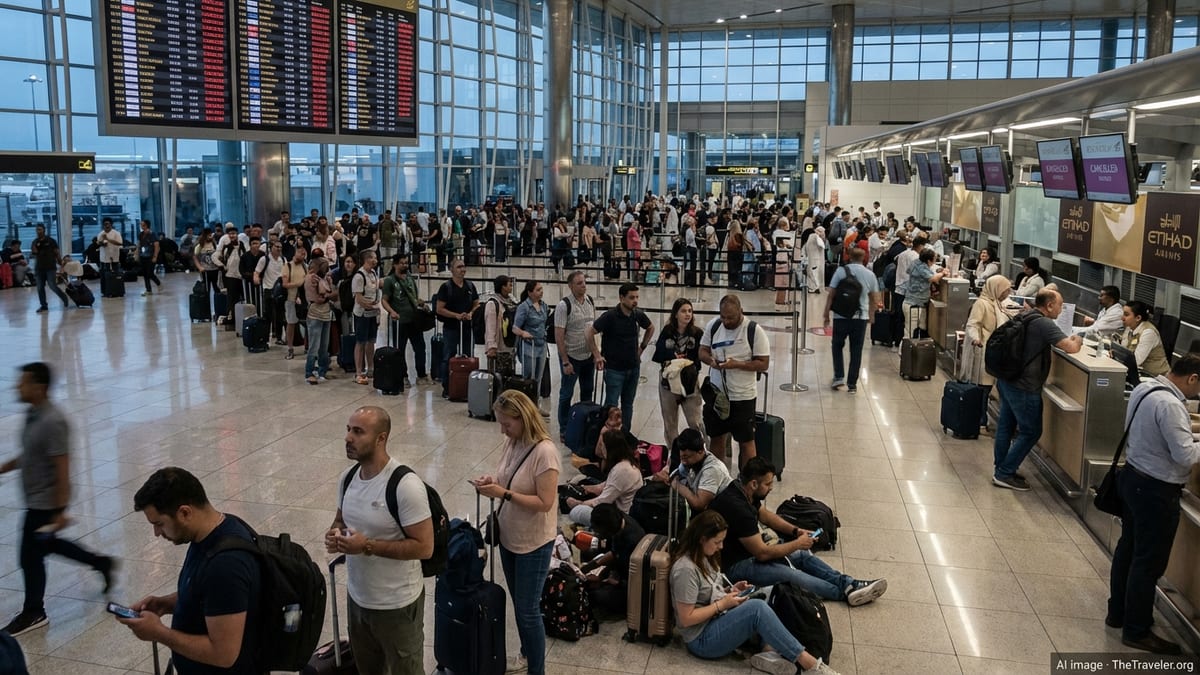
FCDO Tightens Guidance as Gulf States Reenter Warning Spotlight
The United Kingdom’s Foreign, Commonwealth & Development Office has re‑sharpened its travel advice for key Gulf destinations, only weeks after a brief easing of guidance following a short‑lived ceasefire between Washington and Tehran. Recent updates highlight the unpredictable security environment across the United Arab Emirates, Oman, Qatar and Saudi Arabia and underline the risk that further missile or drone activity could affect civilian infrastructure, including airports.
According to published coverage of the latest FCDO revisions, officials in London now stress that tensions remain high and that Iran has previously signalled an intention to target locations associated with the United States and Israel in the wider Gulf. Publicly available information notes a particular focus on commercial and logistical hubs, reinforcing concerns that international aviation gateways could be affected at short notice if hostilities deepen.
Industry analysis in the UK travel trade press indicates that this tightening of language has arrived just as tour operators and airlines were reporting a rebound in bookings to the Gulf following the earlier pause in fighting. The reinstatement of stricter advice for the UAE, Qatar, Oman and Saudi Arabia is therefore being viewed as a potential brake on that recovery, especially for discretionary leisure travel that is sensitive to perceptions of geopolitical risk.
For now, the FCDO’s guidance stops short of discouraging all visits to major Gulf cities, but it does frame the security outlook as fluid and advises travellers to remain alert to the possibility of sudden changes in airspace status or flight schedules.
Missile Alerts and Cross‑Gulf Strikes Raise Perceived Risk
Public reporting from the region in recent days describes a renewed pattern of Iranian attacks involving missiles and drones directed at several Gulf states, including Qatar, the UAE, Oman and Saudi Arabia. Statements issued by affected governments describe these incidents as violations of sovereignty and as part of a broader confrontation linked to the contest over control of the Strait of Hormuz.
Local media coverage from the UAE and other states records air raid alerts, instructions for residents to seek shelter and interceptions of incoming projectiles. In the UAE, reports earlier in the conflict cycle described strikes near critical infrastructure, including airports and energy facilities, underscoring how quickly the theatre of operations can move close to key transport nodes. Similar warnings have periodically been issued in Qatar and Bahrain, with authorities there also highlighting interception activity.
Regional diplomatic statements from Gulf capitals and European governments alike stress the importance of safeguarding shipping and overflight routes near the Strait of Hormuz. Analysts note that any perception of sustained vulnerability in these corridors would have direct implications for aviation routing and insurance, particularly for long‑haul flights between Europe, Asia and Australasia that depend heavily on Gulf stopover hubs.
For travellers, these developments translate less into immediate danger on the ground at airports and more into shifting assessments of background risk. Travel risk consultancies point out that missile and drone campaigns, even when primarily targeted at strategic or military sites, can lead to rapid and sometimes uncoordinated restrictions on civil aviation.
Dubai, Abu Dhabi and Doha Manage Through Intermittent Closures
The most intense disruption to Gulf aviation this year followed late February strikes involving US and allied forces on Iranian targets, and Iranian retaliatory attacks across several Arab Gulf states. Contemporary reporting from international news agencies detailed the temporary closure of major airports at Dubai, Abu Dhabi and Doha, as well as widespread airspace shutdowns that left skies over multiple Middle Eastern countries largely empty.
Operational assessments from aviation and logistics specialists described the episode as one of the most far‑reaching shocks to global air travel in recent years. Flight tracking data at the time showed large detours for long‑haul services, with airlines avoiding Iranian, Iraqi and adjacent airspace and in some cases suspending routes outright. For carriers using Dubai, Abu Dhabi and Doha as super‑connectors, the sudden loss of key corridors forced cancellations and complex rerouting via longer, more southerly tracks.
Subsequent industry reporting indicates that Gulf airports have gradually restored operations, but often at reduced capacity and under strict security coordination with national aviation authorities. Analysts note that the hubs have demonstrated an ability to restart services relatively quickly once immediate threats subside, using refined air traffic routes, tactical operating windows and extensive contingency planning involving diversion airports in the wider region.
Nonetheless, the experience has highlighted structural vulnerabilities. As one recent specialist briefing on Middle East disruption noted, airspace closures and partial shutdowns can cascade rapidly, leading to long queues of diverted aircraft, crew displacement and knock‑on delays across multiple continents. Travel management firms continue to warn corporate clients that flight schedules into and through the Gulf may remain volatile for some time.
US and European Advisories Shape Airline and Passenger Decisions
Alongside UK guidance, updated information from other Western governments and private risk consultancies is playing a significant role in determining what level of service airlines feel comfortable offering to Gulf hubs. The United States currently maintains high‑level advisories for Iran itself and elevated caution for several neighbouring states, while issuing separate notices on security conditions and consular support in the wider Middle East.
Corporate travel and mobility alerts circulated in recent months describe a patchwork of airspace closures, partial reopenings and corridor restrictions across the Gulf and Levant. These reports highlight that even when airports in the UAE, Qatar or Saudi Arabia are technically open, airlines may still limit frequencies or adjust routings in order to comply with internal risk thresholds, insurance requirements and crew rest rules impacted by longer flight times.
European carriers, in particular, are sensitive to overflight restrictions issued by their own civil aviation regulators. Several have continued to route around Iranian and Iraqi airspace, putting greater strain on safe corridors over the Arabian Sea and the Red Sea, and increasing reliance on Gulf states seen as relatively less exposed to direct missile activity at any given time.
Travel experts suggest that, as a result, capacity into Dubai, Abu Dhabi and Doha may recover in uneven stages rather than along a straight upward trajectory. Airlines are expected to keep closely monitoring government advisories and to adapt schedules if the US–Iran confrontation leads to fresh rounds of strikes or threats against commercial infrastructure.
Travellers Face Heightened Uncertainty but Not Total Shutdown
Despite the evident strain on Gulf aviation, current reporting indicates that the region’s main hubs remain operational, with airlines prioritising risk mitigation rather than wholesale withdrawal. Travel logistics bulletins from late June note that while flight paths and transit times have been affected, Dubai, Abu Dhabi and Doha continue to handle significant volumes of passengers, albeit with an emphasis on flexibility and contingency planning.
For individual travellers, the most immediate impacts are likely to come in the form of schedule changes, extended layovers and occasional last‑minute cancellations, rather than a complete breakdown of services. Industry guidance advises passengers to allow extra time for connections, stay closely informed through airline apps and booking platforms, and be prepared for itinerary adjustments if security conditions shift in the hours before departure.
Risk consultants additionally point to the potential for further revisions to official travel advice as the situation evolves. The reappearance of the UAE, Oman, Qatar and Saudi Arabia in the FCDO warning spotlight underscores how quickly political or military developments can alter the risk picture, even for destinations long marketed as safe, reliable transit points connecting East and West.
With diplomatic efforts to stabilise the Strait of Hormuz still fragile, observers expect Gulf aviation to remain highly exposed to the ebb and flow of US–Iran tensions. For now, the message from airlines and travel advisors alike is that the Gulf remains reachable, but that journeys through its flagship hubs are likely to demand more patience, preparation and attention to fast‑moving security updates than in the pre‑conflict era.