


More news on this day
The United Kingdom has tightened travel guidance for parts of the Middle East following a fresh round of United States and Iranian strikes, prompting new safety considerations for British travellers transiting key Gulf hubs or planning holidays in the region.
Get the latest news straight to your inbox!
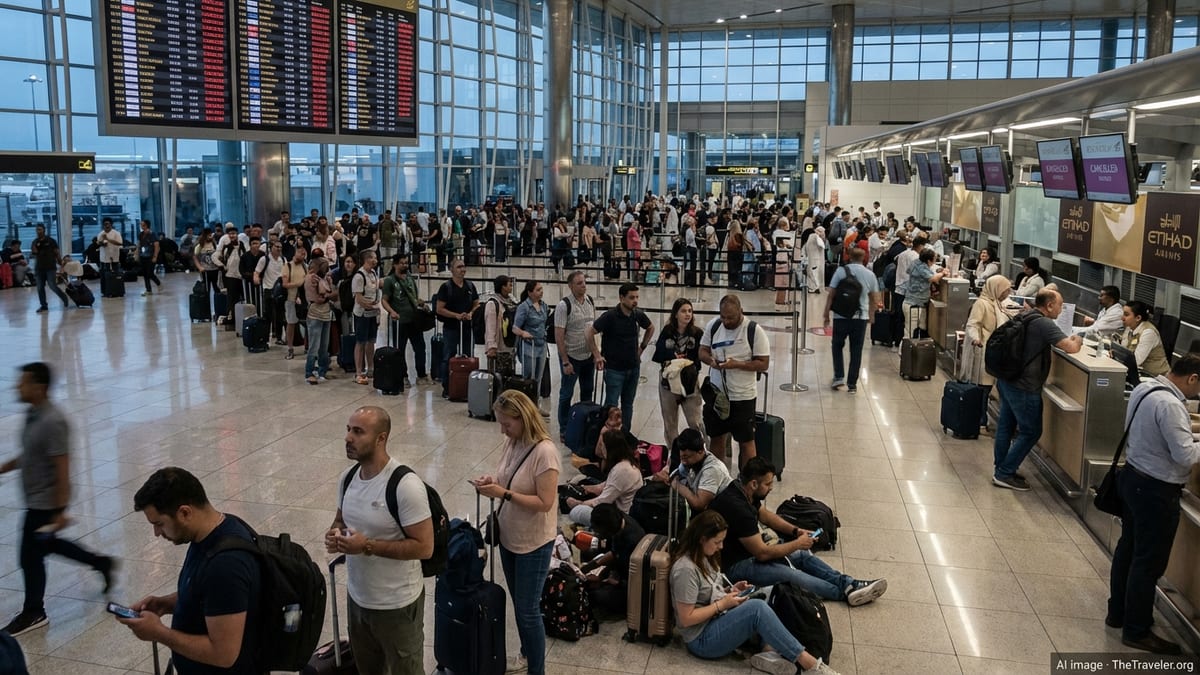
Fresh strikes revive concerns over regional security
Renewed US-Iran strikes in and around the Strait of Hormuz have revived concerns over regional stability, with Iran-linked attacks reported across several Gulf and Levant states in recent days. Coverage by multiple international outlets indicates that Iranian forces and allied groups have targeted facilities and infrastructure in Bahrain, Kuwait, Qatar, Oman and Jordan, as well as commercial shipping in and near the vital waterway.
The latest violence follows earlier phases of the 2026 Iran conflict, which has seen cycles of strikes and counterstrikes impacting airspace, shipping routes and energy markets. Analysts note that, while the fighting has so far been concentrated on military and strategic targets, the pattern of attacks has periodically spilled into areas used by civilians, including airports, ports and urban centres.
Publicly available reporting also points to continued volatility around the Strait of Hormuz, through which a significant share of global oil supplies are shipped. Maritime security channels have kept threat levels elevated, citing recent incidents involving tankers and commercial vessels in the area, which in turn underpin the UK’s cautious stance in its regional travel messaging.
These dynamics form the backdrop to the UK government’s latest adjustments to Middle East travel advice, as it recalibrates guidance to reflect both direct security threats and the growing risk of disruption to flights and overflight routes.
UK travel advice: sharper wording and new cautions
The Foreign, Commonwealth and Development Office (FCDO) has issued updated travel advice for several Middle Eastern destinations, with language highlighting the unpredictability of the security environment following the latest US-Iran exchanges. According to recent media coverage, guidance for Gulf hubs such as the United Arab Emirates has been refreshed to emphasise that regional tensions remain high and could escalate with little warning.
While the UAE and some neighbouring states remain important transit and tourism centres, the revised wording signals that British nationals should be alert to rapid changes in risk levels. Travellers are being urged, via open-source summaries of the guidance, to monitor local developments closely, follow instructions from local authorities and stay in regular contact with airlines and tour operators in case of sudden schedule changes.
In parallel, longstanding FCDO warnings against travel to countries directly affected by active conflict or widespread instability, such as Iran, Iraq, Syria and Yemen, remain in place. The renewed airstrikes and retaliatory attacks have reinforced the rationale for these tougher advisories, which already reflect a combination of military activity, terrorism concerns and the potential for arbitrary detentions and movement restrictions.
Government documentation and recent parliamentary debates also underline that advice is being kept under constant review as the conflict evolves. The UK has repeatedly signalled that changes to the threat picture, including further missile launches or attacks on commercial infrastructure, could prompt rapid updates to travel pages covering both high-risk states and their more stable neighbours.
Impact on flights, connections and popular routes
For British travellers, the most immediate effects of the updated guidance are likely to be felt in the air. Aviation advisories from travel-industry bulletins and airline notices show that airspace over several conflict-affected states, including Iran and parts of Iraq and Syria, has been periodically restricted or closed, forcing carriers to reroute services between Europe, Asia and East Africa.
Although major Gulf hubs such as Dubai and Abu Dhabi continue to operate, the combination of altered flight paths and heightened security protocols can lead to longer journey times, tighter connection windows and, in some cases, short-notice cancellations. Travel risk assessments compiled for corporate clients this year have already highlighted the possibility of cascading disruption if the conflict intensifies or spreads further into key transit corridors.
Tour operators report that some customers are reconsidering itineraries that involve overnight stays or extended stopovers in the wider region, opting instead for point-to-point flights that minimise time spent in or near affected airspace. At the same time, industry commentary suggests that bookings to relatively stable destinations such as certain Gulf city-break hotspots remain resilient, albeit with more travellers purchasing flexible tickets and comprehensive insurance.
Travel specialists caution that airline schedules may change faster than government advisories can be updated, meaning that UK nationals should treat FCDO guidance as a baseline and supplement it with real-time checks on flights, airport operations and security alerts before departure and during their trip.
What the changes mean for UK holidaymakers and business travellers
The latest UK travel guidance does not amount to a blanket warning against visiting the Middle East, but it does underline that risk levels are elevated compared with recent years. For holidaymakers, this translates into a stronger emphasis on preparation and contingency planning, particularly for trips combining multiple stops or cruises that pass through the Gulf.
Insurance considerations are becoming more complex. Policy summaries shared by brokers indicate that cover can be curtailed or excluded entirely for destinations branded unsafe by official advisories, especially where “all but essential travel” or stronger wording is in place. Travellers are therefore being encouraged, in public-facing advice from industry groups, to check whether their plans involve transiting or briefly entering countries with stricter warnings, which could affect claims if disruption occurs.
Business travellers face their own set of challenges. Companies with operations or partners in the region are revisiting duty-of-care policies, relying on the UK travel advice framework as one of several inputs when deciding whether to authorise trips. Some firms have begun to mandate security briefings and tracking tools for employees visiting high-risk locations, especially where ground movements between airports, ports and business districts may be affected by demonstrations or security operations.
For both leisure and corporate travel, observers note that the renewed US-Iran strikes have reinforced a lesson repeatedly seen in recent years: that geopolitical shocks can alter risk profiles and logistical realities very quickly, often outpacing traditional planning cycles for holidays and business itineraries.
Practical steps for travellers monitoring the situation
Against this backdrop, publicly available guidance directed at UK nationals stresses the importance of staying informed before and during any trip involving the Middle East. Travellers are being reminded through official channels and media coverage to sign up for government travel advice email alerts for their destination countries, so they receive notifications if the security assessment changes.
Experts in travel risk management also recommend keeping passport and visa details accessible in digital form, registering contact information with airlines and tour operators, and maintaining alternative routing options where possible. Those with imminent departures may wish to speak with their travel provider about rebooking or rerouting if their itinerary includes airports or airspace close to recent incidents.
More broadly, commentators suggest that travellers adopt a conservative approach to reading the updated UK guidance. Even if popular destinations remain open and welcoming to visitors, the combination of military activity, political tensions and stretched aviation networks means that flexibility and vigilance are now essential parts of any Middle East travel plan.