


More news on this day
Air travel across parts of Asia and neighboring regions has been thrown into fresh turmoil as publicly available data indicates that Russia, Kazakhstan, Indonesia, Kuwait and Saudi Arabia have collectively cancelled 187 flights and delayed about 1,860 more in recent days, disrupting operations for carriers such as Aeroflot, China Eastern, All Nippon Airways, IndiGo, Turkish Airlines and others at airports including Saint Petersburg, Astana, Jakarta and Jeddah.
Get the latest news straight to your inbox!
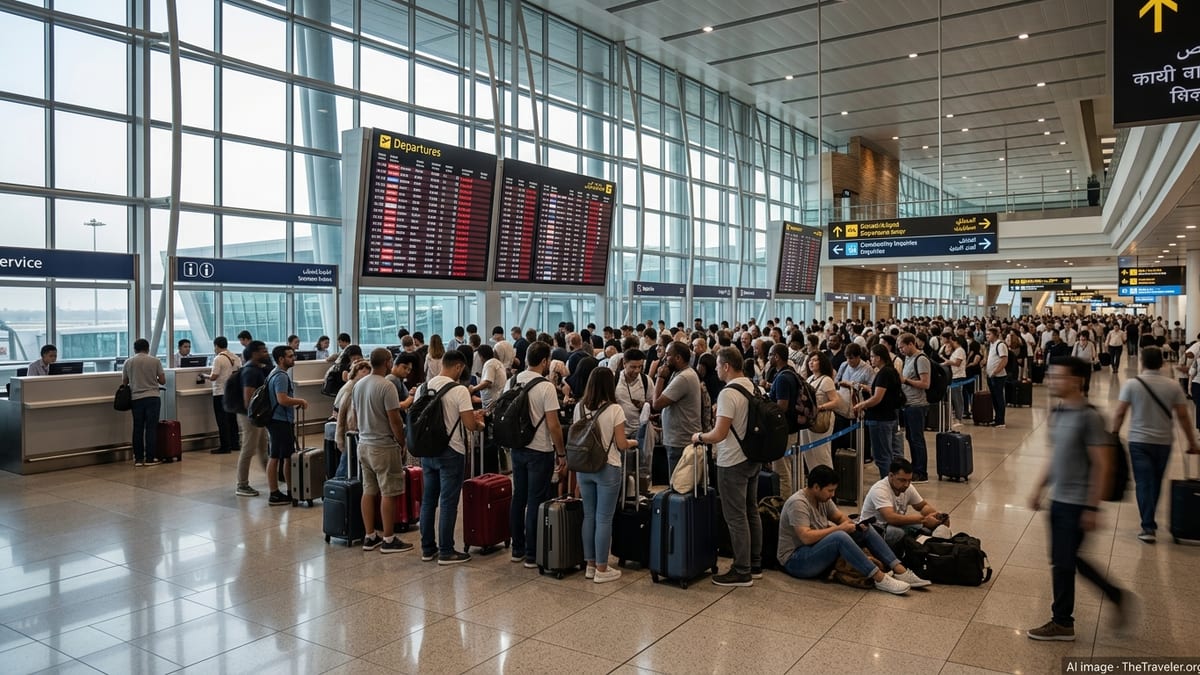
Ripple Effects at Major Regional Hubs
The latest wave of disruption is centered on a string of key hubs that link Asia, the Middle East and Europe. Flight tracking dashboards and schedule aggregators show mounting delays at Saint Petersburg’s main airport, Astana in Kazakhstan, and major Southeast Asian and Gulf gateways, including Jakarta and Jeddah. These hubs function as vital connectors for both point to point and long haul transfer traffic, meaning that localized cancellations quickly cascade across airline networks.
At Saint Petersburg, services operated by Russian carriers and foreign partners have faced rolling schedule changes as airlines adjust to shifting airspace routings and volatile demand patterns on routes to Central Asia and East Asia. In Kazakhstan, Astana’s role as a growing transit point between Europe, the Gulf and the Indian subcontinent has amplified the impact of even modest cuts to daily operations, with regional carriers trimming frequencies and retiming flights to manage aircraft and crew availability.
In Indonesia, Jakarta’s Soekarno Hatta International Airport continues to experience uneven recovery patterns on international routes, with regional cancellations compounding weather related and operational delays. Publicly available airport boards and airline updates indicate that certain services to the Middle East and North Asia have been periodically withdrawn or consolidated, often at short notice, pushing delays into the hundreds of minutes on some departures.
Jeddah and other Saudi gateways are also under pressure from a combination of seasonal demand, constrained capacity on some international sectors and evolving airspace dynamics over parts of the Middle East. Schedule data shows that while overall traffic remains high, selective cancellations and extended turnaround times are contributing to the elevated delay figures counted in the latest totals.
Major Airlines Forced to Rework Networks
The cancellation and delay figures reflect a broad range of operational strategies by airlines confronted with rapidly changing conditions. Russian flag carrier Aeroflot continues to recalibrate its international network, particularly services that rely on overflight permissions and access to transit hubs in Central Asia and the Middle East. This has led to adjustments on routes touching Saint Petersburg and other Russian gateways, where aircraft and crew rotations have become increasingly complex.
In East Asia, publicly accessible timetable information shows that China Eastern and All Nippon Airways have both faced pockets of disruption, especially on flights that connect to regional partners or pass through congested hubs. While most of their domestic operations remain stable, selective cancellations on international sectors can cause knock on delays when aircraft are not where they are expected to be for subsequent rotations.
India’s IndiGo, one of the largest low cost carriers in the region, has already drawn attention for suspending some services to Kuwait in early June as the country adjusted operations around damage at Kuwait International Airport. That decision, together with similar moves by other carriers, has forced many travelers to rebook via alternative cities or accept extended layovers as connections through Kuwait remain subject to sudden changes.
Turkish Airlines and other network carriers with extensive schedules into Saudi Arabia, Kazakhstan and Southeast Asia have likewise had to rework their timetables. Reports from passengers and publicly available airline statements highlight a mix of outright cancellations and retimings, with some flights scrapped several days in advance and others removed closer to departure as demand and operational constraints become clearer.
Airspace, Security and Infrastructure Challenges
Behind the raw numbers of 187 cancellations and 1,860 delays lies a mesh of airspace restrictions, security considerations and infrastructure constraints. In Kuwait, commercial aviation has been disrupted for months by damage to key facilities at Kuwait International Airport following earlier drone and missile incidents. Although the airspace is formally open and traffic has been gradually returning, the airport’s recovery has followed a phased pattern that leaves little margin for irregular operations.
Airlines serving Kuwait have responded by thinning out schedules, rerouting traffic through secondary Gulf and Saudi hubs, or temporarily suspending routes altogether. Low cost and full service carriers alike have published advisories indicating that certain flights will not operate until infrastructure and staffing levels stabilize. This has contributed to the regional tally of cancelled services, particularly on connections linking South Asia and the Middle East.
In Saudi Arabia and neighboring states, aviation consultancies point to the cumulative effects of earlier regional tensions and continuing caution around overflights in certain corridors. While most Gulf airspace is reported to be open, airlines and risk advisers still recommend routing around particular high risk zones when feasible. These detours lengthen flight times, increase fuel burn and can limit the number of daily rotations possible for a given aircraft, indirectly feeding into the broader delay statistics.
Russia and Kazakhstan have their own set of airspace and infrastructure challenges, including restrictions on some European routings and capacity limits at fast growing hubs. Public analysis of schedule data suggests that carriers are periodically cancelling underperforming frequencies or consolidating flights on busy days to keep operations resilient, actions that show up in cancellation counts even when overall seat capacity is preserved.
What Travelers Are Experiencing on the Ground
For passengers, the statistical picture translates into missed connections, long queues at transfer desks and extended waits on the tarmac. Social media posts and consumer forums are filled with accounts of travelers who have arrived to find their flights cancelled or heavily delayed, sometimes without a clear rebooking path if alternative services are already full or also affected by disruption.
Travelers transiting through Kuwait, Jeddah or other Gulf hubs report particular uncertainty when their journeys involve multiple airlines or separate tickets. Publicly available discussions indicate that some itineraries relying on tight connections have become less reliable, with passengers urged by travel advisers to allow significantly longer buffers or to opt for more direct routings where possible.
In Russia, Kazakhstan and Indonesia, domestic and regional passengers are encountering more routine schedule changes, such as departure time shifts of one to three hours or aircraft swaps that ripple through the day’s operations. While many airlines are offering rebooking without additional change fees when services are cancelled for operational reasons, the limited availability of spare seats can leave some travelers stranded for an extra day.
Consumer advocates note that awareness of passenger rights varies widely across markets, and that compensation policies differ between jurisdictions. As a result, two travelers facing similar disruptions on different airlines or in different countries may have very different experiences in terms of refunds, vouchers or hotel support, adding to the sense of uncertainty described in public commentary.
Outlook for the Summer Travel Season
With the Northern Hemisphere summer peak underway, aviation analysts caution that the current disruption may persist in waves rather than resolving quickly. Schedule data and travel risk bulletins suggest that airlines in Russia, Central Asia, Southeast Asia and the Gulf are still fine tuning their networks for the coming months, with further tactical cancellations possible where routes remain marginal or operational conditions are fluid.
Industry commentary indicates that carriers are prioritizing core trunk routes and high demand city pairs, sometimes at the expense of smaller regional links that feed traffic into larger hubs. This approach can support overall reliability but may mean limited options for travelers in secondary cities who depend on a single daily flight to connect to long haul services.
Travel planning services and risk consultancies advise that passengers flying through Saint Petersburg, Astana, Jakarta, Jeddah, Kuwait City and other affected airports monitor their bookings closely in the 48 hours before departure. Public guidance generally recommends checking flight status directly with airlines, enabling app notifications, and working with travel agents or corporate travel managers to secure backup options where feasible.
Despite the current wave of 187 cancellations and 1,860 delays, overall traffic levels across much of Asia and the Middle East remain high compared with recent years. Industry observers suggest that if infrastructure repairs continue, airspace access remains stable and airlines maintain disciplined capacity planning, disruption could gradually ease later in the season, even as travelers are urged to prepare for a more unpredictable journey than they might have faced before.