


More news on this day
Across Asia in 2026, airlines are being pushed into a complex redesign of their route maps as overlapping airspace closures, conflict zones and the rapid expansion of high speed rail redraw how people move around the region.
Get the latest news straight to your inbox!
Airspace Fragmentation Forces Costly Detours
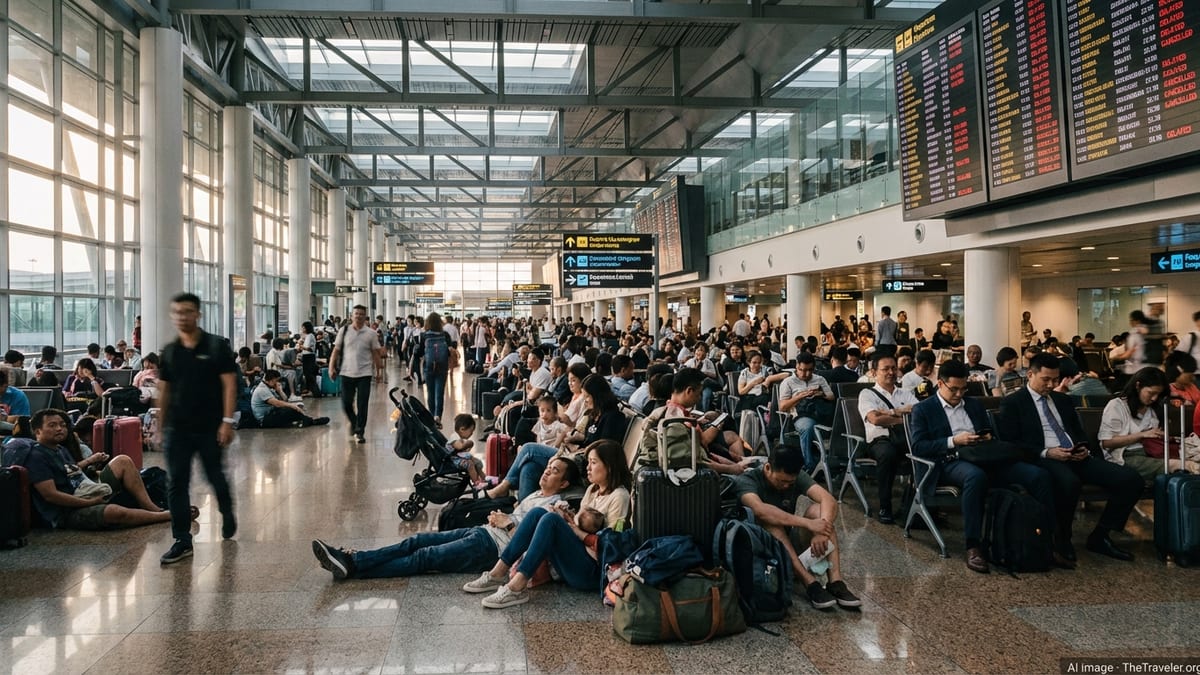
Geopolitical tensions have sharply reduced the amount of usable airspace between Asia, Europe and parts of Africa, creating long detours and bottlenecks for Asian carriers. Since early 2022, the loss of Russian and Ukrainian airspace to many Western airlines has already lengthened Europe to Asia routes. The outbreak of war involving Iran in early 2026 then triggered a fresh wave of restrictions, closing or constraining large tracts of Middle Eastern skies that had served as a crucial bridge between continents.
Industry analyses describe a network now funneled into narrower corridors over Central Asia and the Arabian Peninsula, with flight tracking data showing dense traffic bands replacing what were previously multiple routing options. Studies of post Ukraine war patterns and newer assessments of the 2026 Iran conflict indicate that airlines have passed much of the added time and fuel cost through to passengers, contributing to higher long haul fares on Asia to Europe links and raising concerns about the long term competitiveness of certain hubs.
Recent briefings from airline associations and airport groups in Asia and the Middle East underline how exposed the region is to these airspace shocks. Reports indicate that traffic flows that once relied heavily on Gulf hubs are being rebalanced toward Europe and Asia based carriers, while some Middle Eastern airports see sharp declines in transfer volumes and revenues. At the same time, Asia Pacific airlines with access to alternative routings, or to airspace that remains open over parts of Russia and Central Asia, have gained relative advantage on select long haul sectors.
The disruptions are not limited to intercontinental flying. Notices to air missions and temporary restrictions around military activity in Northeast Asian seas and along sensitive borders have required domestic and regional operators to plan with greater buffer time and fuel reserves, tightening aircraft utilization. Network planners are increasingly building schedules that assume recurring airspace constraints rather than one off crises.
Network Strategies: New Hubs, New Corridors
In response, Asian carriers and regulators are seeking to harden their networks against further shocks. One visible trend in 2026 schedules is the push to diversify away from a small number of overburdened hubs and contested corridors toward secondary gateways and new inter Asia flows. Publicly available data from Chinese regulators on the summer 2026 timetable, for example, shows a continued shift toward strengthening links between inland regions and coastal centers, with more trunk to regional connectivity designed to spread traffic more evenly across the country’s airport system.
In Northeast Asia, South Korean and Japanese networks illustrate different adaptations. South Korea’s regional airports are adding more international services across East and Southeast Asia, with tourism agencies promoting new links from cities such as Busan and Daegu to destinations in Japan, China and Southeast Asia. Published schedules for the 2026 summer season show several new or restored routes from regional Korean gateways to Chinese coastal cities and Japanese islands, reflecting efforts to capture traffic that might previously have flowed through larger hubs or the Middle East.
Thailand, Hong Kong and other Southeast Asian markets are also revisiting bilateral air services frameworks to create more flexibility. A new air services agreement between Thailand and Hong Kong, advanced in early 2026, is described in official releases as aiming to modernize the regulatory base for future capacity growth and clarify traffic rights. Analysts view such moves as an attempt to lock in options for more non stop and fifth freedom services as airlines reassess the viability of routings that once relied heavily on Gulf connections.
At the same time, long haul Asian carriers are selectively increasing frequencies on Europe bound routes where they can exploit available airspace and strong origin demand. Coverage in regional business media in March and April notes that some Southeast and Northeast Asian airlines have picked up Australia and Europe traffic that previously connected over the Gulf, although capacity remains constrained by aircraft delivery delays and slot limits at major airports. The result is a patchwork of new opportunities and ongoing bottlenecks that network planners are trying to balance.
Living Beside High Speed Rail: Competition and Coordination
Overlaying these airspace challenges is the steady spread of high speed rail across Asia’s most densely traveled corridors. China and Japan continue to anchor the world’s largest high speed rail networks, with lines linking most major city pairs at speeds that rival short haul aviation. New or planned systems in countries such as Indonesia, Thailand and India promise to extend rail’s reach on routes that have traditionally been the domain of domestic or regional flights.
The competitive impact is most visible inside China, where low cost carrier Spring Airlines has publicly described a strategy of avoiding routes with strong high speed rail overlap. According to coverage from an industry conference in early 2026, the airline is prioritizing markets where rail either does not exist or offers a weaker value proposition, and focusing on dense point to point links and international services. More broadly, domestic Chinese carriers are seen reorienting capacity away from short trunk sectors toward longer stage lengths and connections that rail cannot easily replicate.
In Japan, the long established Shinkansen network continues to shape airline choices, limiting flights on city pairs where rail’s frequency and reliability are dominant while preserving aviation on longer or cross water routes. Similar dynamics are starting to appear in Southeast Asia as high speed projects move forward. Planned corridors between Bangkok and major cities to the north and east, and between Jakarta and other Indonesian centers, are prompting early discussions among planners about how to position airports and rail stations as complementary rather than competing nodes.
Academic and policy studies on the interaction between high speed rail and aviation in Europe are increasingly being referenced in Asian debates, especially as governments weigh climate targets and capacity constraints at large airports. Proposals to cap or discourage very short domestic flights where high speed rail is available are gaining attention in some Asian capitals, although no large scale bans have been adopted. For now, integration efforts are focusing on schedule coordination, through ticketing experiments and better ground links between key rail terminals and airports.
Building Multimodal Hubs and Data Driven Operations
The most ambitious responses combine airspace resilience and rail competition into a single multimodal vision. Airports in several Asian countries are pushing to more tightly connect terminal complexes with national rail grids, positioning themselves as interchanges where passengers can shift easily between long haul flights and high speed trains. Designs for new or expanded terminals around Beijing, Bangkok and Jakarta, for instance, increasingly emphasize co located rail platforms and streamlined transfer paths.
Japan’s ongoing initiatives around trajectory based operations in the Asia Pacific region also illustrate how air traffic management modernization is being used to squeeze more efficiency out of constrained skies. Documentation from regional projects highlights efforts to use more precise, data driven flight path planning to reduce separation requirements where safe, shorten routings around busy terminal areas and improve predictability for both airlines and air navigation service providers. Such tools can help offset some of the extra distance imposed by geopolitical diversions.
On the commercial side, airlines across Asia are investing more heavily in network optimization software that can simulate different airspace and demand scenarios, including sudden loss of a corridor or rapid ramp up of a new high speed rail line. Revenue management teams are experimenting with dynamic pricing and capacity allocation models that take account of rail competition on overlapping city pairs, drawing on emerging research into multi modal pricing strategies.
Observers note that this more integrated approach is still uneven across the region, with major full service carriers and airport groups in North Asia generally further along than smaller operators in South and Southeast Asia. Yet the direction of travel is clear: aviation, rail and other surface modes are no longer being planned in isolation, particularly on the dense coastal and cross border corridors that underpin Asia’s economic growth.
A New Map for Asian Travel
The combined effects of airspace constraints and rail expansion are gradually redrawing the mental map of travel in Asia. Journeys that once followed a straightforward trajectory from a regional airport to a Gulf hub and on to Europe are now more likely to involve a mix of non stop services on Asian carriers, connections through alternative hubs and, in some cases, high speed rail segments at either end.
Passengers are beginning to see greater choice on some routes and less on others. Secondary cities in South Korea, Japan and parts of China are gaining direct international links as airlines seek new niches, while smaller destinations that relied heavily on Middle Eastern transit traffic may face thinner connectivity. At the same time, major urban pairs within China and Japan continue to see rail consolidating its position as the default mode of travel.
For airlines and infrastructure planners, 2026 is shaping up as a test of how agile Asian aviation networks can be in the face of overlapping structural pressures. The industry’s ability to reconfigure routes, deepen cooperation with rail operators and adopt more sophisticated traffic management tools will play a central role in determining whether the region’s connectivity emerges from this period more resilient or more fragmented.