


More news on this day
Passengers departing Athens International Airport on Saturday faced a fresh wave of disruption, with hundreds of delays and a handful of cancellations affecting Aegean, Ryanair, Lufthansa and Sky Express services to major European hubs including London, Paris and Rome.
Get the latest news straight to your inbox!
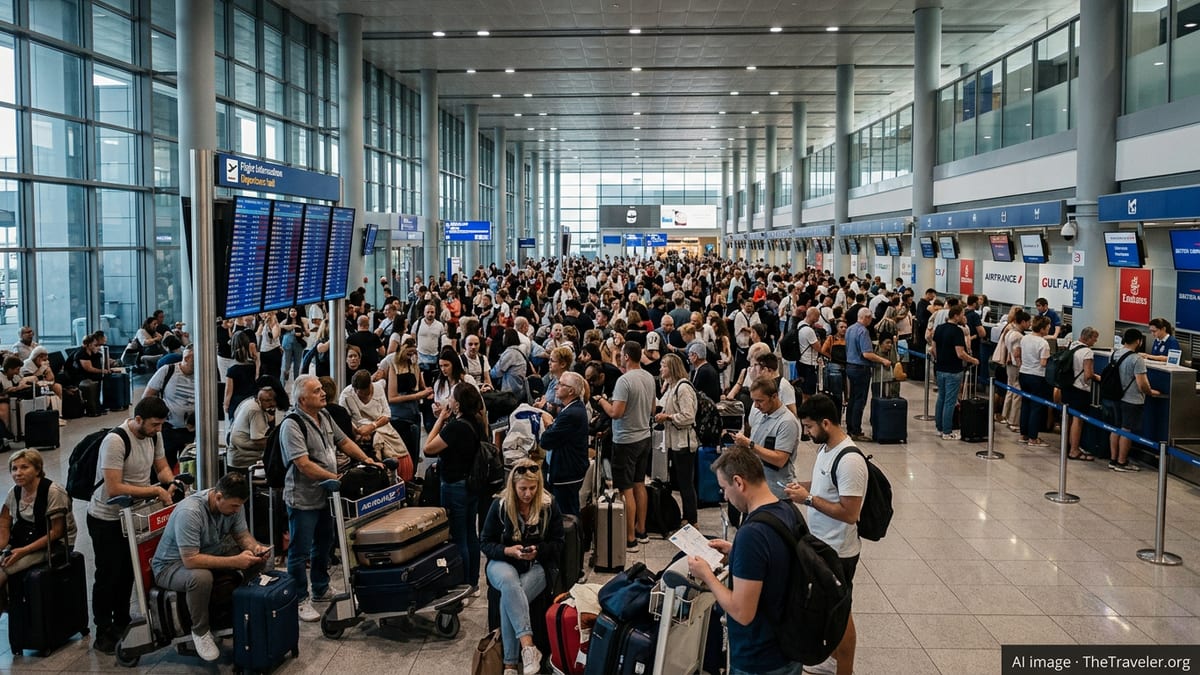
Heavy Delays Across Key European Hubs
Operational data and flight-tracking platforms show Athens International Airport continuing to struggle with punctuality, with reports indicating more than 300 delayed departures and a small number of cancellations concentrated on short and medium haul routes. Services to London, Paris, Rome and other major hubs operated by Aegean, Ryanair, Lufthansa and Sky Express were among those most affected, creating long queues at check in and security as passengers attempted to rebook or wait out extended ground holds.
Departures to Rome and other Italian destinations have been particularly sensitive in recent weeks, with earlier disruptions at Italian airports compounding tight turnarounds on busy weekend schedules. Similar patterns have been seen on London and Paris services, where minor delays quickly multiplied into missed slots and rolling knock-on disruption across the day.
Published coverage and aviation data suggest that while outright cancellations remain relatively limited compared with the number of flights operating, the sheer volume of delayed services has caused a cascade of missed connections and overnight stays for travelers using Athens as a transfer point.
Strain From Navigation System Checks and Air Traffic Capacity
The latest bout of disruption comes on top of a difficult early summer period for Athens. In June, scheduled inspections of key landing guidance systems at the airport led to concentrated blocks of delays, particularly on afternoon and early evening waves, as arrivals and departures were slowed during the checks. Publicly available information from Greek media at the time indicated that the inspections affected most airlines using the airport, including Aegean and Sky Express.
Separate reporting in recent weeks has highlighted continued pressure on air traffic management capacity in Greek airspace. Eurocontrol performance briefings for the summer period have repeatedly listed Athens among European airports experiencing elevated delay minutes per flight, reflecting both local capacity constraints and wider network issues that have reduced the number of movements the system can safely handle during peak hours.
Industry observers note that when technical checks, staffing constraints and seasonal weather combine, airports already operating close to capacity can experience sudden spikes in disruption. Athens, a key gateway for both domestic Greek islands and international traffic, appears to be particularly exposed to such pressure during July’s high-demand period.
Border Controls, New EU Systems and Knock-on Queues
Beyond the air traffic picture, passenger processing has also added friction to operations at Athens International Airport this summer. Since late March, the European Union’s new Entry/Exit System has been fully deployed for many non EU travelers, requiring biometric registration and additional checks on first entry. Guidance published by the airport operator urges travelers to arrive substantially earlier than in previous summers, warning that queues at peak times may be longer while the system beds in.
Separate consumer-rights reporting in June pointed to prolonged passport control queues that left some Ryanair passengers struggling to reach their gates in time, contributing to missed departures and extra strain on departure punctuality. These bottlenecks, when combined with late inbound aircraft and tight turnaround times, have further diminished schedule resilience for carriers operating multiple daily frequencies.
Travel forums and passenger reports describe a patchwork experience, with some travelers clearing security and border checks quickly, while others encounter significant holdups depending on time of day, nationality, and the balance between Schengen and non Schengen departures.
Airline Responses and Passenger Impact
Aegean, Lufthansa, Ryanair and Sky Express all maintain dense schedules from Athens to major European cities, which can magnify the operational impact of any local problem. Earlier in June, Sky Express publicly criticized planning around the navigation system inspections at Athens, arguing that the timing exacerbated disruption and calling for stronger coordination to protect passenger journeys and Greece’s reputation as a tourism destination.
Travel industry analysis and passenger advocacy groups have also highlighted how low margin, high utilization models leave little slack in the system. Ryanair’s high-frequency network, for example, can see a single early-morning delay cascade through multiple sectors by evening, affecting flights well beyond the original cause of disruption. Legacy carriers such as Lufthansa, which rely heavily on connections through hubs like Frankfurt and Munich, face separate challenges as late Athens departures trigger missed onward links.
For individual travelers, the result on days of heavy disruption has been a mix of extended waits in the terminal, missed weddings and cruises, and last minute hotel stays. Social media posts and discussion forums from the current weekend describe scenes of crowded departure halls, limited information screens and queues at service desks as passengers seek alternative options when their flights significantly exceed scheduled departure times.
What Travelers Can Do Now
Given the continuing strain on Athens operations, travel experts and passenger rights organizations recommend that anyone flying from the airport in the coming days build in additional time and prepare for possible disruption. They advise arriving significantly earlier than normal, particularly for non Schengen flights that require full border checks under the new EU Entry/Exit rules.
Passengers are also encouraged to monitor their flights closely through airline apps and independent tracking services, as same day schedule changes remain common. Keeping boarding passes, receipts and written records of delay notifications is considered essential for those who may later seek compensation under European passenger rights regulations when eligible.
With summer holiday traffic building toward its peak, operational data and recent history suggest that Athens International Airport is likely to remain under pressure. Industry observers will be watching closely to see whether incremental staffing measures, improved coordination and further fine tuning of air traffic flows can prevent a repeat of the most severe disruption as July progresses.